Beyond the Algorithm: Why Audience Insight Trumps Easy Attribution in Modern Marketing
In the high-stakes world of digital marketing, the default playbook has become remarkably predictable. Most organizations funnel the lion’s share of their budgets into the "Big Three": Google Ads, LinkedIn campaigns, and Meta retargeting. These platforms offer the siren song of granular, immediate, and easily reportable Return on Investment (ROI) metrics. They are the "safe bets" that keep stakeholders satisfied and dashboards glowing green.
However, a growing chorus of industry experts is beginning to challenge the wisdom of this comfort zone. By tethering marketing strategies exclusively to platforms that prioritize easy attribution, are companies inadvertently blinding themselves to where their customers actually live, learn, and engage?
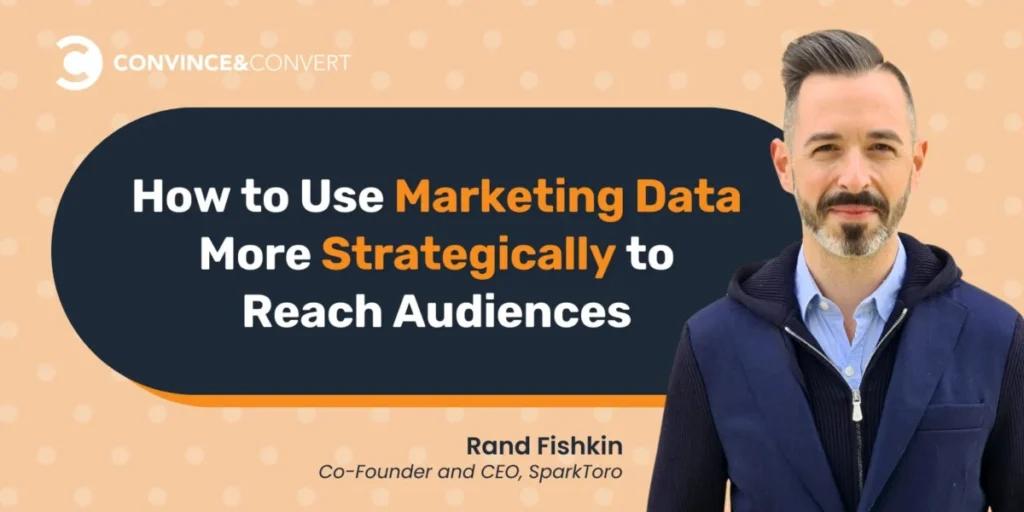
On the Data-Driven Decisions podcast, Rand Fishkin, founder of audience intelligence tool SparkToro, argued that the industry’s obsession with "measurable" platforms is leading to massive inefficiency. By shifting focus from where you can track a click to where your audience actually spends their time, marketers can break through the digital noise and foster genuine, trust-based connections.
The Illusion of Attribution: Why Google Isn’t Always the Driver
To understand why many marketing strategies are failing, one must first deconstruct the current obsession with attribution. Marketers have been conditioned to believe that if a customer converts after clicking a Google Ad, the ad is the sole hero of the story.
Fishkin posits that this is a fundamental misunderstanding of the modern customer journey. "A ton of what happens in Google is actually a response to something else," Fishkin explains. "People who performed a search query in Google, very rarely was that a spontaneous first-touch thing. It was like, ‘Oh, I heard about this software, so I went to Google and searched for it and clicked on it.’ And of course, the attribution looks like Google drove all the value. No, Google was just the middleman."
The "Middleman" Trap
When companies rely solely on platform-provided attribution, they fall into a cycle of optimizing for the "last click." This ignores the crucial discovery phases of the funnel—the industry podcasts, the niche forums, and the influencer communities where the initial seed of brand awareness was planted.
If a potential lead discovers your brand via an industry influencer and subsequently converts through a Google search, your analytics platform will attribute 100% of the credit to Google. Consequently, you may double down on Google Ads while slashing your budget for influencer partnerships or content creation, effectively cutting off the very source of your traffic. This creates a feedback loop that renders a brand invisible to new audiences, tethering growth to the rising costs of ad auctions.
The SparkToro Philosophy: Mapping the Audience Ecosystem
The core of Fishkin’s message—and the function of his company, SparkToro—is the necessity of "audience intelligence." Instead of asking which platform provides the easiest reporting, marketers should ask: Where does my target persona hang out when they aren’t looking for a product?
Identifying Niche Channels
Data-driven strategy is not about more data; it is about better data. SparkToro works by aggregating publicly available information to map the online habits of specific target audiences. It answers critical questions:
- What websites do they frequent?
- Which podcasts do they listen to?
- Which influencers or thought leaders do they follow on social media?
By identifying these niche communities, companies can bypass the competitive, high-cost bidding environments of major ad platforms and insert themselves into spaces where their audience is already receptive and engaged.
Case Studies: Success Through Targeted Presence
The shift from broad-spectrum paid advertising to community-focused engagement has yielded tangible results for early adopters.
Case 1: The Podcaster’s Growth Strategy
A podcaster looking to increase sponsorship revenue found themselves hitting a ceiling. Instead of spending money on social ads to drive listenership, they used audience intelligence to identify high-reach, relevant influencers on YouTube and X (formerly Twitter). By inviting these influencers as guests, the podcaster leveraged the guest’s existing community. The influx of new, relevant listeners directly increased the podcast’s appeal to sponsors, creating a sustainable revenue model that didn’t rely on ad spend.
Case 2: The Tech Event Organizer
Similarly, a technology event organizer used audience data to select speakers. By identifying speakers who held high influence within specific, hard-to-reach demographics, the organizer attracted sponsors looking to engage that exact niche. This approach transformed the event from a generic industry gathering into a targeted, high-value meeting point for key stakeholders.
In both instances, the marketing strategy was successful because it prioritized the customer journey over the ad platform. By meeting leads at the beginning of their journey—where they are solving problems and learning—brands can secure trust long before a competitor ever enters the conversation.
The Rise of Zero-Click Marketing
Perhaps the most radical shift proposed by the current data-driven movement is the concept of "Zero-Click Marketing," a term coined by Amanda Natividad, VP of Marketing at SparkToro.
In a world where social media algorithms actively punish posts that lead users away from their platforms, marketers often feel pressured to force a "click-through." However, the zero-click philosophy suggests that providing value directly on the host platform is more effective than trying to drive traffic to a landing page.
The Chartr Example
The data-storytelling company Chartr achieved massive success by engaging directly with the Reddit community "r/dataisbeautiful." Instead of posting ads or "sign-up" links, the team simply shared high-quality, relevant data visualizations. There was no aggressive sales pitch, no call-to-action, and no branding bombardment.
The result was a surge in brand recognition and authority. By consistently showing up as a helpful, interesting member of the community, Chartr built a level of brand loyalty that paid advertising cannot replicate. This strategy is fundamentally about building top-of-mind awareness. When members of that subreddit finally do need data-storytelling services, the company that has been providing them free, high-quality value for months is the one they turn to.
Integrating Data into a Holistic Strategy
It is vital to clarify that this approach does not advocate for the total abandonment of paid advertising. As Fishkin notes, "If you find spending money there is really valuable, don’t let me stop you." The problem arises when paid ads become the only tool in the kit, masking the need for broader, more creative strategies.
When Data Fails
A common error is over-relying on behavioral data while ignoring qualitative insights. Data can tell you that users are clicking a link, but it cannot tell you why they are frustrated, what they are looking for that you aren’t providing, or how they feel about your brand values.
To bridge this gap, organizations must supplement digital tracking with:
- Customer Interviews: Direct conversations that reveal the "why" behind the data.
- Surveys: A way to gauge sentiment and intent.
- Competitor Analysis: Understanding where your target audience goes when they are dissatisfied with your solution.
Data-driven decision-making should be a balance. Use quantitative tools like SparkToro to find the "where," and use qualitative methods like interviews to find the "what" and the "why."
Implications for the Future of Marketing
The implications of this shift are profound. As privacy regulations tighten and the cost of digital advertising continues to rise, the "easy" path is becoming increasingly expensive and less effective. Marketers who continue to rely solely on platform-provided attribution are likely to find themselves on a treadmill of diminishing returns.
Shifting Focus to Long-Term Brand Equity
Moving forward, successful organizations will be those that view their marketing through the lens of community building. This requires:
- Investment in Content Quality: Creating assets that provide value without requiring a "click."
- Diversification of Channels: Moving beyond the "Big Three" to discover the niche spaces where target audiences reside.
- Human-Centric Insights: Prioritizing customer feedback and direct engagement as much as, if not more than, platform analytics.
The goal of modern marketing is not to win the algorithm; it is to win the audience. By letting go of the false sense of security provided by platform metrics, brands can refocus their energy on what truly matters: solving problems for their customers in the places they already trust.
As Zontee Hou and Rand Fishkin highlight, the most successful brands of the future will be those that are "data-informed" rather than "data-obsessed," using insights to guide their creativity rather than replace it. In the end, the most powerful marketing isn’t the ad that tracks perfectly—it’s the one that builds a relationship that lasts.