Climate Tech Startup Mitti Labs Secures Landmark 1 Million Carbon Credit Offtake Deal with Google to Transform Rice Farming
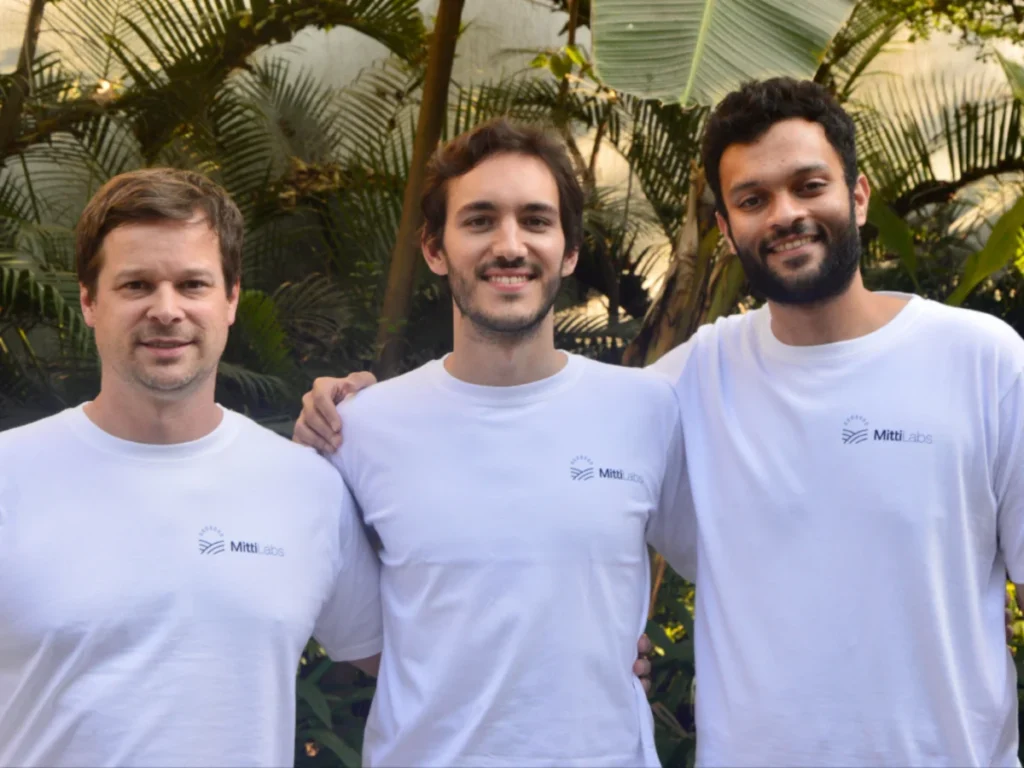
NEW DELHI — In what is being hailed as one of the most significant nature-based carbon offtake agreements in the agritech sector to date, Indian-founded climate tech startup Mitti Labs has signed a landmark four-year contract with technology giant Google. Under the agreement, Mitti Labs will supply 1 million verified carbon credits to Google through 2030, reinforcing a shared commitment to measurable corporate climate action, water conservation, and agricultural sustainability.
The high-profile partnership is expected to accelerate the adoption of climate-smart agricultural practices across vast stretches of South Asia, transforming traditional rice cultivation into a mechanism for global greenhouse gas mitigation while generating an invaluable secondary income stream for smallholder farmers.
Executive Summary & Core Transaction Metrics
While the specific financial valuation of the transaction has been kept under wraps by both parties, the structural details of the agreement highlight a mature and results-oriented approach to corporate carbon procurement:
- Volume and Timeline: A fixed contractual delivery of 1 million carbon credits, scheduled to be fulfilled progressively between 2027 and 2030.
- Payment Mechanism: Payments will be executed strictly upon the successful delivery and third-party verification of the carbon credits, bypassing any upfront financing mechanisms.
- Geographic Focus: The credits will primarily originate from sustainable rice farming initiatives spanning the southern Indian states of Andhra Pradesh, Telangana, and Karnataka.
- Current Footprint: Mitti Labs’ active agricultural programs currently cover more than 100,000 hectares (1 lakh hectares) across India, with aggressive scaling targets aimed at millions of hectares in the coming years.
Chronology of Growth: From Inception to Global Tech Partnership
The journey leading up to this monumental agreement with Google underscores the rapid maturation of Mitti Labs as a formidable player in the global voluntary carbon market (VCM) and climate tech ecosystem.
Early Foundations and Regional Scaling in India
Mitti Labs was founded with a singular, high-impact mission: to tackle agricultural emissions at their root while simultaneously improving the economic livelihood of rural farming communities. By focusing on South India—specifically Andhra Pradesh, Telangana, and Karnataka—the startup established robust localized networks, working directly with farming cooperatives and rural communities to build trust and demonstrate the tangible benefits of sustainable water and soil management.
The $9.5 Million Series A Funding Milestone
The Google offtake agreement arrives hot on the heels of another major institutional validation. Exactly one month prior to the announcement, Mitti Labs successfully closed a $9.5 million Series A funding round led by Aramco Ventures.
This substantial capital injection was earmarked for two primary strategic initiatives:
- Deepening and expanding domestic operations across major agrarian belts in India.
- Launching greenfield international pilot projects in Southeast Asian markets, beginning with the Philippines and extending exploratory operations into Indonesia.
The Google Offtake Agreement (Present Day)
The sealing of the four-year contract with Google serves as a powerful market validator. By locking in a multi-year purchase commitment for 1 million credits, Google has provided Mitti Labs with long-term revenue visibility, signaling to the broader venture capital and climate tech communities that nature-based, technologically verified agricultural interventions are commercially viable and scalable.
Supporting Data & Technological Innovation: How Rice Farming Drives Emissions
To understand the profound significance of Mitti Labs’ work, one must examine the unique environmental challenges posed by traditional rice cultivation, which feeds over half of the global population.
The Methane Dilemma in Paddy Fields
Rice paddies are notorious hotspots for anthropogenic greenhouse gas emissions, specifically methane ($textCH_4$). Under conventional farming practices, fields are continuously flooded with standing water to weed out unwanted vegetation and ensure optimal crop growth.
However, this continuous flooding creates anaerobic (oxygen-poor) soil conditions. These waterlogged environments become breeding grounds for methanogenic microbes—bacteria that naturally produce methane gas, which bubbles up into the atmosphere. Methane is a potent short-lived climate pollutant with a global warming potential significantly higher than carbon dioxide ($textCO_2$) over a 20-year horizon, making its reduction an urgent priority for immediate climate mitigation.
The Solution: Alternate Wetting and Drying (AWD)
To combat this, Mitti Labs implements and scales an agronomic technique known as Alternate Wetting and Drying (AWD), originally developed by the International Rice Research Institute (IRRI).
- Mechanics: Instead of keeping fields continuously flooded, AWD involves allowing the water level in the paddy to recede and the soil to dry periodically before the field is re-flooded.
- Environmental Impact: This cyclical drying introduces oxygen back into the soil, drastically inhibiting the activity of methane-producing microbes and reducing overall emissions.
- Resource Conservation: Beyond curbing emissions, AWD dramatically cuts down water usage—a critical advantage in water-stressed agricultural regions—while preserving or even enhancing crop yields.
Cutting-Edge MRV: The GeoAI Platform
A historical bottleneck in agricultural carbon markets has been the high cost and low accuracy of Measurement, Reporting, and Verification (MRV). Mitti Labs has systematically dismantled this barrier through proprietary technology.
The startup has developed an advanced GeoAI platform, built in part with support from a NASA grant. The platform synthesizes multiple layers of complex data, including:
- High-resolution synthetic aperture radar (SAR) imagery
- Advanced remote sensing capabilities
- Sophisticated biogeochemical models
- On-the-ground measurements, including physical flow meters to precisely track water savings
This rigorous technological stack allows Mitti Labs to accurately estimate and verify changes in greenhouse gas emissions and water consumption at scale, providing corporate buyers like Google with unassailable data integrity.
Official Responses and Stakeholder Perspectives
The partnership has garnered high praise from corporate sustainability leaders and startup executives alike, emphasizing the multi-dimensional benefits of the collaboration.
Google’s Commitment to Near-Term Atmospheric Impact
Kate Brandt, Chief Sustainability Officer at Google, emphasized the immediate, scalable benefits of the partnership, noting that Mitti Labs’ innovative methodology addresses multiple environmental crises simultaneously.
"Mitti Labs’ approach delivers critical near-term atmospheric impact by cutting methane emissions, while conserving billions of gallons of water and empowering smallholder farmers to deploy advanced water-management practices. We’re excited to partner with them to help accelerate and scale their solution across India," Brandt stated.
Google’s corporate procurement strategy increasingly favors high-integrity, nature-based removals and reductions that offer verified co-benefits, such as rural economic development and watershed protection.
Founders’ Vision: Validation and Global Expansion
Reflecting on the milestone, Xavier Laguarta Soler, Co-founder of Mitti Labs, highlighted what the partnership signifies for the company’s technological infrastructure and future roadmap.
"We are currently working on expanding both across India and Southeast Asia. This deal with Google doesn’t just validate the quality of the projects, the use of our MRV and the scalability of our projects, but will also help us scale our India projects," Laguarta Soler told Inc42.
Wider Implications for Agriculture, Markets, and Climate Action
The Mitti Labs-Google agreement carries far-reaching implications that extend well beyond the balance sheets of the two participating entities.
1. Empowering Smallholder Farmers Through Additional Income
One of the most transformative aspects of the initiative is its socioeconomic design. Farming communities are often the most vulnerable to the adverse effects of climate change, yet traditional agricultural practices offer thin and volatile profit margins.
By integrating farmers into the voluntary carbon market, Mitti Labs ensures that a significant share of the revenue generated from carbon credit sales flows directly back to the farming communities. This creates a powerful economic incentive for rural populations to abandon carbon-intensive habits and adopt sustainable, water-efficient farming techniques voluntarily.
2. Setting a New Benchmark for Corporate Net-Zero Strategies
As global regulatory scrutiny intensifies around corporate sustainability claims, buyers of carbon credits are facing unprecedented pressure to ensure absolute transparency, additionality, and permanence.
By committing to a fixed-volume, delivery-based offtake agreement backed by satellite-verified MRV data, Google is setting a gold standard for corporate procurement. This deal demonstrates how major technology enterprises can deploy their balance sheets to catalyze early-stage climate tech innovations in the Global South, where the potential for emissions reduction is highest.
3. Blueprint for Regional and Global Replication
With its initial beachhead firmly established in southern India and active expansion underway into Southeast Asian markets like the Philippines and Indonesia, Mitti Labs is proving that localized agricultural solutions can be systematically productized and scaled.
Rice is a staple crop across vast swathes of Asia, Latin America, and parts of Africa. If the MRV and AWD models pioneered by Mitti Labs can be successfully replicated across millions of hectares of global rice paddies, the cumulative impact on global methane abatement could be astronomical.
Conclusion
The four-year carbon offtake agreement between Mitti Labs and Google represents a watershed moment for agricultural climate tech. By marrying rigorous space-age technology—such as NASA-backed GeoAI monitoring—with grassroots agronomic practices like alternate wetting and drying, Mitti Labs has created a scalable blueprint for sustainable farming.
As the world races to meet ambitious climate targets ahead of 2030, partnerships of this magnitude prove that ecological restoration and economic empowerment can go hand in hand, turning the world’s paddy fields into frontline defenses against global climate change.