Strategic Shift at Zetwerk: Co-founder Rahul Sharma Eyes AI-Robotics Venture Amid IPO Momentum
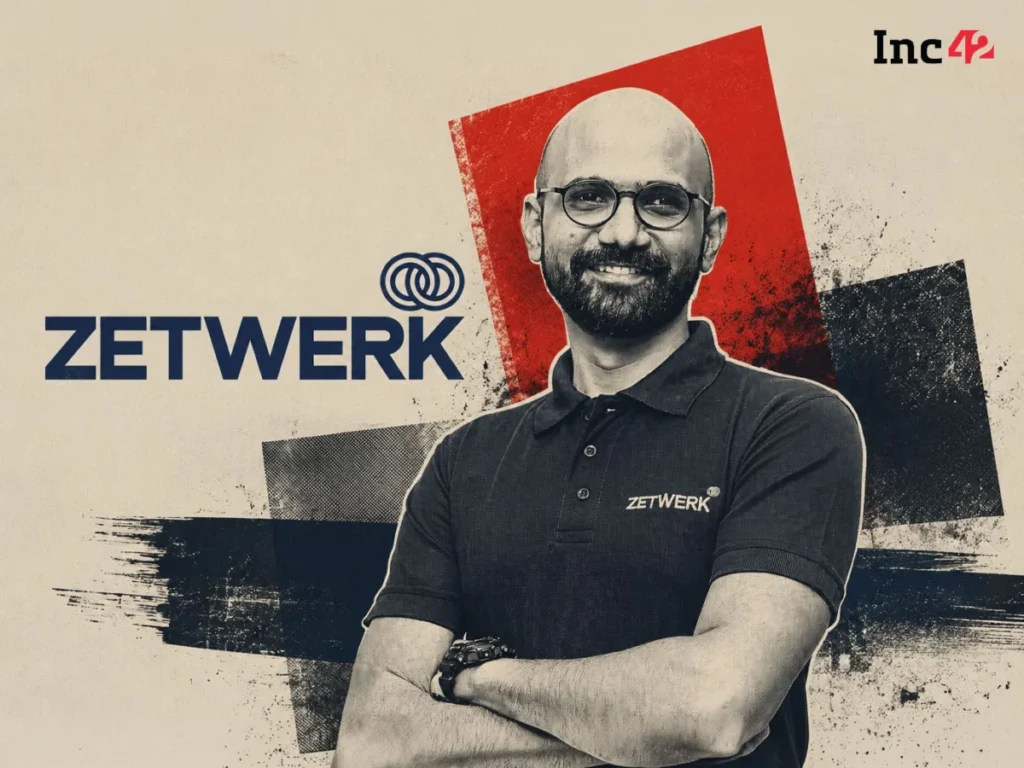
In a significant leadership realignment at one of India’s most prominent manufacturing unicorns, Rahul Sharma—co-founder and Managing Director of the precision manufacturing (electronics) business at Zetwerk—is stepping down from his executive duties. According to industry insiders, the move marks a transition to a non-executive role, signaling a pivot toward a new, ambitious entrepreneurial chapter: the launch of an AI-driven robotics venture.
The transition comes at a pivotal juncture for Zetwerk, which has just received the green light from the Securities and Exchange Board of India (SEBI) for its highly anticipated Initial Public Offering (IPO). While Sharma prepares to venture into the nascent but rapidly expanding field of artificial intelligence and robotics, the move highlights a broader trend among India’s seasoned startup veterans who are increasingly leveraging their expertise to capitalize on the country’s burgeoning deep-tech ecosystem.
The Strategic Pivot: From Precision Manufacturing to AI Robotics
Rahul Sharma, an IIT Roorkee alumnus with a professional pedigree that includes stints at BlackBuck and Schlumberger, has been instrumental in shaping Zetwerk’s trajectory since its inception in 2018. As the head of the company’s precision business, he played a vital role in positioning Zetwerk as a global player in electronics manufacturing.
Sources close to the development indicate that Sharma’s new venture will likely maintain a strategic tie-up with Zetwerk. While the new entity is expected to seek independent capital to fuel its growth, Zetwerk is reportedly exploring ways to back the venture, ensuring that the synergy between the parent company’s manufacturing prowess and the new firm’s AI-robotics innovation remains intact. Sharma is currently actively engaging with the investment community to secure the necessary capital to bootstrap the venture, which aims to bridge the gap between industrial automation and advanced AI.
Chronology of a Unicorn’s Rise and Leadership Evolution
To understand the weight of this transition, one must look at the meteoric rise of Zetwerk. Founded in 2018 by Amrit Acharya, Srinath Ramakkrushnan, Vishal Chaudhary, and Rahul Sharma, the company revolutionized the B2B contract manufacturing landscape.
- 2018: Zetwerk is founded, introducing a full-stack platform that connects clients with factories for industrial components, electronics, and renewable energy equipment.
- 2021: The company achieves "unicorn" status, crossing the $1 billion valuation mark after a successful $150 million funding round.
- March 2024: Zetwerk files its confidential Draft Red Herring Prospectus (DRHP) with SEBI, signaling its intent to go public.
- October 2024: SEBI grants approval for the IPO, which is expected to include a fresh issue of approximately $300 million and an Offer for Sale (OFS) component of $150 million.
- Present: Rahul Sharma transitions to a non-executive role, setting the stage for his next venture while the company prepares for its market debut.
Financial Health and Market Positioning
Zetwerk’s strength lies in its diversified, "asset-light" B2B model. By acting as the bridge between product design and factory execution, the company manages everything from procurement and quality control to logistics. Currently, the company operates over 100 production facilities globally, spanning India, the US, Germany, Spain, Vietnam, and Mexico.
The IPO Outlook
With over $700 million in total funding raised from marquee investors such as Peak XV Partners, Lightspeed, and Mars Growth Capital, Zetwerk is well-capitalized. The upcoming IPO, which also includes a reported pre-IPO funding requirement of $50 million to $60 million, is a testament to the company’s scalability. Analysts suggest that the timing of the IPO—coinciding with a global shift toward supply chain diversification—positions Zetwerk to leverage the "China Plus One" strategy, where global corporations seek to reduce dependency on Chinese manufacturing.
The Broader Ecosystem: A "Founder-Led" Exodus to New Frontiers
Rahul Sharma’s transition is not an isolated incident. It is part of a growing trend in the Indian startup ecosystem where early-stage co-founders, having scaled their initial ventures to maturity, are moving on to tackle more complex, technology-heavy problems.
This "founder-recycling" phenomenon is characterized by a move toward deep-tech, AI, and niche consumer solutions. Recent notable examples include:
- Gravity: Former Livspace co-founder Saurabh Jain and former CBO Lalit Mittal recently teamed up to launch a home interior materials venture, signaling a move toward digitizing traditional construction supply chains.
- Luxury For You: BharatPe co-founder Shashvat Nakrani is transitioning into a new role as co-founder and CEO of the Dubai-based luxury ecommerce platform, moving away from fintech toward high-end retail technology.
- Neo: Zeta founder Bhavin Turakhia recently unveiled "Neo," an AI-focused startup, underscoring the shift toward building proprietary AI models rather than just implementing them.
This wave of entrepreneurship is being fueled by an abundance of experienced talent, a deeper pool of venture capital, and a maturing domestic market that is ready for complex, high-barrier-to-entry solutions.
Implications for the Future of AI in India
The choice of "AI Robotics" as a domain for Sharma’s new venture is particularly timely. India’s AI market is currently on an explosive growth trajectory. Projections indicate that the sector will grow 5.3 times to reach a valuation of $126 billion by 2030. Furthermore, the integration of AI into industrial and manufacturing processes is expected to contribute approximately $1.7 trillion to India’s GDP by 2035.
By focusing on robotics, Sharma is positioning himself at the intersection of two critical sectors: hardware manufacturing (Zetwerk’s core) and the software intelligence layer (AI). This hybrid approach is increasingly viewed by investors as the "holy grail" of the next generation of industrial startups. If successful, this venture could potentially redefine how industrial automation is approached, not just in India, but globally.
Official Stance and Market Reaction
As of the time of publication, Zetwerk has not issued a formal response regarding the internal leadership transition or the potential partnership with Sharma’s new venture. However, market observers remain largely optimistic. Transitions of this nature are often viewed by institutional investors as a sign of organizational maturity. When founders transition to non-executive or advisory roles, it often allows the professional management team to take the reins, while the founder focuses on long-term R&D or "innovation-at-the-edge" projects that benefit the company’s ecosystem.
For the public shareholders, the key focus will remain on whether this transition impacts the company’s operational efficiency during the sensitive IPO window. However, given the robust leadership structure already in place at Zetwerk, most analysts expect a seamless transition.
Conclusion: A New Chapter for Industrial Tech
The exit of a co-founder from an executive role is often a moment of reflection for any unicorn. In the case of Zetwerk, it marks the end of an era where the primary focus was on establishing the foundational infrastructure of contract manufacturing. Rahul Sharma’s pivot to AI-robotics signifies a transition from building the platform to building the intelligence that will power the next generation of that platform.
As Zetwerk prepares to enter the public markets, it carries with it the confidence of its investors and the weight of a transformed manufacturing sector. Meanwhile, the birth of Sharma’s new venture will be watched closely—not just by the venture capital community, but by the entire Indian deep-tech sector—as a bellwether for the future of AI-driven industrialization in the country.
The story of Zetwerk is far from over; it is simply evolving, moving from a story of scale to a story of sustained, technology-led innovation.