The AI-Native Paradigm: Why India’s Tech Titans are Pivoting to a Second Act
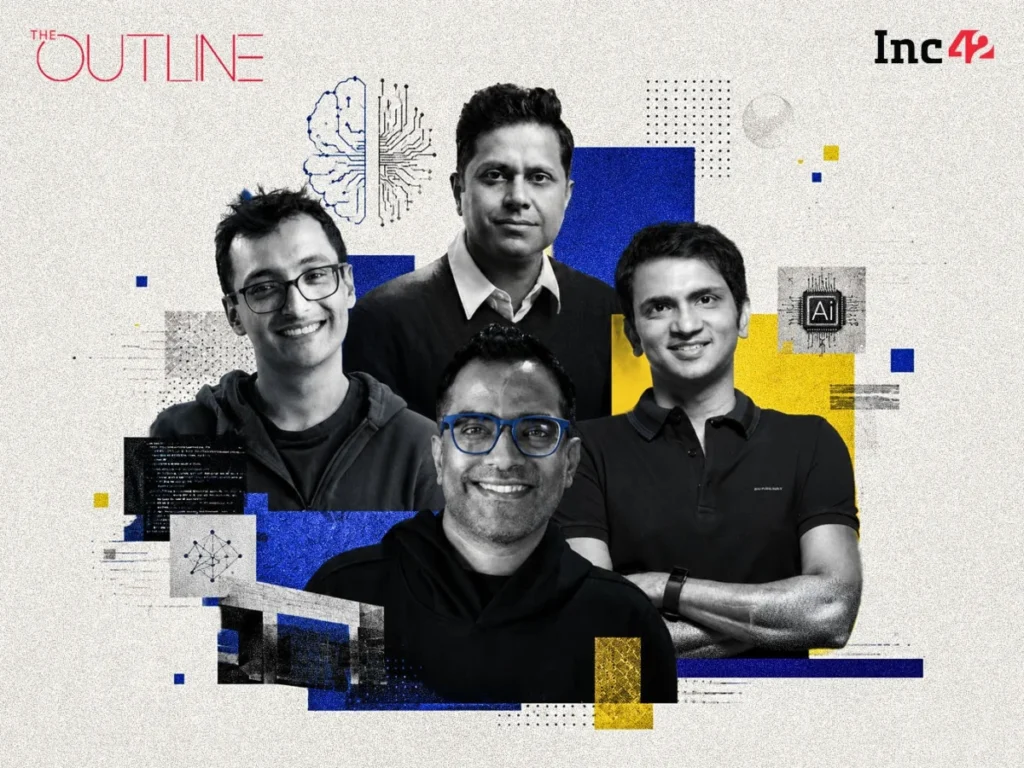
"Not using AI is like being left behind," Apple CEO Tim Cook once remarked. While the irony of this statement coming from a company often criticized for its slow, methodical approach to the generative AI revolution is palpable, the sentiment rings undeniably true for the global startup ecosystem. In India, however, the conversation has shifted. The era of merely "integrating" AI as a supplementary feature is over. A new, more ambitious breed of entrepreneur is emerging: the AI-native builder.
For many of India’s most successful founders—those who spent the last decade defining the mobile, e-commerce, and fintech landscapes—the current AI boom is not just another technological trend. It is a fundamental platform shift, comparable to the advent of the internet or the smartphone. They are not merely adding chatbots to legacy software; they are rebuilding the enterprise stack from the ground up, with AI agents at the core of the product architecture.
The Shift to AI-Native Architectures
The latest entrant to this exclusive club is Bhavin Turakhia, founder of Zeta. Earlier this week, Turakhia unveiled Neo, an AI-native workplace platform backed by a $30 million personal investment. Neo represents a departure from traditional SaaS; instead of simple AI assistants, the platform utilizes autonomous agents designed to work alongside employees, access deep organizational knowledge, and execute complex workflows without constant human intervention.
This is not an isolated experiment. It is part of a systemic "second act" playing out across the Indian startup landscape. Veterans who built the unicorns of the 2010s are returning to the arena, trading their old playbooks for a new mission: creating software that writes code, automates industrial processes, and performs tasks that previously required human oversight.
Chronology of the Second Act
The transition began in earnest as the dust settled on the first decade of India’s startup boom. While the first wave focused on solving "India-specific" problems—internet access, digital payments, and last-mile logistics—the current wave is global, aiming to redefine enterprise productivity.
- The Early Adopters: Mukesh Bansal, having scaled Myntra and later co-founded Cult.fit, was among the first to pivot. He launched Nurix AI to develop enterprise-grade AI agents for sales and operations. The recent acquisition of conversational AI startup Verloop signals his intent to create a dominant enterprise platform.
- The Coding Revolution: Former Dunzo co-founder Mukund Jha has pivoted to Emergent, a venture building AI-powered coding tools. By generating software rather than just assisting in code completion, Emergent is tapping into one of the most lucrative segments of the AI market: developer productivity.
- Supply Chain & E-commerce: Binny Bansal, co-founder of Flipkart, has launched Optra. The venture applies AI to the high-pressure world of supply chains and retail operations, where the mandate is to drive efficiency and margin expansion simultaneously.
- Healthcare & Beyond: Shashank ND, after a decade of building the health-tech giant Practo, has launched Cent, a venture focused on AI-driven diagnostic technologies. Similarly, Zetwerk co-founder Rahul Sharma recently stepped back from executive duties to launch an AI robotics venture, moving from physical manufacturing to autonomous mechanical intelligence.
The pattern is clear: the most seasoned operators in the ecosystem are betting that the "wrapper" phase of AI is ending, and the "agentic" phase—where AI takes autonomous action—is just beginning.
Supporting Data and Market Dynamics
The exodus of high-level talent from established companies to AI ventures underscores the gravity of this shift. We are seeing a brain drain from the upper echelons of Indian tech. Dream11’s CTO, Amit Sharma, recently stepped down after an 11-year tenure to pursue a new venture. Similarly, former OYO CPO and COO Anil Goel founded Nava, which has already secured $22 million in funding.
The market size for this transition is staggering. According to recent Inc42 estimates, India’s AI market is projected to surpass $126 billion by 2030. Enterprise software is expected to capture the lion’s share of this growth as traditional businesses look for AI solutions that offer measurable ROI rather than just "vanity" features.
The global context, particularly in Silicon Valley, reinforces this trend. The same migration is visible with industry icons like Reid Hoffman (Inflection AI) and former Google researchers Noam Shazeer and Daniel De Freitas (Character.AI). These founders are treating AI as a foundational layer, moving away from the "bolt-on" strategy that defined the early days of generative AI.

The "Capital Intensive" Challenge
While these serial founders possess an undeniable advantage in terms of institutional knowledge, networking, and credibility, they face a landscape far more hostile than the one they encountered a decade ago.
The barrier to entry for building "frontier" AI is exceptionally high. In the early 2010s, a consumer internet startup could be launched with minimal capital. Today, building a competitive AI product requires access to massive compute power, proprietary datasets, and high-end AI research talent.
The Cost of Competition
The capital required to train models and secure GPU clusters is pushing startup costs into territory that previously would have been considered "late-stage" funding. Indian founders are entering a ring where the heavyweights—OpenAI, Anthropic, Google, and Meta—are deploying billions. OpenAI alone has raised over $192 billion, while Anthropic has secured $130 billion.
Even for those not building foundation models, the infrastructure costs for scaling AI-native enterprise applications are daunting. The "familiarity" that serial founders bring—the ability to raise money and scale teams—will be tested against this new economic reality.
Implications for the Future
The success of these second-time founders will not be determined by their past exits or their ability to attract seed capital. It will be determined by their ability to identify "blind spots" left behind by the global incumbents.
- Product-Market Fit vs. Research: Global incumbents are focused on general-purpose intelligence. Indian founders have a window of opportunity to build vertical-specific, highly nuanced AI agents that solve granular problems in industries like manufacturing, logistics, and healthcare—areas where deep domain expertise matters more than raw compute power.
- The Talent War: As more executives leave their high-paying roles to launch AI startups, the battle for engineering talent will intensify. The ability to retain top-tier AI researchers and data scientists will become a more significant competitive advantage than traditional business strategy.
- Measurable Utility: The "experimentation" phase is over. Corporate clients are demanding proof of value. Startups that cannot demonstrate concrete efficiency gains or cost reductions will likely be culled in the next funding cycle.
Conclusion: A New Era of Competition
The pivot to AI-native businesses represents a maturation of the Indian startup ecosystem. We are moving from a phase of digital imitation to one of deep-tech innovation. However, the stakes have fundamentally changed.
The "second act" for India’s founders is not about repeating the success of the past; it is about surviving the complexities of the future. While they bring the experience of scaling companies from zero to a billion, the current AI landscape requires a different kind of agility—one that balances the need for massive capital with the necessity of hyper-focused, problem-solving innovation.
The founders mentioned—from Bhavin Turakhia to Mukesh Bansal—are effectively betting that the next set of global giants will not be born in the labs of Mountain View alone, but in the agile, enterprise-focused environments they are currently crafting. Whether this "experience-led" strategy can withstand the sheer capital might of global incumbents remains the central question of this decade. One thing is certain: the era of the AI-native startup is not coming; it is already here, and it is moving faster than anyone anticipated.