The End of the Arbitrage Era: Why Indian D2C Brands are Abandoning the ‘Performance-First’ Playbook
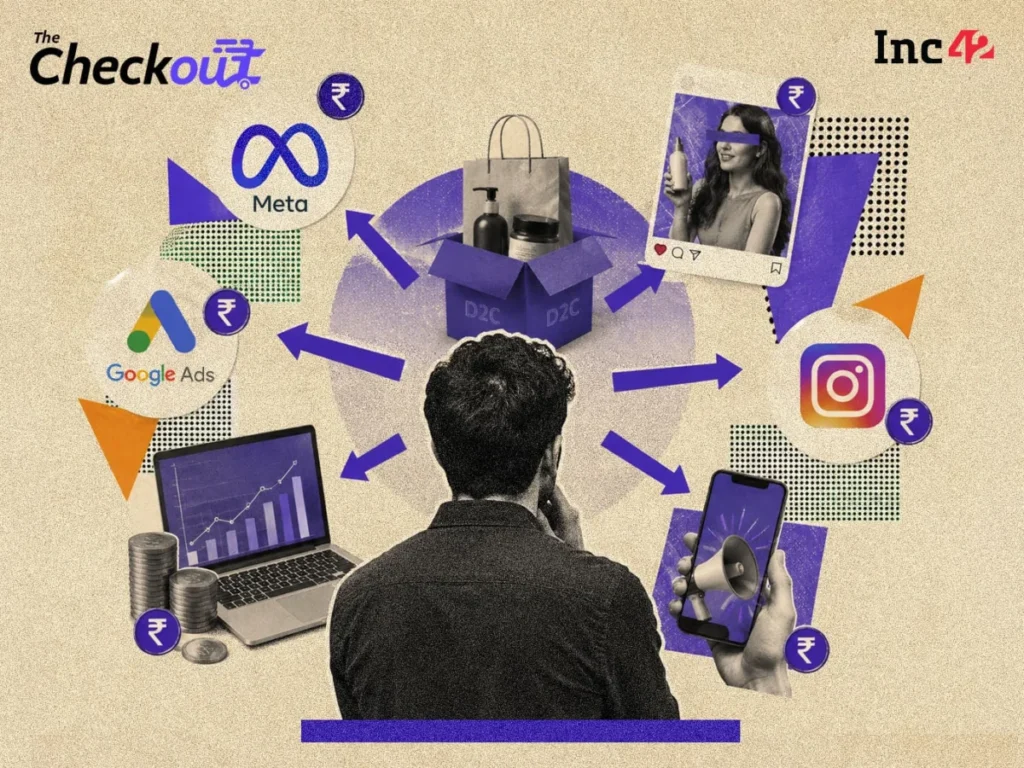
For over a decade, the Direct-to-Consumer (D2C) ecosystem in India operated on a singular, intoxicating promise: build a brand by "buying" customers on Meta and Google. With a credit card and a compelling creative, founders could scale from zero to millions in revenue almost overnight. It was the era of the "performance marketing" obsession, where success was measured by a single metric—Return on Ad Spend (ROAS)—and growth was fueled by cheap capital and an abundance of digital real estate.
Today, that playbook is not just fraying; it is becoming a liability. As Customer Acquisition Costs (CAC) soar, platform algorithms become less transparent, and the rise of AI-driven product discovery threatens to decouple the brand from the consumer, Indian D2C brands are initiating a painful but necessary pivot. They are moving away from the "growth at all costs" mentality toward a future defined by retention, organic brand-building, and omnichannel profitability.
The Changing Economics of D2C: A Chronology of the Shift
To understand the current crisis of identity in the D2C space, one must look at how the model evolved.

- 2015–2019: The Gold Rush: This was the era of digital arbitrage. Brands entered the market with 95% of their budget allocated to performance marketing. The math was simple: if you spent ₹1 to acquire a customer and earned ₹3 in lifetime value, you scaled aggressively.
- 2020–2022: The Pandemic Boom: COVID-19 accelerated online adoption, but it also flooded the digital ecosystem with competition. As every traditional FMCG player rushed to the web, auction prices for ad impressions skyrocketed.
- 2023–2024: The Reckoning: The "cheap money" era ended. Founders realized that relying on Meta and Google to "manufacture" demand was unsustainable. Profit margins were being eroded by the mounting "refresh tax"—the necessity to constantly cycle new ad creatives just to maintain stagnant conversion rates.
- 2025–Present: The Post-ROAS Era: Today, the focus has shifted. Brands are no longer asking, "How much can we spend?" but rather, "How much of this relationship do we actually own?"
The AI Disruption: The "Invisible" Customer Journey
One of the most profound challenges facing modern brands is the rise of AI assistants and LLM-powered shopping agents. For years, the digital funnel was linear: an ad appeared, a user clicked, a tracking pixel fired, and a sale was recorded.
Viren Inaniyan, founder of AI commerce infrastructure startup TruCommerce, notes that the US market is already experiencing a "black hole" in attribution. "Consumers are now getting recommendations without even visiting a brand’s website," Inaniyan explains. "This has made marketing much harder to measure. When an AI assistant recommends a product based on sentiment analysis or aggregated reviews, the brand loses the ability to attribute the sale to a specific campaign."
This decoupling means that the old "click-to-purchase" tracking is becoming obsolete. Brands that rely on granular tracking to justify their existence are finding themselves blind. Visibility, in the age of AI, is no longer bought; it is earned through high-quality product data, authentic consumer reviews, and consistent brand presence across the open web.

Why ROAS is No Longer the "North Star"
The industry is witnessing a quiet departure from ROAS as the primary KPI. Sunitha Viswanathan, partner at Kae Capital, captures the sentiment perfectly: "A brand can show a 3X ROAS on a dashboard, and that number can still be hiding a real profit margin of just 5% once you subtract the cost of goods, high return rates, and heavy discounting."
The Metrics That Matter Now:
- MER (Marketing Efficiency Ratio): Total revenue divided by total marketing spend. It removes the bias of platform-specific attribution and provides a holistic view of the business.
- Blended CAC: The average cost to acquire a customer across all channels, including organic and paid.
- Contribution Margin After Marketing Expenses (CMAME): A brutal but necessary metric that reveals if a brand is actually making money on its unit economics or just subsidizing sales.
Ashutosh Valani, co-founder of Renée Cosmetics, provides a sobering case study. When he launched five years ago, the company’s ad-spend-to-revenue ratio was 1:1. While that has improved to 0.45:1 today, the expected drop below 40% never materialized. The rise of influencer marketing costs and competition from legacy FMCG giants has turned digital marketing into a permanent, high-cost operational expense rather than a temporary growth lever.
Implications: The Move Toward Omnichannel and Retention
The consensus among investors and operators is that the "Meta-arbitrage" business model is dead. Building a brand purely through performance marketing worked only because the digital auctions were undersaturated.

"Neither cheap capital nor undersaturated auctions are coming back," says Viswanathan.
This reality is forcing a 20-30% reallocation of budgets from pure acquisition to retention and brand-building. Brands are now investing in first-party data, community engagement, and offline expansion. Renée Cosmetics, for instance, now derives 65% of its sales from offline retail, a testament to the fact that the most "digital-first" brands are becoming the most "omnichannel-dependent."
The Operator Playbook: A Strategic Framework
In light of these shifts, Saloni Anand, founder of Traya Health, suggests a rigorous four-point strategy for modern D2C operators:

- Rationalize Spending: Never scale digital ads until you have proof of a "communication product-market fit." If the core messaging doesn’t resonate organically, no amount of ad spend will fix it.
- Continuous Iteration: Do not treat ad creatives as static assets. Constantly tweak pricing, visual aesthetics, and USPs based on real-time feedback loops rather than blindly scaling.
- Cohort-Based Targeting: Move away from generic influencer campaigns. Use specific creator cohorts for language-based or geography-based outreach. This increases attribution clarity and drives deeper community trust.
- The "Logo Test": If you remove the logo from your advertisement, would a consumer know who it is? If not, you are selling a commodity, not a brand.
Industry Spotlight: The Pulse of the Market
The broader ecosystem reflects these shifts toward diversification and profitability:
- Zepto’s Premium Pivot: The quick-commerce giant is launching "Select," a premium grocery service, to combat the margin-crushing nature of low-value, high-frequency deliveries.
- Zomato’s AI Integration: Zomato is piloting voice-bot technology, signaling that even in the food delivery space, the interface of the future is conversational, not visual.
- Offline Ambitions: Brands like Open Secret have raised significant capital (₹50 Cr) specifically to deepen their offline retail footprint, proving that digital-native brands now view physical shelves as a primary growth driver.
- Anmasa’s Funding: The ₹30 Cr infusion into Anmasa highlights continued investor interest in niche grocery, provided the brand has a clear path to regional dominance.
Conclusion: The New Foundation
The "End of the ROAS Era" is not a death knell for D2C; it is a coming-of-age. The brands that emerge successful in the next five years will be those that stop viewing the internet as a vending machine for customers and start treating it as a platform for building long-term equity.
Sustainable growth in the current climate requires a trifecta: an obsession with profit-focused metrics, an early-mover advantage in AI-driven discovery, and a relentless focus on the "omnichannel" customer experience. The era of shortcuts is over. The era of the brand has begun.