The Monetization of Trust: Decoding the Rise of Big Media Product Reviews
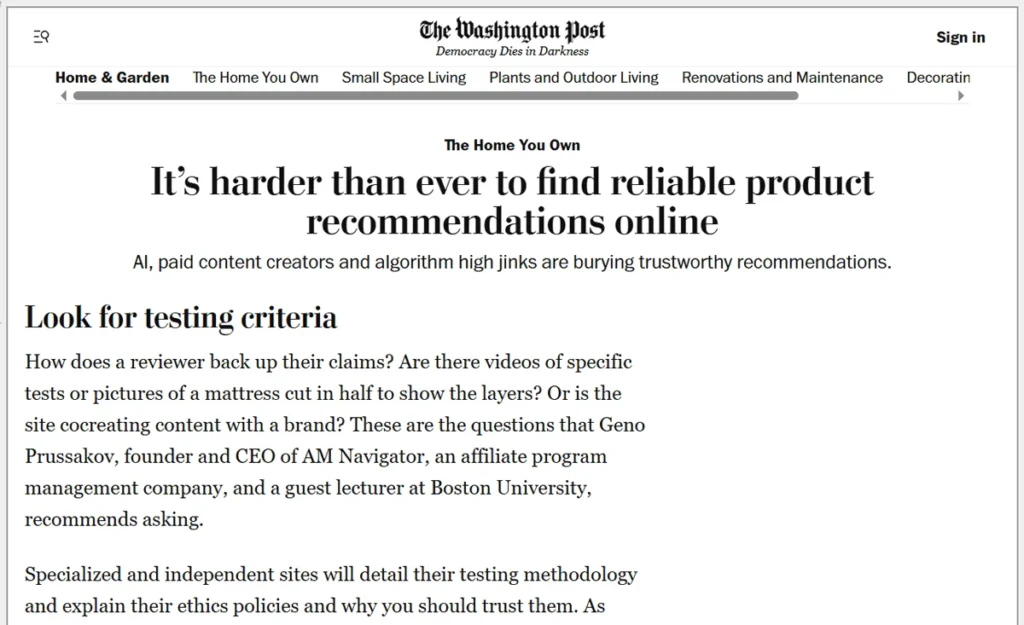
In an era where digital content is synonymous with commerce, the line between editorial integrity and affiliate marketing has become increasingly porous. Earlier this year, The Washington Post reached out to me for insight into a growing industry trend: the transformation of legacy media outlets into massive affiliate recommendation engines. While my contribution to their January 13th piece, "How to navigate the murky world of online product reviews," provided a concise snapshot of the issue, the landscape is far more nuanced than a soundbite can capture.
As digital publishers face declining print revenues and the volatility of traditional advertising, many have pivoted toward "commerce content"—product roundups, "best-of" lists, and curated shopping guides. But as these outlets leverage their search engine authority to rank for high-intent keywords, consumers are left asking a fundamental question: Is the "Best Vacuum of 2025" list truly a result of rigorous testing, or is it a byproduct of a lucrative financial arrangement?
The Evolution of Authority: How Big Media Became the New Mall
For decades, media brands built their reputations on investigative journalism and cultural commentary. Today, that same institutional trust is being deployed to capture the "middle of the funnel" in the consumer journey.
The strategy is simple yet highly effective: identify high-volume search queries, produce comprehensive content that ranks on the first page of Google, and insert affiliate links that generate a commission for every sale. When a major publication—be it The New York Times’ Wirecutter, CNN Underscored, or The Independent’s IndyBest—recommends a product, it carries a weight that a smaller, niche blog cannot replicate.
The Mechanism of Monetization
The monetization of authority is not inherently malicious, but it is systemic. Publishers typically operate through a combination of:
- Affiliate Commissions: A percentage of the sale price is paid to the publisher when a reader clicks a link and completes a purchase.
- Placement Fees: In some instances, brands may negotiate for guaranteed visibility within a roundup.
- EPC Guarantees: Earnings-per-click guarantees ensure that the publisher earns a baseline revenue regardless of conversion volatility.
While these models sustain journalism, they create a conflict of interest that is often obscured from the average reader.
Behind the Curtain: How Major Publishers Maintain Standards
Having spent years at AM Navigator managing affiliate programs and collaborating with large-scale media publishers, I have observed that the reputable players take this transition quite seriously. They recognize that their brand equity is their most valuable asset; once they lose the trust of their readers, the revenue stream dries up.
To mitigate bias, top-tier media outlets typically employ four primary safeguards:
1. The "Church and State" Separation
Most reputable organizations maintain a strict divide between the editorial team and the commercial/affiliate team. Writers and product testers are often instructed to choose products based on performance, price, and features, with no knowledge of which merchants offer higher commission rates. The commercial team then retroactively adds affiliate links to the content already vetted by the editorial staff.
2. Standardized Testing Protocols
Institutional publishers often invest in dedicated lab spaces. They do not merely "read reviews"; they put products through stress tests. Whether it’s measuring the decibel level of a blender or the battery drain of a smartphone, the goal is to create data-driven benchmarks that justify the recommendation.
3. Transparent Disclosure Policies
Regulatory bodies like the FTC (Federal Trade Commission) mandate clear disclosure. You will often see a notice at the top of a page stating, "When you buy through our links, we may earn a commission." While some critics argue this is insufficient, it remains the standard for legal compliance.
4. Continuous Product Audits
High-performing outlets understand that a product that was "the best" in 2023 might be obsolete by 2025. They maintain ongoing update cycles, revisiting older articles to ensure recommendations remain relevant and to remove products that have been discontinued or have suffered from quality control issues.

The Hidden Influence: When Money Trumps Merit
Despite these safeguards, the influence of money cannot be entirely erased. In my experience, there are moments where financial arrangements skew rankings. This occurs through several, often subtle, mechanisms:
- Commission Rate Incentives: If a merchant offers a 10% commission while a competitor offers 2%, the pressure to prioritize the 10% product is significant, especially when the products are functionally similar.
- Exclusivity Agreements: Some brands negotiate for "top-of-list" placement in exchange for a higher affiliate payout.
- Pressure on EPCs: If a major publisher’s commercial team feels the pressure of quarterly revenue targets, they may nudge the editorial team to prioritize brands that have a higher "Earnings Per Click" potential, favoring higher-priced items over better-value alternatives.
The Consumer’s Toolkit: How to Shop Smart
If you are a consumer navigating this landscape, you should treat every recommendation as a piece of "sponsored advice." Here are four strategies to ensure your buying decisions are based on your needs, not a marketing budget.
1. Seek Multiple Sources of Truth
Never rely on a single publication. If you are looking to buy a high-ticket item, compare the recommendations across three different outlets. If one specific brand appears at the #1 spot on every site, it might be a genuinely superior product—or it might be the only one with an affiliate program aggressive enough to capture all the publishers.
2. Look for "The Negative"
Genuine reviews almost always highlight a flaw. A review that describes a product as "perfect" in every regard is a red flag. Look for sections detailing "cons" or "who this product is NOT for." If a piece is purely promotional, it is likely an advertorial rather than an objective review.
3. Dig Into the Methodology
Read the section on how they tested the product. Did they actually use it, or did they aggregate other people’s opinions? Did they provide original photography of the product in use, or are they using stock images provided by the manufacturer? Original, hands-on content is the hallmark of a legitimate review.
4. Check the Date of the Article
In the age of AI-generated content, many "best of" lists are updated with software that simply swaps out dates without actually re-testing products. Check the "last updated" timestamp and look for evidence that the content has been refreshed with new insights, not just a new year in the headline.
Implications: The Future of Media Trust
The trajectory of this industry suggests that we are moving toward a "Pay-to-Play" environment where search rankings are increasingly dominated by those with the largest budgets for affiliate management.
For the average consumer, this means the barrier to entry for finding honest information is rising. The internet is no longer a wild, decentralized landscape of hobbyist bloggers; it is a battleground for large media corporations competing for your "click-to-buy" revenue.
However, there is a silver lining. As consumers become more sophisticated, the market will eventually demand greater transparency. We are already seeing a rise in newsletters, independent review sites, and community-driven platforms that operate on subscription models rather than affiliate commissions. These outlets provide a necessary counter-balance to the big media juggernauts.
The bottom line remains: Trust is earned through transparency. As we look toward the future of digital commerce, the publishers that survive will be the ones that put the reader’s experience above their affiliate margins.
What do you think? Have you ever felt misled by a "best of" list, or do you find these roundups genuinely helpful in narrowing down your choices? The comments section is open for your insights. I promise to respond to every point raised. Let’s keep the conversation going.