Shaping the Future: PM Modi Leads 11th NITI Aayog Governing Council to Chart Course for ‘Viksit Bharat @2047’

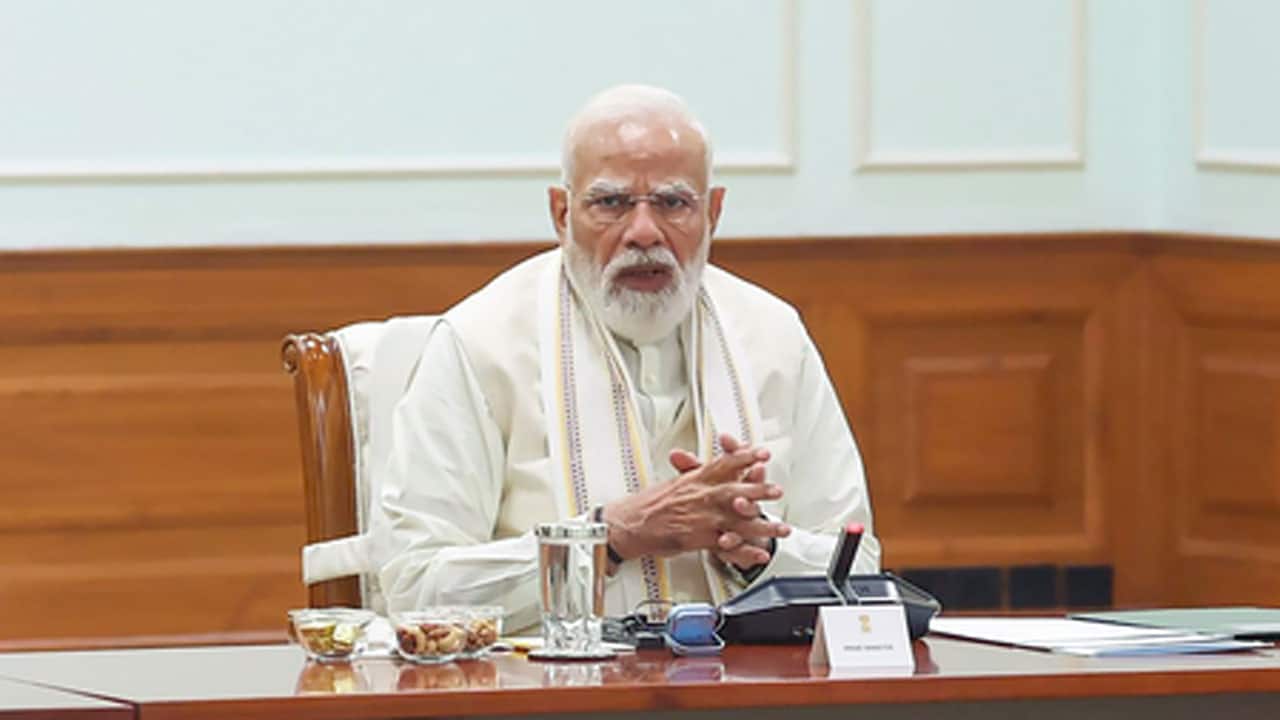
New Delhi: As India stands at a critical juncture in its developmental trajectory, Prime Minister Narendra Modi is set to preside over the 11th Governing Council Meeting of NITI Aayog at the Rashtrapati Bhavan Cultural Centre this Thursday. This high-level assembly, which serves as the premier platform for collaborative federalism, aims to formalize a roadmap for the nation’s ambitious vision of ‘Viksit Bharat @2047’—a blueprint for a developed, inclusive, and prosperous India by the centenary of its independence.
With the overarching theme of "Inclusive Human Development for Viksit Bharat @2047," the meeting marks a strategic shift toward a citizen-centric development model. The objective is clear: to ensure that the fruits of India’s rapid economic growth reach every corner of the country, leaving no demographic, region, or socio-economic group behind.
The Strategic Core: A Vision for Inclusive Growth
The Governing Council Meeting is not merely a consultative gathering; it is designed to be a definitive action-oriented summit. According to an official statement, the council will deliberate on the framework for realizing an inclusive development model that prioritizes the well-being of every Indian citizen, regardless of age, gender, or regional affiliation.
The Four Pillars of Human Capital
At the heart of the discussion is a sophisticated framework anchored by four foundational pillars:
- Foundational Human Capital and Future-Ready Skills: Recognizing that India’s primary strength lies in its demographic dividend, the council will focus on reforming education to align with global standards and the needs of a digital-first economy.
- Productive Employment, Entrepreneurship, and Decentralized Growth: The strategy emphasizes moving beyond urban-centric development, promoting entrepreneurship at the grassroots level, and fostering localized economic hubs.
- Health, Nutrition, and Wellbeing: Sustained growth is contingent upon a healthy population. The council will review initiatives aimed at universalizing access to quality healthcare and nutrition, particularly for vulnerable populations.
- Equity and Dignity for All: Central to the "Inclusive" theme is the mandate to bridge socio-economic divides, ensuring that the marginalized segments of society are active participants in the national growth story.
Chronology of Consultations: From Chief Secretaries to the Governing Council
The groundwork for this 11th Governing Council Meeting has been meticulously laid over the past several months, culminating in a series of intense administrative consultations.
The process gained significant momentum during the 5th National Conference of Chief Secretaries, held from December 26 to 28, 2025. This conference acted as the technical engine room for the current summit, where top bureaucrats from every state and Union Territory debated granular policy interventions. The recommendations emerging from those three days of intense deliberations—spanning themes such as early childhood education, the building blocks of schooling, the creation of a future-ready workforce through skilling, the integration of a knowledge-based economy, and the expansion of sports and extracurricular activities—will now be placed before the Prime Minister and the Chief Ministers for political endorsement and policy integration.
By bridging the gap between bureaucratic recommendations and political consensus, the NITI Aayog is ensuring that the transition from policy drafting to implementation is seamless.
Collaborative Federalism: The Role of States and UTs
A hallmark of the NITI Aayog model is "Team India"—the collaborative spirit between the Union and the States. This meeting will see a massive turnout of the country’s top leadership, including Chief Ministers, Lieutenant Governors, and Administrators of Union Territories.
Aligning State Visions with National Ambition
A critical thrust of the meeting is the alignment of state-specific development visions with the national objective of ‘Viksit Bharat @2047.’ Recognizing that India’s diversity necessitates tailored solutions, the Council aims to create a unified implementation roadmap.
"The focus is on leveraging key enablers—governance, Digital Public Infrastructure (DPI), convergence, partnerships, and data-driven systems," the official statement noted. By utilizing DPI, states can ensure that welfare schemes reach the last mile with minimal leakage, while data-driven systems allow for the accountability of short, medium, and long-term outcomes.
Supporting Data and the Economic Imperative
While the meeting focuses on policy, the backdrop is India’s robust economic performance. With India consistently ranking as one of the fastest-growing major economies globally, the Governing Council is looking to capitalize on this momentum.
The Shift to Productivity and Entrepreneurship
The Council will deliberate on specific measures to promote entrepreneurship. With the global supply chain diversification and the "Make in India" initiative, the focus is on scaling up MSMEs (Micro, Small, and Medium Enterprises) and fostering an environment where startups can thrive outside of the traditional Tier-1 metropolitan hubs.
Data-driven insights from the NITI Aayog suggest that decentralized growth—moving the focus from major hubs to smaller cities—is the only way to manage the massive urbanization shift expected over the next two decades. By integrating digital infrastructure into the rural economy, the government hopes to create "productive employment" that moves people out of low-yield agriculture and into the manufacturing and services sectors.
Implications: Building Accountability and Impact
The most significant takeaway from the 11th Governing Council Meeting is the emphasis on accountability. In past iterations, policy discussions were often criticized for being broad and aspirational. This year, the focus has shifted toward "concrete, measurable outcomes."
Tracking Progress
The NITI Aayog has proposed a structured mechanism to track progress. This includes:
- Performance Metrics: Every state will be monitored on specific development indicators aligned with the national goals.
- Institutional Accountability: The inclusion of Union Ministers as ex-officio members ensures that central ministries are aligned with state requirements, reducing the red tape that often hampers project execution.
- Convergence: By forcing the convergence of various central and state schemes, the government aims to eliminate the duplication of efforts and maximize the impact of every rupee spent on development.
Official Perspective and Future Outlook
The NITI Aayog, as the government’s premier think tank, serves as the bridge between the political vision of the Prime Minister and the administrative realities of the states. By involving the Vice Chairman, Members, and the CEO of NITI Aayog alongside Union Ministers and state heads, the government is signaling that ‘Viksit Bharat @2047’ is not just a slogan, but a time-bound project.
As the meeting proceeds at the Rashtrapati Bhavan Cultural Centre, the nation’s gaze is fixed on the potential announcements. Analysts suggest that this meeting could herald a new era of "cooperative federalism," where the success of a state is directly tied to the success of the nation.
Conclusion
The 11th Governing Council Meeting represents a pivotal moment in India’s administrative history. By centering the discourse on "Inclusive Human Development," the government is acknowledging that for India to become a global leader by 2047, it must first solve the challenges of equity, health, and skill-based employment at home.
The roadmap generated here will likely define the policy priorities for the next two decades. As Prime Minister Modi steers this collective exercise, the message to the nation is clear: the path to a developed India is built on the foundation of every citizen’s progress, facilitated by a transparent, digital, and accountable governance structure.
The deliberations conclude with a promise of a unified India, working in tandem across party lines and regional boundaries to achieve the ultimate goal: a nation that is not only economically powerful but also socially inclusive and human-centric.