Reliance Retail’s Strategic Pivot: Navigating the High Cost of Quick Commerce Supremacy
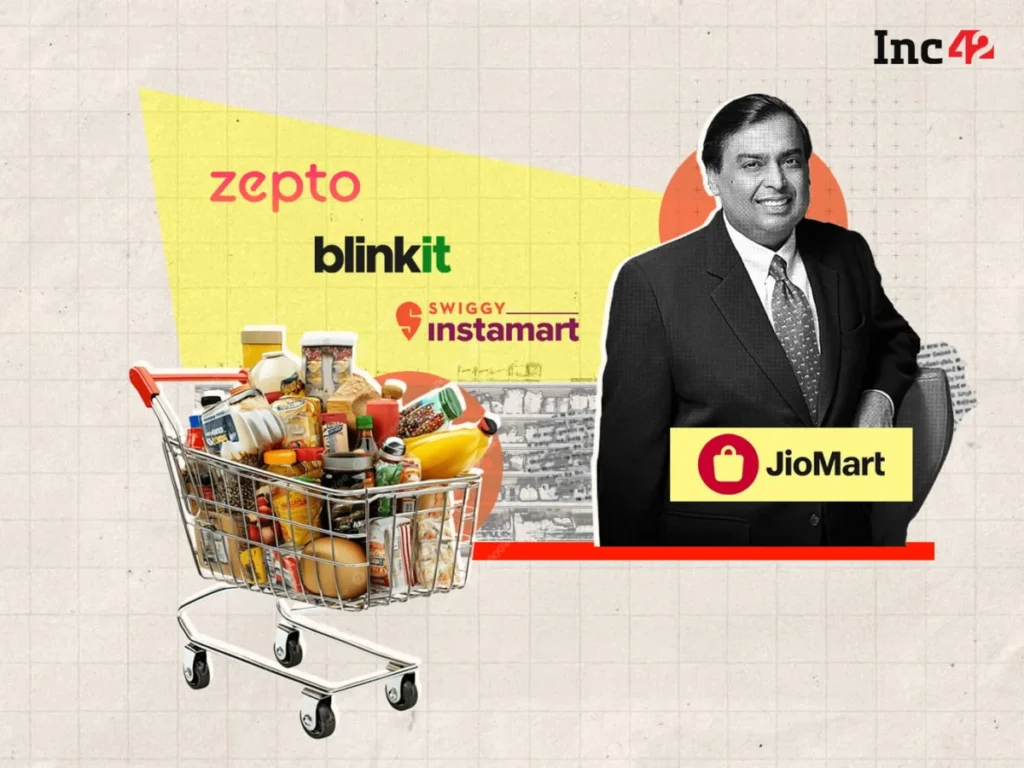
In the hyper-competitive landscape of Indian retail, the battle for consumer convenience has shifted from long-term brand loyalty to the immediacy of the "quick commerce" promise. Reliance Retail Ventures Ltd. (RRVL), the retail arm of India’s most valuable conglomerate, finds itself at a critical juncture. While its revenue streams remain robust, the company’s recent Q1 FY27 financial results reveal a tightening squeeze on profitability—a direct consequence of its aggressive capital deployment into hyperlocal delivery infrastructure.
As the retail giant balances its massive physical footprint with a digital-first strategy, the market is closely watching whether these heavy investments will yield long-term dominance or continue to erode margins in the face of nimble, pure-play rivals.
The Financial Snapshot: Growth Amidst Margin Erosion
For the quarter ending in Q1 FY27, Reliance Retail reported a mixed bag of results that underscore the high price of market expansion. Despite a commendable 8.2% year-on-year (YoY) increase in operational revenue, which climbed to ₹79,745 Cr from ₹73,720 Cr in the same quarter last year, the company’s bottom line took a significant hit.
The most telling metric was the EBITDA margin, which contracted by 80 basis points, sliding to 7.9% from 8.7% in Q1 FY26. Sequentially, the margin remained stagnant at 7.9% compared to Q4 FY26. This contraction translated into a 1.1% dip in absolute EBITDA, which stood at ₹6,309 Cr against ₹6,381 Cr in the year-ago period. Ultimately, the company’s net profit plummeted by 14.2%, falling to ₹2,806 Cr compared to the ₹3,271 Cr reported in Q1 FY26.
These figures illustrate a clear narrative: while Reliance Retail is successfully scaling its top line, the cost of acquiring and serving customers in the quick-commerce segment is rising faster than the revenue it currently generates.
The "Hyperlocal" Strategy: Differentiating from the 10-Minute Crowd
Reliance Retail’s approach to quick commerce is distinct from the aggressive 10-minute delivery model championed by market incumbents like Blinkit, Zepto, and Swiggy Instamart. Instead of focusing solely on ultra-short-duration convenience, RRVL has leaned into a "hyperlocal" strategy that prioritizes a 30-minute delivery window for grocery and everyday essentials.
This infrastructure-heavy approach involves the strategic placement of fulfillment centers and the integration of the company’s massive network of physical retail stores into the digital supply chain. By leveraging its existing brick-and-mortar assets, Reliance aims to create an omnichannel moat that pure-play startups cannot easily replicate. However, this strategy requires substantial fixed-cost investments in logistics, technology, and last-mile connectivity.
The company has explicitly attributed the recent EBITDA erosion to these "associated infrastructure investments." In the eyes of Reliance management, this is a calculated trade-off. The current expenditure is framed not as a loss, but as a "build-out" phase, essential for establishing the scale required to dominate the next decade of Indian retail.
Chronology of Expansion and Digital Integration
The push toward digital and quick commerce did not happen overnight. Over the past several quarters, Reliance has systematically integrated its retail empire with its digital arm, JioMart.
- Q4 FY26 Performance: JioMart reported a 116% YoY surge in online grocery orders, with the platform contributing 13.4% to the company’s D2C grocery revenue—a 160-basis-point increase.
- The Rise of Ajio Rush: Doubling down on speed, Reliance launched "Ajio Rush," an apparel delivery service promising products within four hours. The service saw a massive 136% quarter-on-quarter growth in Q1 FY27, signaling that the "need for speed" extends beyond groceries into fashion and lifestyle segments.
- Omnichannel Reach: JioMart has successfully extended its two-hour delivery service for apparel and electronics to over 5,500 pincodes. This is supported by more than 2,500 digital and fashion stores that act as micro-warehouses, effectively blurring the lines between offline and online commerce.
Supporting Data: A Deep Dive into Performance Metrics
While EBITDA margins are under pressure, other operational metrics suggest that the underlying ecosystem is gaining traction. The active seller base on JioMart grew by 26% YoY, indicating that Reliance is successfully attracting a wider pool of merchants to its digital platform.
Furthermore, digital commerce is increasingly becoming a significant contributor to specific categories. For example, digital channels now account for 27.3% of Reliance Retail’s total apparel and footwear revenue, a healthy increase of 490 basis points YoY. This indicates that the company’s omnichannel strategy—allowing customers to browse online and pick up or receive from a local store—is resonating with the Indian consumer.
The broader Reliance ecosystem also continues to provide a massive cross-selling opportunity. Reliance’s digital arm, Jio Platforms, reported a 9.2% rise in consolidated net profit to ₹7,764 Cr, while JioHotstar hit a milestone of 530 million monthly active users (MAUs). With the IPL 2026 drawing a record 700 million viewers on the digital platform, the potential for integrating retail marketing with entertainment content remains a massive, albeit nascent, advantage for the conglomerate.
Official Responses and Management Outlook
In the investor presentation accompanying the Q1 FY27 results, Reliance Retail leadership remained steadfast in their long-term vision. The company acknowledged that the "build-out of hyper-local delivery infrastructure" would continue to impact margins in the near term.
"This will provide significant scale and generate value creation opportunities in coming years," the company stated, emphasizing that the current phase is a foundational one.
Isha Ambani, Executive Director of RRVL, reinforced this sentiment: "Our continued investment in digital commerce underscores the transformative power of our digital platforms. Our expanding customer base, widest store network, and growing omnichannel capabilities position us well to continue fulfilling every need, every dream, for every Indian, every day."
The management’s messaging is clear: the current margin pressure is a temporary hurdle in a marathon race to own the Indian consumer’s wallet.
Implications: The Long Game vs. Short-Term Volatility
The market’s reaction to these results—and the broader economic implications—are twofold.
1. The Capital Intensity of Quick Commerce
Reliance is proving that even a retail giant with deep pockets faces the "curse of the last mile." Delivering goods in under 30 minutes is inherently expensive. The high cost of labor, fuel, and storage, combined with the need for high order density, means that profitability in this sector remains elusive. Reliance’s willingness to absorb these costs suggests it is prepared to engage in a war of attrition, potentially pushing out smaller, less-capitalized players.
2. The Omnichannel Moat
The most significant implication is the long-term competitive advantage of Reliance’s store network. Unlike pure-play quick commerce companies that rely on dark stores, Reliance can utilize its existing retail footprint to fulfill orders. This hybrid model—where a store serves both as a physical destination and a distribution hub—could eventually lower the cost of delivery compared to the pure-play model, provided the technology and logistics are optimized correctly.
3. Investor Sentiment
Despite the dip in net profit, Reliance Industries (RIL) shares ended the trading session following the results 2.59% higher, closing at ₹1,326.5. This suggests that investors are looking past the quarterly earnings fluctuations, focusing instead on the company’s revenue growth and its successful integration of digital platforms. The market seems to trust the "Reliance Playbook": invest heavily to capture market share, build an ecosystem, and then pivot to monetization.
Conclusion
Reliance Retail’s Q1 FY27 results are a snapshot of a company in transition. The decline in EBITDA and net profit is a stark reminder of the financial toll exacted by the race for quick commerce dominance. However, the consistent double-digit growth in digital commerce, the expansion of the Ajio Rush service, and the strengthening of the JioMart platform demonstrate that Reliance is not merely participating in the retail evolution—it is actively steering it.
For the next few quarters, analysts will likely keep a close watch on whether Reliance can stabilize its margins while maintaining this aggressive growth pace. The company’s ability to leverage its 5,500-pincode reach and convert its digital user base into loyal retail shoppers will be the ultimate test of its strategy. While the short term may be characterized by "margin erosion," Reliance’s long-term bet is that the infrastructure it is building today will become the bedrock of the Indian retail economy tomorrow.