Beyond the Ad-Spend Trap: Why Audience Intelligence is the New Competitive Frontier
For decades, the digital marketing playbook has remained remarkably static. Budgets are funneled into a familiar triumvirate: Google Ads, LinkedIn campaigns, and Meta retargeting. These platforms offer a seductive promise—a clear, measurable path to Return on Investment (ROI) that can be neatly packaged into reports for stakeholders.
But beneath the surface of these "safe bets" lies a critical oversight. By prioritizing channels that are easy to measure, marketers are increasingly ignoring the complex, non-linear realities of the modern customer journey. The question is no longer just "what is our conversion rate," but rather: "are we building trust where our customers actually live?"
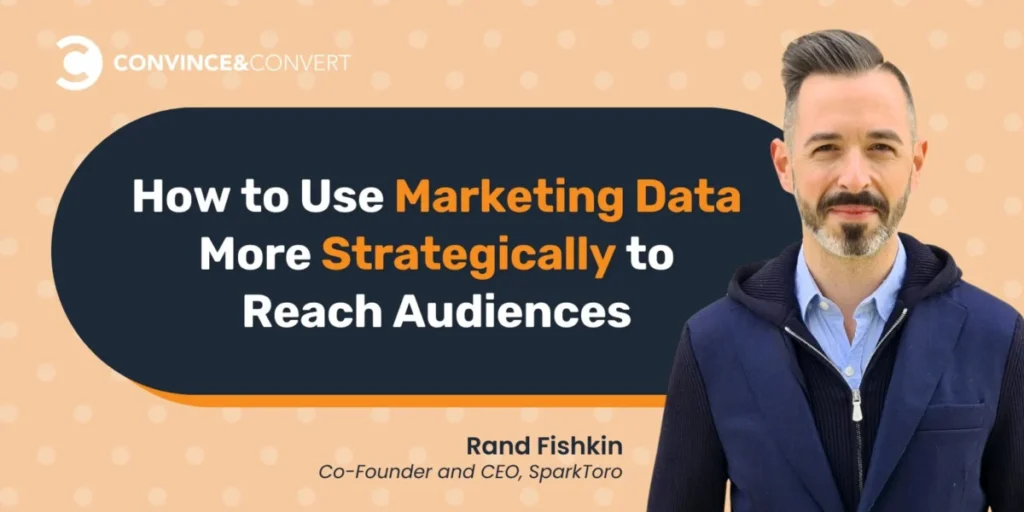
In a recent episode of the Data-Driven Decisions podcast, Rand Fishkin, co-founder of audience intelligence platform SparkToro, challenged the industry to look beyond the dashboard. By shifting focus from attribution-heavy ad platforms to niche, high-relevance communities, brands can break through the digital noise and foster genuine, lasting connections.
The Illusion of Attribution: Why Google Isn’t the Whole Story
To understand why traditional digital strategies are faltering, we must first confront the "attribution trap." Marketers often view Google Ads as the primary driver of value simply because the platform provides a direct line between a click and a conversion.
However, as Fishkin points out, this is a fundamental misunderstanding of the consumer psyche. "A ton of what happens in Google is actually a response to something else," Fishkin explains. "People who performed a search query in Google, very rarely was that a spontaneous first-touch thing. It was like, ‘Oh, I heard about this software, so I went to Google and searched for it.’ And of course, the attribution looks like Google drove all the value. No, Google was just the middleman."
The Ripple Effect of "Middleman" Marketing
When brands rely exclusively on search intent, they ignore the "Top of Funnel" (ToFu) awareness that happens in the wild—on podcasts, at industry conferences, or within niche social communities. If a potential customer hears about a solution on a podcast and then Googles it, the brand credits the ad for the conversion, missing the fact that the podcast appearance was the actual catalyst.
This leads to a dangerous feedback loop: marketers continue to over-invest in search ads while under-investing in the channels that actually built the brand equity in the first place.
Strategy: Shifting from Paid Reach to Audience Intelligence
The alternative to broad-spectrum paid advertising is a strategy rooted in audience intelligence. This involves identifying exactly where your target demographic spends their time, what podcasts they listen to, which influencers they trust, and what niche websites they frequent.
The SparkToro Approach
Tools like SparkToro allow marketers to move away from the "spray and pray" methodology. By mapping the online habits of a specific audience, teams can redirect their time, energy, and capital toward high-affinity channels.
Case Study: The Podcast Revenue Model
Consider the example of a podcaster seeking to maximize sponsorship revenue. Rather than relying on cold outreach or paid lead generation, the creator used audience data to identify influential figures with high-engagement X (formerly Twitter) accounts and YouTube channels that overlapped with their target audience. By inviting these influencers as guests, the creator tapped into pre-established, trusting audiences. This influx of relevant listeners, in turn, attracted high-value sponsors, creating a virtuous cycle of growth that paid ads rarely replicate.
Case Study: Event Marketing
Similarly, a technology event organizer utilized audience data to recruit speakers who possessed the exact demographics sponsors were targeting. By aligning the speaker lineup with the audience’s interests, the organizer ensured high attendance and sponsor satisfaction, proving that data-driven strategy outperforms broad-reach advertising in both efficiency and impact.
The Rise of "Zero-Click" Marketing
Perhaps the most radical departure from traditional strategy is the concept of "zero-click" marketing, a term championed by Amanda Natividad, VP of Marketing at SparkToro.
In a digital landscape saturated with calls-to-action (CTAs) and "click here" links, users have developed a form of banner blindness. Zero-click marketing operates on a different premise: deliver value directly within the platform where the user is already present.
Engagement over Traffic
The goal of zero-click marketing is not to drive traffic to your website, but to build authority within a community. A standout example is the company Chartr, which utilized the Reddit community r/dataisbeautiful. Instead of posting links or sales pitches, they shared high-quality, standalone data visualizations. By providing value without a barrier to entry, they built brand recognition among a highly relevant audience.
When your audience eventually encounters your brand at the point of sale, they don’t see an unfamiliar advertiser; they see a trusted, recognizable entity. This is the cornerstone of brand loyalty in the 21st century.
The Data-Informed Professional: A Balanced View
It is a mistake, however, to view this shift as a rejection of data. On the contrary, it is a call for more responsible use of data. Fishkin emphasizes that marketers must distinguish between what data can solve and what it cannot.
Where Data Fails
- Contextual Understanding: Data can tell you that a user clicked a button, but it cannot tell you why they felt frustrated by the process.
- The "Silent" Majority: Behavioral data tracks existing users, but it often misses the motivations of those who don’t interact with your product or app at all.
- Bias in Feedback: Relying solely on surveys or interviews can lead to skewed results if the sample size is not representative or if the questions are leading.
To solve these problems, brands must blend quantitative data—what platforms they use—with qualitative data—why they make the choices they do. Regular customer interviews remain the gold standard for uncovering the "why" that dashboards simply cannot capture.
Implications: Building a Resilient Marketing Ecosystem
For CMOs and marketing managers, the implications of this shift are significant. It requires moving away from the comfort of "easy-to-measure" platforms toward a more holistic view of the customer journey.
1. Reallocate "Incremental" Spend
Fishkin suggests a pragmatic test: audit your current ad spend. "If you think to yourself, the top 10% of spend that I do at these places is probably bringing me no incremental customers—which is almost always the case—maybe redirect that to some more creative, thoughtful and audience data-driven forms of marketing."
2. Prioritize Trust over Clicks
If your strategy is solely focused on getting a click, you are competing on price and convenience. If your strategy is focused on building trust, you are competing on value. In the long run, trust is a much more defensible moat.
3. Embrace Cross-Functional Collaboration
As noted in Zontee Hou’s book, Data-Driven Personalization, marketing data should not be siloed. It should inform company culture, product development, and customer service. When the entire organization understands who the customer is and where they hang out, the marketing becomes more authentic and less "salesy."
Conclusion: The Future is Strategic, Not Just Analytical
Achieving success in the modern digital age is not about chasing the latest algorithm or doubling down on the platform with the most granular reporting. It is about being strategic with your attention.
Data is the tool, not the master. When we use data to find out where our audience is already solving their problems, we stop being interrupters and start being contributors. By investing in the channels that truly matter to our customers, we can move beyond the "safe bets" of the status quo and build a marketing strategy that is not only measurable but, more importantly, meaningful.
As we navigate the future of digital engagement, the winners will be those who recognize that while data can point you toward the door, it is the quality of your presence in the room that actually drives the sale.
For those looking to refine their own data strategy, the Data-Driven Decisions podcast offers a comprehensive look at how top leaders across industries are navigating these shifts. You can find the full series and additional resources on the Convince & Convert website.