The Death of the "Link-Farm" Newsletter: Why Strategy, Not Content, is the New Currency for Marketing Leaders
In the modern digital landscape, marketing leaders are not suffering from a shortage of content; they are suffering from a surplus of noise. Every day, the average executive’s inbox is besieged by a relentless deluge of industry reports, “thought leadership” think pieces, and tactical frameworks. In this high-velocity environment, the traditional brand newsletter—often little more than a list of links—has become a relic of a less cluttered era.
The industry is reaching a critical inflection point. As audience attention spans fracture, the value proposition of email marketing is shifting from mere distribution to high-level curation and strategic synthesis. Recognizing this, Convince & Convert (C&C) has officially retired its long-running newsletter, ON, in favor of a new, insight-driven publication titled The Trendline. This transition serves as a bellwether for the broader marketing industry: in an era of AI-generated bloat and infinite scrolls, the most valuable commodity is not content—it is the filter.
The Data Behind the Shift: Why Newsletters Still Rule
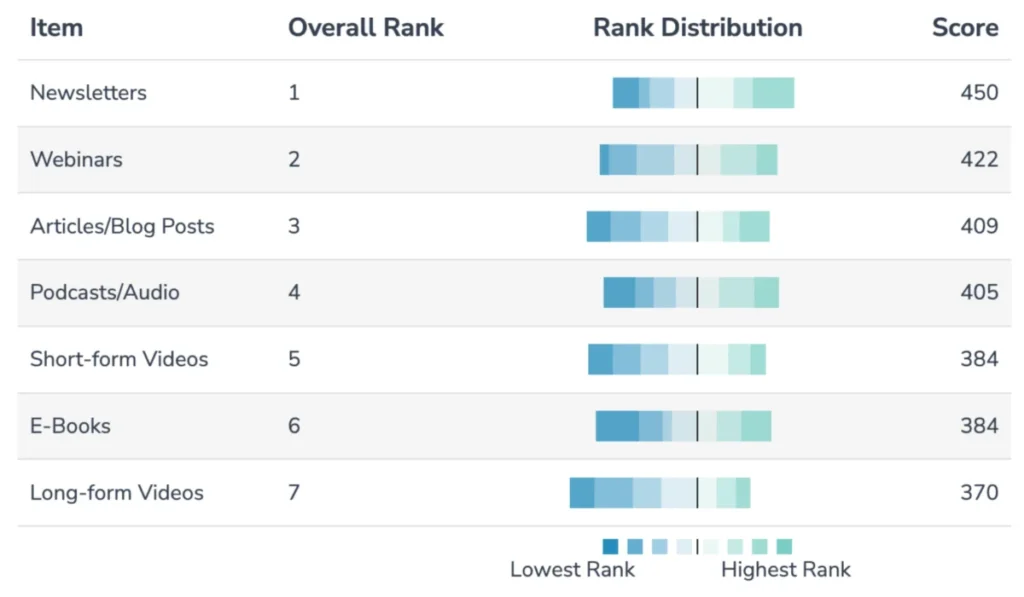
While many pundits have predicted the decline of email in favor of short-form video and social media, data suggests the opposite. According to recent audience research conducted by C&C, when marketing leaders were asked to rank their preferred methods for consuming industry trends and insights, newsletters emerged as the clear victor.
When presented with seven different formats—ranging from webinars and blogs to podcasts and short-form video—respondents were nearly twice as likely to rank newsletters in the top spot compared to any other medium. This preference is not merely a matter of habit; it is a matter of utility.
For the modern CMO, the sheer volume of content is paralyzing. The desire is no longer for "more information," but for "meaningful distillation." A well-curated newsletter does the heavy lifting, acting as an intellectual partner that answers the fundamental question: Why does this matter to my business?
Chronology of a Rebrand: From "ON" to "The Trendline"
The decision to overhaul C&C’s newsletter was not an impulsive pivot, but a calculated response to evolving audience needs. For years, the ON newsletter followed a classic, reliable playbook: aggregate the week’s blog posts, podcast episodes, and training modules into a single email. It was a digital "table of contents" designed to drive traffic back to the brand’s website.
However, as the team observed, this model was failing to meet the specific requirements of decision-makers. The "link-farm" approach requires the reader to do the labor of clicking through to determine value. In a world where attention is the scarcest resource, this friction is a barrier to engagement.

By analyzing the performance of their content, the C&C team identified three core opportunities for improvement:
- Reducing Friction: Moving the primary value from the "click" to the "inbox."
- Increasing Strategic Depth: Transitioning from news-sharing to perspective-sharing.
- Enhancing Readability: Prioritizing format and hierarchy to ensure the email is useful even if the reader never visits the website.
This realization led to the conceptualization of The Trendline. The goal was to build a resource that functions less like a marketing channel and more like a briefing document for leadership teams.
The Anatomy of "The Trendline": A New Standard for Engagement
The new format is designed as a "debrief" rather than a digest. It acknowledges that marketing leaders do not have time for long-form deep dives into every topic. Instead, The Trendline is engineered to provide an immediate return on investment for the time the reader spends opening it.
The strategic pillars of the new format include:
- The Strategic Lens: Every curated piece of news is accompanied by an analysis of why it matters and what questions executives should be asking their teams as a result.
- Front-Loaded Value: Information is presented within the body of the email. If a reader is in a rush, they receive the core takeaway immediately without needing to follow a trail of links.
- Curated Hierarchy: Rather than a chronological list of content, stories are prioritized by their impact and relevance to current marketing shifts.
- Interactive Feedback Loops: The introduction of "Sound Off" polls provides a direct, low-friction way for the audience to engage, offering the editorial team better engagement metrics than traditional click-through rates.
Implications for the Modern Marketing Department
The shift at C&C signals a broader trend that every brand manager and CMO should note: the "link-click" metric is becoming a vanity KPI. True authority is built when a brand provides value inside the platform where the customer already lives.
When presenting to senior stakeholders, the ability to synthesize complex information into actionable insights is what distinguishes a leader from a vendor. The same logic applies to how brands treat their audience. If your newsletter is just a mirror of your blog, you are treating your audience as a distribution channel rather than a community.
Key Lessons for Email Strategy
For brands looking to refine their own email marketing, the path forward requires a return to the basics of audience understanding:

- Prioritize the "Time-to-Insight" Ratio: Audit your current newsletter. If it takes the reader more than 30 seconds to grasp the "why" behind the information, it is failing.
- Design for the "Skimmer" Economy: Use clear, consistent formatting. In the new The Trendline format, each section has a defined purpose and strict guidelines, ensuring that the team delivers a predictable, high-quality experience every time.
- Stop Chasing "Clicks," Start Chasing "Trust": Clicks are a proxy for curiosity; trust is a proxy for retention. By providing value upfront, you move your email from a "solicited advertisement" to an "essential utility."
- Leverage Qualitative Feedback: Quantitative data (open rates, click rates) tells you what happened, but not why. Use polls, direct outreach, and audience surveys to understand the specific pain points your readers are trying to solve.
Moving Toward a "Consultative" Newsletter Model
The transition to The Trendline underscores a deeper, more profound truth about modern content marketing: the most successful brands are those that act like media companies. They are not simply promoting their own services; they are providing a service to the industry.
The investment required to produce this style of newsletter is significantly higher than a standard link-aggregator. It requires subject matter experts to write, edit, and synthesize, rather than just curate. However, the payoff is substantial. An owned media channel like a newsletter is one of the few places where a brand can build deep, consistent authority without the interference of algorithmic fluctuations on social media platforms.
As the digital ecosystem continues to be saturated with AI-generated content and automated newsletters, the "human filter"—the strategic voice that interprets the world for the reader—will only become more valuable.
Conclusion: The Future of Email
The lesson from the evolution of The Trendline is clear: marketing leaders should stop asking, "How can we get more people to read our content?" and start asking, "How can we make our content so useful that our audience feels smarter after reading it?"
For those looking to refine their own strategies, the recommendation is simple: start with your audience’s pain points. If you can help your readers solve problems, think more strategically, or simply save time in their busy days, you will earn their loyalty.
As we move deeper into 2025, the brands that win will not be those with the loudest content or the most links. They will be the ones that serve as the most effective filters—delivering the right insights, at the right time, in a format that respects the reader’s most precious asset: their attention.