Scaling the Frontier: OpenAI’s GPT-5.5 and Codex Arrive on Amazon Bedrock
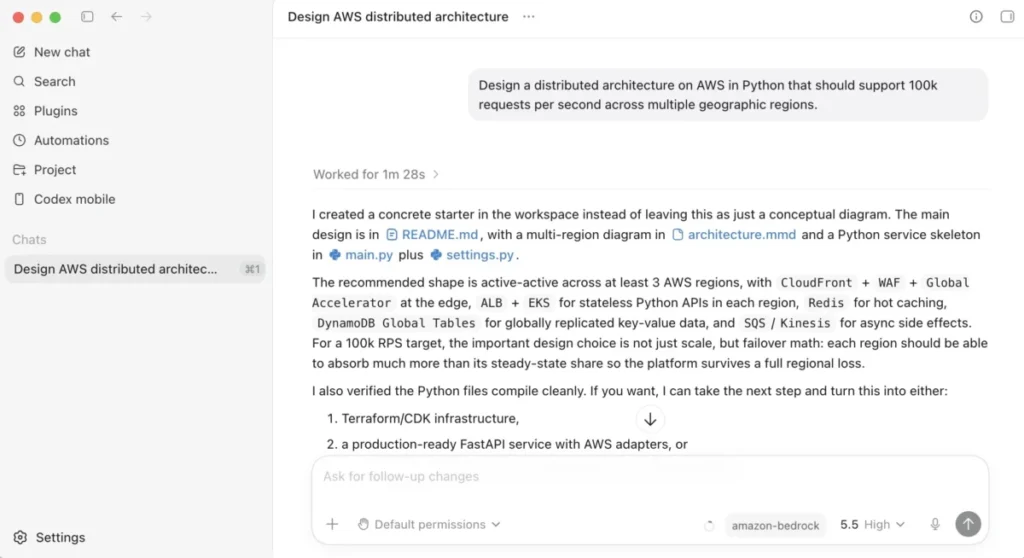
In a landmark development for enterprise artificial intelligence, Amazon Web Services (AWS) has officially integrated OpenAI’s latest flagship models—GPT-5.5 and GPT-5.4—alongside the powerful Codex coding agent, into the Amazon Bedrock ecosystem. This integration marks a significant shift in how organizations can deploy frontier-level generative AI, combining OpenAI’s cutting-edge reasoning capabilities with the robust, secure, and highly scalable infrastructure of the AWS cloud.
Main Facts: A New Era of Inference
The availability of these models on Amazon Bedrock signifies more than just a software update; it represents a convergence of two technological giants aiming to streamline the development of complex agentic workflows.
GPT-5.5, the premier offering in this rollout, is designed to handle the most demanding enterprise workloads. It excels in advanced reasoning, complex problem-solving, and professional-grade content generation. Conversely, GPT-5.4 is positioned as the optimal choice for organizations prioritizing a balance between high-performance intelligence and cost-efficiency. Both models are powered by Bedrock’s next-generation inference engine, specifically engineered to deliver low-latency responses, high reliability, and enterprise-grade security.
Perhaps the most transformative addition is Codex. Recognized as the industry standard for AI-powered software development, Codex assists developers by refactoring, debugging, testing, and validating code across massive, multi-layered codebases. By leveraging GPT-5.5’s underlying intelligence, the new iteration of Codex is capable of navigating long-horizon developer workflows—automating tasks that previously required significant manual oversight.
Chronology of the Rollout
The deployment of these models followed a strategic, phased release schedule that underscored AWS’s commitment to stability and security:
- May 24, 2026: Initial preview announced during the "What’s Next with AWS 2026" event, signaling the upcoming integration of OpenAI’s frontier models into the Bedrock platform.
- June 1, 2026: Official launch of GPT-5.5 and GPT-5.4 on Amazon Bedrock. AWS clarified that these models are accessible via the
ResponsesAPI, with console support scheduled for imminent release. - June 3, 2026: AWS expanded the reach of GPT-5.4, making it available within the AWS GovCloud (US-West) region, catering to the strict data residency and security requirements of government and public sector clients.
- June 7, 2026: AWS unveiled a redesigned Amazon Bedrock console, offering a native, optimized interface for managing OpenAI-compatible APIs, further simplifying the user experience for developers.
Supporting Data and Technical Infrastructure
The integration is built upon the Responses API, a specialized endpoint designed for high-performance interaction. This architecture allows developers to move beyond simple prompt-response cycles, enabling model-managed multi-turn states, hosted tool execution, and complex orchestration for long-running processes.
Performance and Accessibility
For developers, the barrier to entry has been lowered significantly. The platform utilizes the standard OpenAI SDK, allowing for seamless migration of existing codebases. For instance, configuring a Python environment requires only a standard installation (pip install -U openai) and a redirection of the OPENAI_BASE_URL to the Bedrock mantle endpoint.
The cost structure is equally developer-friendly. AWS has eliminated traditional seat licensing and per-developer commitments, opting for a "pay-per-token" model. This granular approach ensures that organizations only incur costs based on actual consumption, providing a predictable financial model for scaling AI applications.
Codex Integration
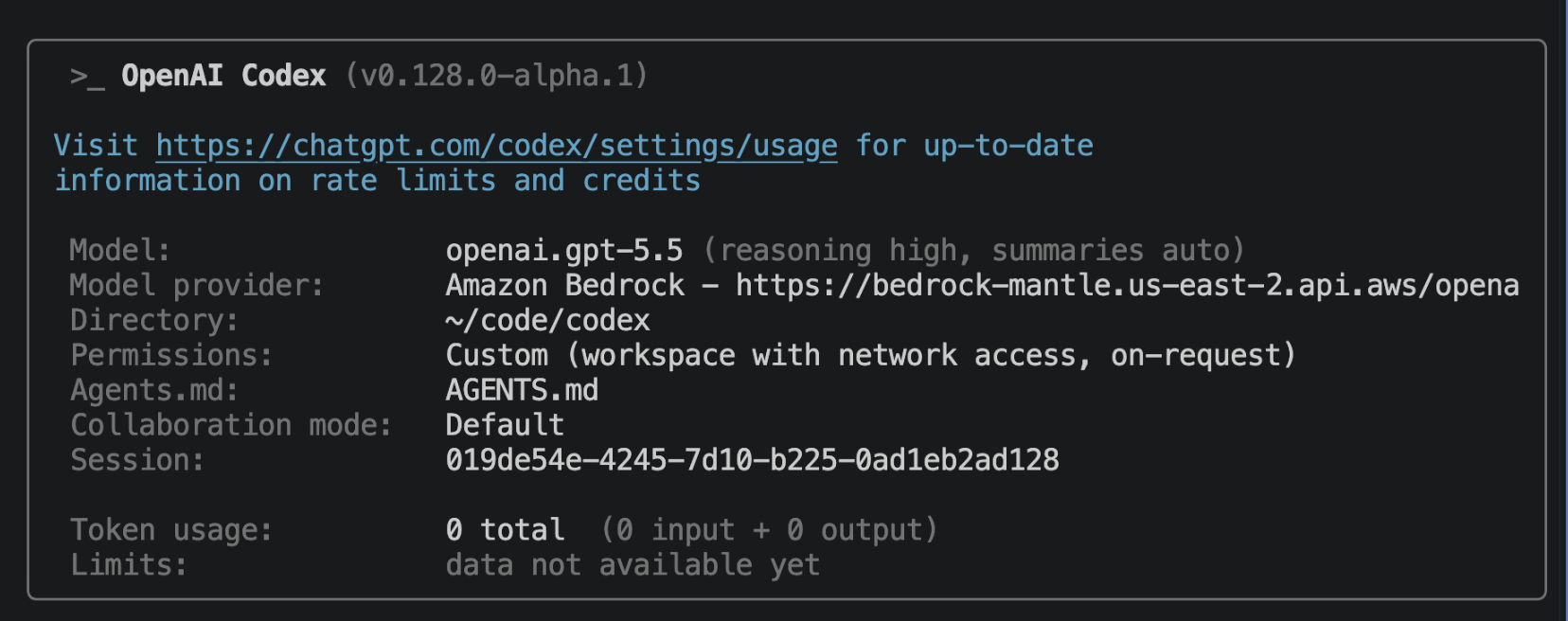
Codex operates with a flexible authentication pathway. Developers can authenticate via an Amazon Bedrock API key or through the standard AWS SDK credential chain. By setting the AWS_BEARER_TOKEN_BEDROCK environment variable, users can route their Codex CLI or VS Code extensions directly through the secure Bedrock inference engine, ensuring that code never leaves the selected regional boundary.
Official Responses and Strategic Intent
Industry analysts view this partnership as a strategic "best-of-both-worlds" scenario. OpenAI, by leveraging the AWS global footprint, gains unparalleled reach into enterprise environments that require stringent security compliance. AWS, in turn, reinforces its position as the premier cloud provider for AI, offering customers the freedom to choose from a diverse library of models, including those from OpenAI, Anthropic, and their own Titan foundation models.

In recent briefings, AWS technical leads highlighted the "data residency" aspect as a primary driver for the collaboration. For regulated industries—such as finance, healthcare, and defense—the ability to keep data processing strictly within a selected Bedrock region is not just a feature; it is a fundamental requirement. By wrapping OpenAI’s models in the Bedrock security perimeter, AWS ensures that customer data remains isolated and protected under the same compliance certifications that govern other AWS services.
Implications for the Future of Development
The introduction of GPT-5.5 and Codex on Bedrock has profound implications for the software development lifecycle (SDLC) and the broader AI landscape.
1. The Rise of Agentic Workflows
The capability of GPT-5.5 to manage "reasoning" at scale means that software agents are moving from simple chatbots to autonomous systems capable of executing multi-step business logic. With the Responses API, developers can now build agents that interact with external APIs, update databases, and perform complex calculations without human intervention, provided they remain within the guardrails set by the organization.
2. Democratizing Complex Coding
Codex’s integration into IDEs like VS Code, JetBrains, and Xcode significantly lowers the cognitive load on developers. By offloading the "grunt work"—such as writing boilerplate code, writing unit tests, and refactoring legacy systems—to an AI that understands long-horizon workflows, senior engineers can focus on high-level architecture, while junior developers can achieve greater productivity and code quality.
3. Regional Sovereignty and Compliance
The move to support GPT-5.4 in GovCloud signals that even the most sensitive environments are now ready to embrace generative AI. This will likely accelerate the adoption of LLMs in the public sector, where data privacy and sovereignty are paramount. As AWS continues to roll out these models across more global regions, the gap between "experimental AI" and "enterprise-production AI" will continue to narrow.
4. A Shift in Tooling
The move toward an "OpenAI-compatible" API on AWS suggests that the industry is standardizing. Developers no longer need to learn proprietary, platform-specific AI languages. By maintaining compatibility with the OpenAI SDK, AWS is ensuring that the ecosystem remains interoperable, allowing developers to switch between models or cloud providers with minimal refactoring.
Conclusion
The availability of OpenAI’s GPT-5.5 and Codex on Amazon Bedrock is a watershed moment. By combining the world’s most advanced reasoning engines with the world’s most comprehensive cloud infrastructure, AWS and OpenAI have effectively lowered the barriers to sophisticated AI adoption.
As businesses move from the "exploration phase" of generative AI to the "integration phase," the demand for the kind of security, scalability, and performance offered by this partnership will only increase. For the developer, the message is clear: the tools of the future are no longer just an experiment—they are ready for production, ready for scale, and waiting in the console.
For those looking to get started, the integration is live in the US East (Ohio) and US West (Oregon) regions, with further expansion on the horizon. The future of software is not just being written; it is being generated—and now, it is being hosted on the cloud with unprecedented efficiency.