The Fall of ‘Dort’: Global Investigation Leads to Arrest of Kimwolf Botnet Mastermind
In a significant victory for international law enforcement and cybersecurity researchers, Canadian authorities have apprehended a 23-year-old Ottawa resident accused of orchestrating one of the most destructive and sophisticated IoT-based botnets in history. Jacob Butler, who operated under the alias "Dort" in underground cybercriminal forums, now faces a gauntlet of criminal charges in both Canada and the United States for his role in the "Kimwolf" botnet—a digital behemoth that enslaved millions of connected devices to unleash record-shattering distributed denial-of-service (DDoS) attacks.
The arrest, carried out by the Ontario Provincial Police (OPP) pursuant to a U.S. extradition warrant, marks the culmination of a months-long investigation involving the FBI, the Department of Defense’s (DoD) Criminal Investigative Service, and private sector security researchers.
The Scope of the Kimwolf Infrastructure
Kimwolf was not merely a collection of hijacked computers; it was a sprawling, automated ecosystem designed to exploit the inherent security vulnerabilities of the Internet of Things (IoT). By targeting devices traditionally firewalled from the broader internet—including web cameras, smart appliances, and digital photo frames—Butler’s botnet achieved a level of persistence that standard security software often failed to detect.
According to the U.S. Department of Justice (DOJ), the Kimwolf botnet was responsible for issuing over 25,000 individual attack commands. The scale of the resulting disruption was historic, with the DOJ reporting DDoS attacks measuring nearly 30 Terabits per second. To put this into perspective, such traffic volumes are capable of crippling the most robust enterprise-grade network infrastructure, causing financial losses that, for individual corporate victims, exceeded the seven-figure mark.
Beyond commercial disruption, the botnet’s reach extended into the sensitive realm of national security. The infrastructure impacted IP address ranges assigned to the U.S. Department of Defense, prompting an immediate and high-priority investigation by the Defense Criminal Investigative Service, working in tandem with the FBI’s field office in Anchorage, Alaska.
A Chronology of the Kimwolf Saga
The timeline of the Kimwolf collapse reveals a calculated and aggressive campaign by law enforcement to neutralize a growing threat.
The Rise and Harassment (Late 2025 – Early 2026)
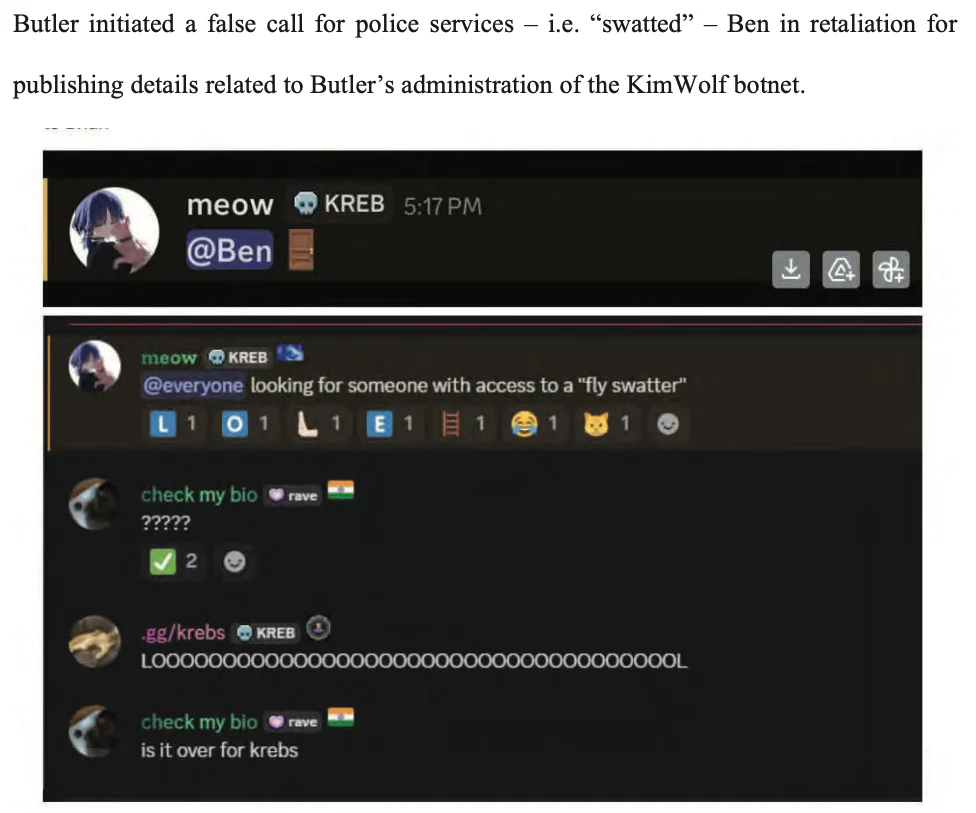
As Kimwolf gained momentum in late 2025, it began outcompeting rival botnets—namely "Aisuru," "JackSkid," and "Mossad"—for control over the pool of vulnerable IoT devices globally. During this period, Butler’s alias, "Dort," became a fixture on various cybercrime forums. When security researchers, including those at the startup Synthient, began to reverse-engineer the botnet’s propagation methods to develop defenses, Butler responded with intimidation. He launched a series of doxing, swatting, and DDoS campaigns against researchers, attempting to silence those who were actively dismantling his digital empire.
The Public Unmasking (February 2026)
In February 2026, KrebsOnSecurity published an investigation that definitively linked the alias "Dort" to Jacob Butler. By correlating email addresses, forum registrations, and footprints left on public Discord and Telegram servers, researchers exposed the man behind the machine. Despite this public exposure, Butler remained defiant, continuing his campaign of harassment against the very individuals who had unmasked him.
The Infrastructure Seizure (March 2026)
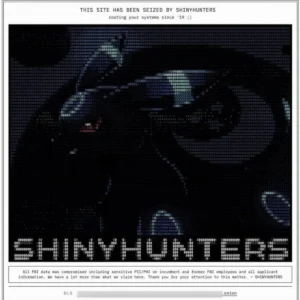
On March 19, a coordinated international operation saw the seizure of the technical infrastructure supporting Kimwolf and its three primary competitors. Law enforcement authorities executed a search warrant at Butler’s Ottawa residence, seizing numerous electronic devices that would later provide the evidence necessary for formal criminal charges.
Formal Charges and Legal Proceedings (May 2026)
The unsealing of a criminal complaint in the District of Alaska in May 2026 formally charged Butler with aiding and abetting computer intrusion. Currently held in Canadian custody, Butler awaits a court hearing scheduled for late May, where the process of his potential extradition to the United States will begin.
The Intersection of Crime and Consequences
The criminal complaint filed against Butler paints a picture of a perpetrator who was technically proficient but operationally careless. Investigators were able to link Butler to the administration of Kimwolf through a combination of IP address logs, transaction records from illicit service payments, and private messaging records obtained through legal processes.
Butler’s disregard for the separation between his "Dort" persona and his real-life identity proved to be his undoing. While he successfully weaponized IoT devices to attack others, he failed to apply the same level of security to his own digital footprint.
In Canada, the charges against him are extensive:
- Unauthorized use of a computer.
- Possession of a device to obtain unauthorized use of a computer system or to commit mischief.
- Mischief in relation to computer data.
If extradited to the United States, Butler faces up to 10 years in prison. However, legal experts note that U.S. Sentencing Guidelines offer significant room for variation based on mitigating factors, such as the defendant’s age, lack of a prior criminal record, and the level of cooperation provided to investigators following his arrest.
A Victory for the Security Community
The collapse of Kimwolf is being hailed as a major win for the cybersecurity community, particularly for the small firms and researchers who bore the brunt of Butler’s personal vendettas. Ben Brundage, founder of Synthient, expressed a collective sense of relief after the announcement of the arrest.
"Hopefully, this will end the harassment," Brundage stated. Synthient’s role in the investigation was pivotal; the firm had identified a critical vulnerability that Kimwolf was using to spread and, in doing so, allowed researchers to patch the weakness before the botnet could cause even greater global damage.
The DOJ and international partners have officially recognized the contributions of private industry, noting that the disruption of Kimwolf was a collaborative effort that could not have been achieved by government agencies alone.
Broader Implications for IoT Security
The Kimwolf case serves as a grim reminder of the fragility of the modern, connected home. The fact that digital photo frames and web cameras could be used to facilitate 30 Terabit-per-second attacks on the Department of Defense highlights a systemic failure in the manufacturing and deployment of IoT devices.
Industry analysts suggest that the Kimwolf investigation may trigger a shift in how IoT vulnerabilities are handled. Historically, many manufacturers have prioritized ease-of-use and low production costs over rigorous security protocols. The "Kimwolf precedent"—where the botmaster is held liable not only for the attacks but for the underlying intrusion—may pressure manufacturers to adopt "secure-by-design" principles.
Furthermore, the simultaneous disruption of other botnets like Aisuru and JackSkid in April 2026 demonstrates a new, more aggressive phase in international law enforcement. By seizing domain names tied to "DDoS-for-hire" services, authorities are targeting the "service-oriented" business model of cybercrime. By cutting off the platforms that allow botmasters to monetize their enslaved devices, law enforcement is attacking the financial incentives that drive the creation of these massive botnets in the first place.
As the legal proceedings against Jacob Butler unfold, the international community remains focused on the next phase of IoT defense. While the arrest of one individual is a significant tactical success, the underlying vulnerabilities that made Kimwolf possible remain. For now, however, the digital landscape is quieter, and the threat of the "Dort" persona has been effectively neutralized, marking a rare and decisive moment of justice in the often-chaotic world of online warfare.