The Gentlemen’s Fall: How a Corporate Marketer Became a Global Ransomware Kingpin
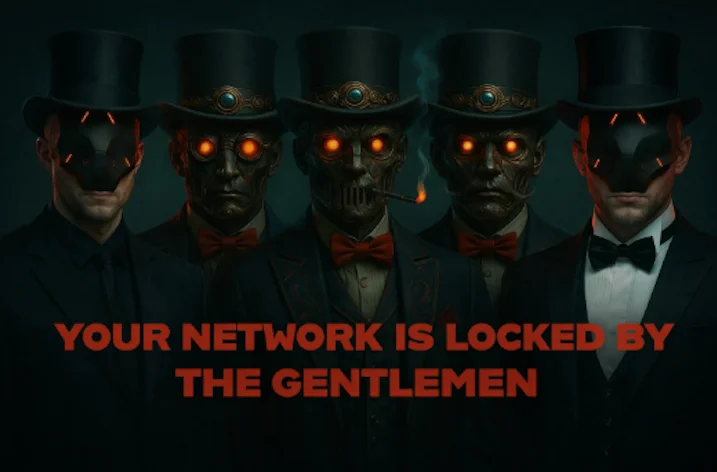
In the shadowy corners of the dark web, a new ransomware powerhouse has ascended with meteoric speed. Known as "The Gentlemen," this Ransomware-as-a-Service (RaaS) collective has vaulted to become the second most active threat actor by victim count in 2026. While the group’s technical proficiency is noteworthy, it is their aggressive, industry-disrupting recruitment model—offering affiliates a staggering 90 percent of all ransom proceeds—that has cemented their dominance.
However, the veil of anonymity protecting the group’s mastermind has been pierced. Through a painstaking investigation involving cybersecurity firms Check Point Software, Intel 471, Flashpoint, and Constella Intelligence, the administrator known as "Zeta88" and "Hastalamuerte" has been unmasked. The trail of digital breadcrumbs leads not to a shadowy state-sponsored operative, but to Alexander Andreevich Yapaev, a 36-year-old marketing executive based in Izhevsk, Russia.
The Rise of a Ransomware Juggernaut
The Gentlemen emerged in mid-2025, operating under a business model that prioritizes rapid expansion over traditional profit margins. By offering a 90/10 revenue split—dwarfing the industry standard of 80/20—the group has successfully poached veteran hackers from competing programs, effectively weaponizing the freelance economy of the cybercriminal underground.
According to researchers at Check Point Software, the group has claimed at least 332 victims since its inception, with over 240 of those breaches occurring in 2026 alone. Their methodology is clinical and swift: they focus on exploiting vulnerabilities in internet-facing devices, such as VPNs and firewalls. Once inside the perimeter, they move laterally with terrifying speed, often encrypting entire enterprise networks within hours of initial access.
Recent intelligence from the threat research firm PRODAFT has further illuminated the group’s operations. PRODAFT reports that the administrator provides affiliates with "initial access" directly, typically through Fortinet SSL-VPN credentials sourced from brute-force campaigns or internal leak databases. Perhaps most alarmingly, the group has integrated artificial intelligence into their workflow, utilizing LLMs to accelerate the development of ransomware strains, refine tooling, and assist in post-exploitation navigation of victim networks.
A Chronology of Deception: From Novice to Administrator
The evolution of the "Hastalamuerte" persona provides a masterclass in how a low-level hobbyist matures into a major criminal threat.
2019–2020: The Formative Years
In the early days of his career, the user Hastalamuerte was far from the sophisticated administrator seen today. Records from forums like Nulled and Codeby show a fledgling hacker struggling to grasp basic penetration testing concepts. In June 2020, the user joined a public training program (@pntst) on Telegram. Chat logs reveal a student who was, at the time, struggling to use standard security tools effectively—a stark contrast to the hardened criminal orchestrating massive enterprise heists today.
2020–2022: Establishing the Infrastructure
During this period, the persona began to solidify. The email address [email protected] appeared across various forums. The numeric suffix, widely recognized as a white supremacist dog whistle, became a permanent feature of his digital footprint. It was during this time that he registered on Raidforums and began to link his online activity to secondary personas, such as "SantaMuerte" on GitHub and "bu4vs" on Russian social media platforms.
2025–2026: The "Gentlemen" Era
The launch of The Gentlemen marked the transition from a lone actor to a platform provider. The administrator adopted the moniker "Zeta88" to distance his new enterprise from his earlier, less professional exploits. A breach of the group’s backend infrastructure—analyzed by Kela and others—confirmed that Zeta88/Hastalamuerte holds the keys to the kingdom: he builds the lockers, manages the RaaS panels, negotiates payments, and pockets the 10 percent administrative fee.
Connecting the Dots: The Digital Breadcrumbs
The de-anonymization of Yapaev was not the result of a single "smoking gun," but a convergence of multiple intelligence streams that pointed to a single, consistent life outside the dark web.
The Geography of Access
Intel 471 data indicates that Hastalamuerte registered on Breachforums in January 2025 from an IP address located in Izhevsk, the capital of Russia’s Udmurt Republic. This geographic footprint was mirrored by the Zeta88 account, which signed up on the Breached forum in August 2022 from the same city.
The Phone Number Link
The most significant breakthrough came from the correlation of the Telegram ID 30907522. Constella Intelligence traced this ID to the Russian phone number 79127650004. By pivoting this number through leaked Russian government databases, investigators uncovered the identity of Alexander Andreevich Yapaev.
The Professional Facade
The digital trail extended to the professional networking site LinkedIn. The email address [email protected], used extensively by the hacker across various forums, was found to be the contact address for an Alexander Yapaev. This profile identifies him as the "Head of B2B Marketing" at Uralenergo Udmurtia, a prominent supplier of electrotechnical and lighting products.
The juxtaposition is striking: by day, Yapaev manages marketing strategy for a legitimate Russian firm; by night, he facilitates the destruction of international corporate networks for a 10 percent cut of the proceeds.
Official Responses and The Silence of the Accused
Despite multiple attempts by various security outlets to contact Yapaev for comment, he has remained silent. His LinkedIn presence has been scrubbed or restricted, and his public-facing digital footprints have largely gone quiet.
The silence is characteristic of the environment in which Russian cybercriminals operate. Under current geopolitical conditions, the Russian government generally maintains a policy of "controlled impunity." As long as these actors do not target Russian domestic interests, they are effectively shielded from international law enforcement. This "dark covenant" ensures that, provided they do not travel to countries with active extradition treaties with the West, they can live relatively normal lives while operating criminal empires.
Implications: The Normalization of Cybercrime
The case of Alexander Yapaev raises uncomfortable questions about the future of global cybersecurity. The transition of an individual from a struggling student in a public chat room to the head of a major ransomware syndicate demonstrates that the barrier to entry for high-level cybercrime is collapsing.
The "Corporate" Hacker
The fact that a professional marketing executive can successfully manage a global ransomware operation suggests that the "hacker" stereotype is outdated. Modern cybercrime is less about "Matrix-style" coding in a basement and more about project management, affiliate recruitment, and business administration. The Gentlemen are not just a group of hackers; they are a functioning corporation with HR policies, incentive programs, and R&D departments.
The Risks of AI Integration
The revelation that Zeta88 uses AI to maintain his infrastructure and conduct post-exploitation activities is a harbinger of a new era. AI tools allow administrators to scale their operations without needing to hire more skilled—and potentially disloyal—human coders. This lowers the operational risk for the administrator while increasing the frequency and efficacy of attacks against global targets.
The Security Gap
For security professionals, the lesson is clear: the threat is no longer purely technical. It is social, operational, and structural. Organizations must shift their focus from purely perimeter-based defenses to a "Zero Trust" architecture that accounts for the fact that attackers are not just trying to "break in"—they are already inside, operating like a legitimate, motivated business.
As investigators continue to monitor the activities of The Gentlemen, the spotlight remains on the man in Izhevsk. Whether Alexander Yapaev continues his double life or fades into further obscurity, the blueprints he has laid for the future of ransomware are likely to persist, challenging the security community to evolve faster than the criminals who seek to exploit it.