Decoding the Science of Attention: Why Psychology, Not Algorithms, Governs Short-Form Video Success
In an era defined by digital saturation, the average social media user spends approximately two seconds deciding whether to engage with a video or continue scrolling. This split-second window has created a high-stakes environment for marketers, creators, and brands. While much of the industry remains obsessed with "hacking" the latest algorithm or chasing trending audio, new insights from content strategists suggest that the secret to viral longevity lies not in code, but in the biological and psychological blueprints of the human brain.
Hilary Billings, a prominent content strategist and founder of Attentioneers, argues that algorithmic changes represent only 10% of what drives video performance. The remaining 90% is rooted in the "science of attention"—a set of psychological principles that dictate how humans process information, form connections, and decide what is worth their time.
Main Facts: The Shift from Technical to Psychological Optimization
The current landscape of short-form video (SFV) is dominated by platforms like TikTok, Instagram Reels, and YouTube Shorts. However, the fundamental problem facing creators remains universal: the "scroll-past" epidemic. According to research and analysis conducted by Billings and her team, the reliance on platform-specific tactics—such as posting frequency or specific hashtags—is a diminishing strategy.
Instead, the core of high-performing content is built upon three psychological pillars:
- Connection: The immediate, subconscious alignment between the creator and the viewer.
- Reputation: The operationalization of authenticity through a specific formula (Values x Voice).
- Emotion: The neurological trigger that bypasses logic to drive sharing and engagement.
By mastering these pillars, brands can create content that transcends platform shifts and AI-generated competition. The "science of attention" is positioned as a deeply human skill set that AI currently struggles to replicate, offering long-term career security for those who can execute it effectively.
Chronology: From Viral Anomalies to a Data-Backed Framework
The evolution of short-form video strategy has moved through several distinct phases. In the early days of Vine and the initial surge of TikTok, virality was often viewed as a "lightning in a bottle" phenomenon—accidental, chaotic, and unrepeatable.
To demystify this process, Billings and her partners undertook a massive data-analysis project. They tracked thousands of viral videos, documenting every variable imaginable: hand gestures, lighting, wardrobe choices, the timing of edits, the use of trending music, and specific calls to action.
The chronology of their findings revealed a surprising pattern. Early in the study, they looked for correlations between "technical" factors (like the number of cuts per second) and high view counts. However, the data remained inconsistent. It was only when they shifted their focus to the psychological state of the viewer that the patterns became clear. They discovered that the most successful videos—those that were not only watched but remembered and shared—consistently leveraged human biology.
This led to the development of the "Viral Authority Framework," a transition from chasing trends to engineering sustained engagement. This framework moves the content creation process from the "production phase" (what equipment to use) back to the "psychological phase" (how to trigger the amygdala).
Supporting Data: The Biological Mechanics of Retention
To understand why these principles work, one must look at the neurological processing of information.

The Amygdala vs. The Prefrontal Cortex
Science indicates that the amygdala—the brain’s emotional processing center—handles stimuli approximately 80,000 times faster than the prefrontal cortex, the seat of logic and rational thought. In the context of a short-form video, this means the viewer has made an emotional decision about the content before they have even consciously processed what the video is about. If a video fails to spark an immediate emotional resonance, the "logic" of the content (the value proposition or the information) never gets a chance to be heard.
The Authenticity Formula: Values x Voice
Billings defines authenticity not as a vague suggestion to "be yourself," but as a mathematical output: Values multiplied by Voice.
- Values: These are the foundational beliefs of a brand (e.g., sustainability, disruption, family). Data from a national personal brand study by Brand Builders Group supports this, showing that over 70% of consumers are willing to pay a premium for products if the founder shares their values.
- Voice: This is the personality or "frequency" of the brand (e.g., edgy, humorous, authoritative).
The data suggests that when these two elements are aligned, the content creates a "frequency" that attracts the right audience while filtering out the wrong one. Rather than appealing to everyone—a common mistake in a "scarcity mindset"—successful brands use their values to accelerate the "journey to yes" for aligned customers.
The Sharing Impulse
Billings notes a specific statistical correlation: creators who are disconnected from their own content (appearing inauthentic or forced) produce videos that are 25% to 40% less likely to be shared. Sharing is a social signal; when a user shares a video, they are effectively saying, "This represents me" or "I want to experience this emotion with you." If the source material lacks genuine connection, the viewer feels no impulse to attach their own reputation to it by sharing.
Official Responses and Case Studies: Industry Proof Points
Several major brands and entities have successfully implemented these psychological strategies to achieve market dominance.

Duolingo: A Masterclass in Voice
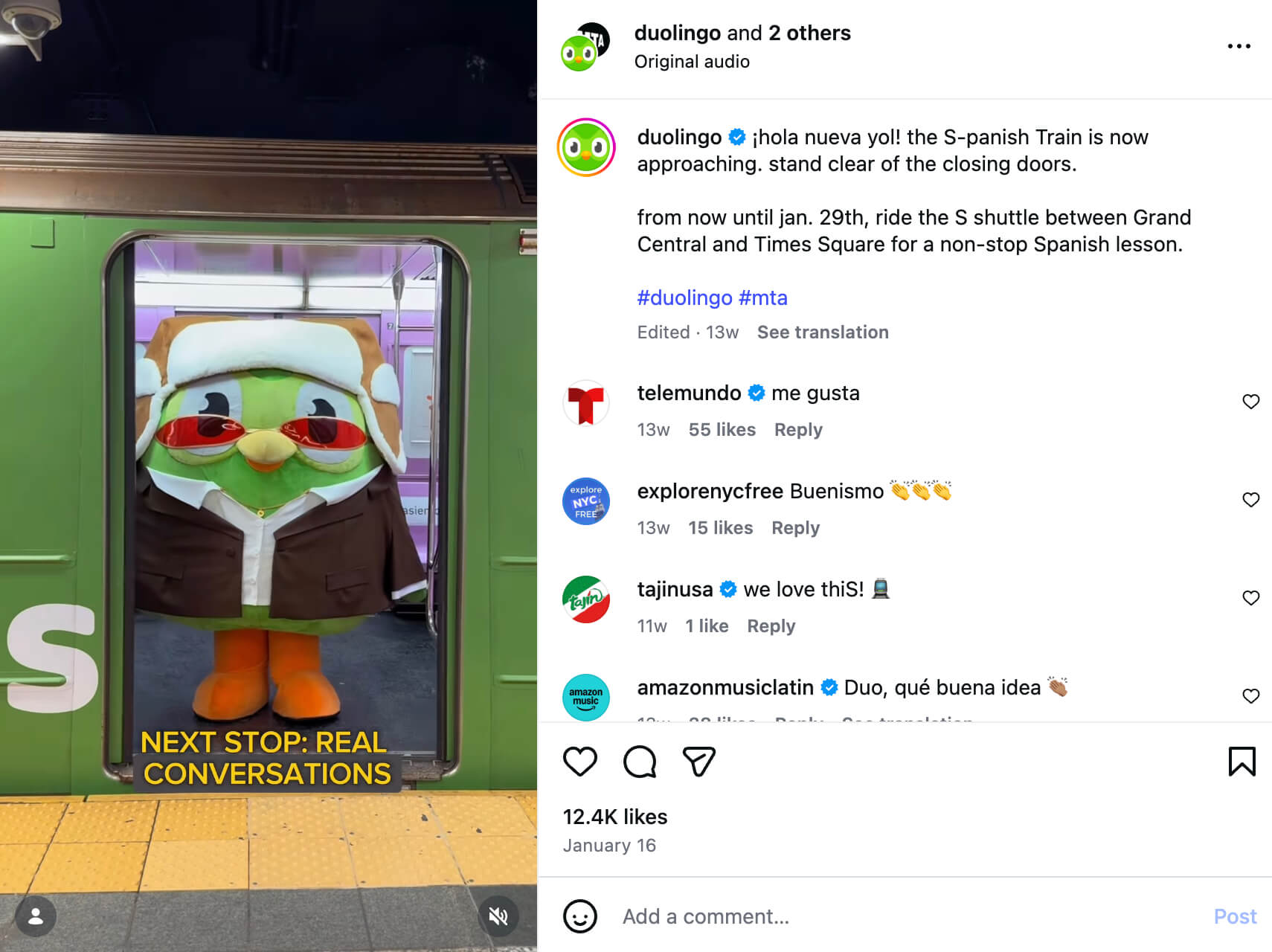
Duolingo is frequently cited as the gold standard for short-form video strategy. The brand made a strategic decision to avoid direct product promotion. Instead, they focused entirely on a specific "voice" (the unhinged, sassy personality of Duo the Owl) and clear "values" (the importance of consistency and the shared "pain" of language learning). By leaning into this personality, they became the number-one language-learning platform, trusting that the emotional connection would eventually drive users to the app.
Lighthouse Immersive: Shifting the Focus to the Human Experience
When Lighthouse Immersive, the company behind the "Immersive Van Gogh" exhibits, struggled to gain traction on social media, they sought a new approach. Despite having visually stunning content, their videos were failing to convert.
The shift occurred when they moved the focus from the art to the emotion. By filming the human experiences happening within the exhibit—proposals, multi-generational family reunions, and children’s reactions—they tapped into relatability. The art became the backdrop for a human story. This change in strategy led to a massive increase in sharing and ticket sales, proving that viewers don’t just want to see a product; they want to see how a product makes them feel.
Professional Services and the "Fear of Niche"
In the legal and financial sectors, there is often pushback against showing personality or values for fear of alienating potential clients. However, Billings’ work with real estate agents and lawyers suggests the opposite. By showing a specific "voice" (e.g., a lawyer who values transparency and uses a humorous tone), these professionals build trust faster. The "official response" from the market is clear: specificity wins over generic professionalism in the attention economy.
Implications: The Future of Content in an AI-Driven World
The shift toward the science of attention has profound implications for the future of digital marketing.
1. The Resilience Against AI
As AI tools become more capable of generating "perfect" videos, the value of human imperfection and genuine alignment will increase. AI can mimic a trending format, but it cannot yet replicate the subtle facial cues and "energy" that signal human authenticity. Creators who master the psychological aspects of connection are effectively "future-proofing" their careers.
2. The Death of the "Viral Hit" Mentality
The focus is shifting from one-off viral hits to sustained engagement. By using the "three-question" pre-production checklist, creators can ensure every video serves a strategic purpose:
- What do I want them to know? (The Value)
- What do I want them to feel? (The Emotion)
- What do I want them to do? (The Action)
3. The "Mini-Story" Requirement
Future content strategy will require every 60-second video to function as a complete narrative arc. This doesn’t mean a complex plot, but rather a "mini-story" where the audience can see their own reflection. The goal is "recognition"—the moment a viewer thinks, "That is exactly how I feel."
4. Quality Over Quantity
As platforms become more crowded, the "posting for the sake of posting" strategy is failing. The implication is that one psychologically "tuned" video per week is more valuable than seven pieces of "filler" content. Brands must move toward a model of "engineered engagement," where every frame is designed to satisfy the brain’s craving for connection and emotion.
In conclusion, the science of attention is a reminder that while technology changes, human biology does not. The most successful short-form videos of the next decade will not be those that best manipulate an algorithm, but those that best understand the heart and mind of the person holding the phone. By focusing on connection, reputation, and emotion, creators can build a loyal audience that doesn’t just watch, but truly engages.