The Sovereign Shield: Is HCLTech’s $234 Million Bet on Sarvam AI the Turning Point for India’s Tech Autonomy?
In an era where Artificial Intelligence is no longer just a technological frontier but a cornerstone of geopolitical influence, India finds itself at a critical crossroads. The recent decision by Anthropic—one of the world’s leading AI labs—to restrict access to its frontier models for non-US nationals has sent shockwaves through the Indian startup ecosystem. It served as a stark, sobering reminder: reliance on Silicon Valley giants for critical infrastructure carries the risk of sudden, policy-driven disconnection.
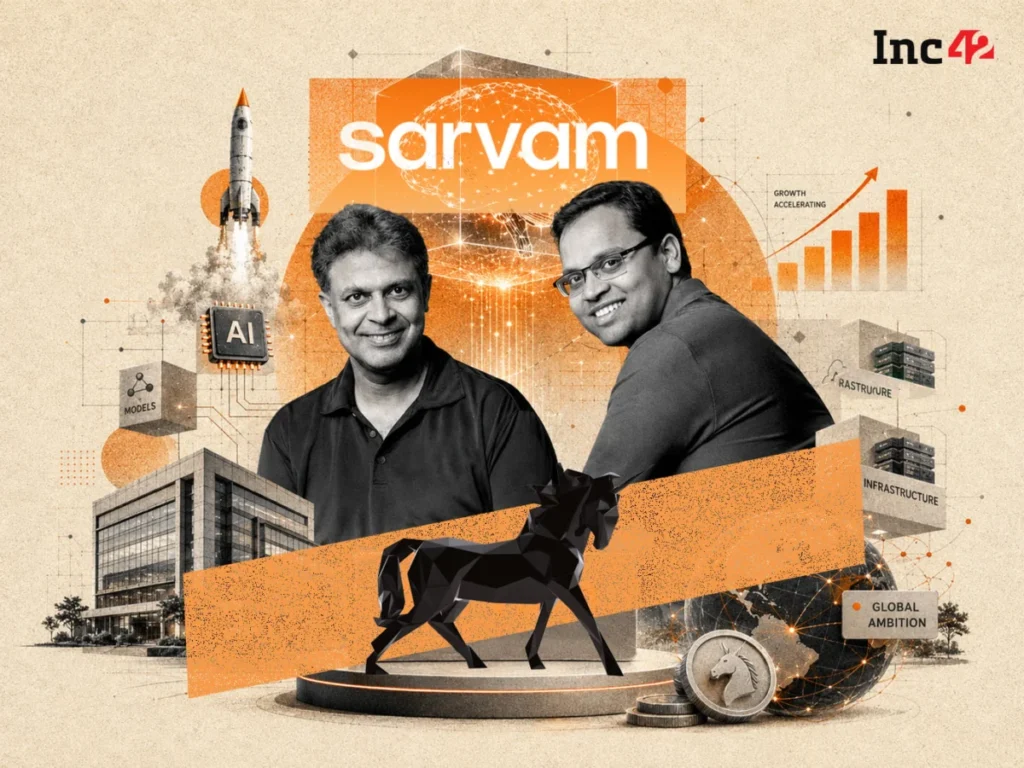
Amidst this climate of uncertainty, Sarvam AI, an ambitious homegrown startup, has secured a landmark $234 million funding round, pushing its valuation to $1.5 billion. Notably, the round was led by Indian IT powerhouse HCLTech, which committed $150 million. This move is being heralded by some as the "Microsoft-OpenAI moment" for India—a strategic pivot from relying on global venture capital toward domestic, sovereign-backed industrial support. But as the dust settles, a pressing question remains: Is this truly the dawn of a self-reliant Indian AI era, or merely a localized patch on a structural deficit?
The Strategic Shift: A New Chapter for Indian AI
To understand the weight of this transaction, one must look at the shifting winds in New Delhi. Earlier this year, the India AI Impact Summit sought to project the nation as a neutral, welcoming ground for global innovation. Prime Minister Narendra Modi stood shoulder-to-shoulder with the titans of OpenAI, Anthropic, and Google, painting a picture of global collaboration.
However, the geopolitical reality has shifted violently since February. A deteriorating global security environment, record outflows of foreign institutional capital, and the tightening of export controls by the US government have forced a rethink. The "Sovereign AI" narrative, once a niche topic for policymakers, has moved to the center of the boardroom table. Sarvam AI’s unicorn status is not just a triumph of fundraising; it is a tactical response to a global environment that is becoming increasingly insular.
Chronology of an Ecosystem’s Ambition
The journey of Sarvam AI, founded in August 2023 by researchers Vivek Raghavan and Pratyush Kumar, has been marked by a departure from the "application-layer-only" approach favored by many Indian startups.
- August 2023: Sarvam AI is incorporated with a vision to build a full-stack AI ecosystem, focusing on foundational model research tailored to Indian linguistic and socio-economic contexts.
- Early 2024: The company begins aggressive infrastructure development, focusing on training and inference capabilities rather than simply wrapping APIs from foreign providers.
- June 2026: Amidst growing regulatory anxiety regarding foreign AI model access, Sarvam AI closes a massive $234 million round.
- Post-Funding: The company pivots toward scaling its conversational AI and agentic platforms, targeting enterprise-grade reliability and security.
Unlike many of its peers, Sarvam has resisted the temptation to focus on a single vertical. Instead, it has invested heavily in the "plumbing" of AI—foundational research, inference infrastructure, and developer platforms. This end-to-end approach mirrors the trajectory of global giants like Anthropic, albeit achieved with a fraction of the capital.
The HCLTech Catalyst: Why This Deal Matters
The involvement of HCLTech is the variable that differentiates this funding round from standard venture capital injections. While Silicon Valley models are often built on the "move fast and break things" ethos, HCLTech brings the stability, risk-aversion, and deep enterprise relationships of a legacy IT giant.
1. The "Patient Capital" Thesis
Mohit Saxena, CTO of InMobi, recently pointed out at the Inc42 AI Summit that India’s primary hurdle is not talent, but the lack of "patient capital." Building a foundational AI model—or a chip—is a decade-long endeavor. By injecting $150 million, HCLTech provides the kind of long-term stability that traditional VCs, often looking for a 5-to-7-year exit, cannot always guarantee.
2. Enterprise Trust and Compliance
For large banks, government agencies, and healthcare providers in India, data sovereignty is a non-negotiable requirement. HCLTech acts as the bridge between Sarvam’s technical prowess and the complex regulatory demands of enterprise clients. Their global delivery capabilities offer a ready-made channel for Sarvam to deploy its solutions at scale, effectively de-risking the startup’s growth phase.
Supporting Data: By the Numbers
Sarvam AI’s growth metrics suggest that the market is hungry for a domestic alternative. The company has reported:

- Platform Traffic: Over 2 million daily interactions on its conversational AI platform.
- Usage Velocity: Usage has doubled within the last two months alone.
- API Ecosystem: The inference platform currently processes roughly 10 million API calls daily.
- Revenue Streams: Sources indicate that conversational AI agents are currently driving nearly 80% of the company’s $12 million annual revenue run rate (ARR).
- Developer Adoption: Adoption of its development platform has tripled in the last three months, signaling a growing preference among Indian developers for local foundational tools.
Official Perspectives: Building a Trusted Ecosystem
The synergy between the two firms was underscored by C. Vijaykumar, CEO and Managing Director of HCLTech. In a public statement, he framed the investment not as a mere financial transaction, but as a strategic commitment to national infrastructure.
"Sarvam’s AI research capabilities complement HCLTech’s enterprise expertise," Vijaykumar noted. "This partnership is a foundational step toward building a trusted and globally competitive AI ecosystem, ensuring that Indian enterprises can innovate without compromising on sovereignty or compliance."
For Sarvam, the mandate is clear: the capital will be deployed toward next-generation frontier models, with a heavy emphasis on "agentic" AI—systems capable of autonomous decision-making—and cybersecurity, an area where Sarvam hopes to provide a competitive advantage over foreign-built models that may not understand the nuances of the Indian threat landscape.
The Challenges Ahead: Is it Too Little, Too Late?
Despite the optimism surrounding this deal, the road ahead is fraught with systemic hurdles. The "sovereign AI" argument faces a brutal reality: scale.
The Scale Gap
Even with $234 million, Sarvam is competing against companies like OpenAI and Google, which spend billions on compute alone. As pointed out by industry observers, India’s total investment in AI remains a drop in the ocean compared to the tens of billions being funneled into US-based foundational models.
The "Consumer Trap"
There is a legitimate fear that India might remain a "consumer" of global tech. If Indian startups cannot bridge the gap in foundational compute power, they may end up simply building thin layers on top of foreign models, leaving them vulnerable to the same regulatory shifts that affected Anthropic users.
The Talent and Infrastructure Deficit
Foundational AI requires a constant, reliable supply of high-end GPUs and massive energy infrastructure. India currently lags in both. While HCLTech can provide the corporate backing, the fundamental challenge of building a sovereign, world-class AI model from the ground up requires a national-level commitment to silicon manufacturing and data center expansion that transcends any single private deal.
Implications: The Path Forward
Sarvam AI’s deal with HCLTech marks the beginning of a vital experiment. It is a test of whether a "corporate-led" model can foster the deep-tech innovation required to compete globally.
If Sarvam succeeds in becoming a trusted, scalable, and sovereign alternative, it will provide a blueprint for other Indian startups to follow. It could catalyze a new wave of corporate venture capital, where India’s IT services giants act as the bedrock for the next generation of deep-tech unicorns.
However, if this remains an isolated event, the "sovereign AI" dream may struggle to gain momentum. For now, Sarvam AI has laid a few more bricks in the wall of India’s technological autonomy. Whether that wall will be strong enough to withstand the currents of global tech geopolitics remains to be seen. One thing is certain: the era of blind reliance on Silicon Valley is over, and the race to build the Indian AI stack has officially begun.