The LinkedIn Algorithm Revolution: How to Master the Platform’s New AI-Driven Feed
Is your LinkedIn reach in a slump? You aren’t alone. LinkedIn has quietly executed one of the most significant structural overhauls in its history, moving away from a legacy feed model toward a sophisticated, AI-driven engine that fundamentally changes how content is surfaced, prioritized, and distributed.
For years, LinkedIn users relied on a simple formula: grow your follower count, and you would inevitably reach a larger percentage of your network. That era is officially over. To thrive in the current environment, creators and brands must stop "posting to followers" and start "training the algorithm."
The Evolution of the LinkedIn Feed: A Paradigm Shift
The platform has abandoned its previous architecture—a patchwork of five separate systems—in favor of a unified, AI-powered "brain." This new system marks a departure from relationship-based distribution (showing you what your connections post) to interest-based distribution.
The Death of the Follower-First Model
The algorithm now tracks what LinkedIn refers to as a user’s "professional journey over time." It builds a comprehensive, evolving profile of your interests. Much like the recommendation engines behind TikTok, YouTube, and Facebook, LinkedIn no longer guarantees that your connections will see your updates. Instead, the feed acts as a curator, serving content that matches the specific topics a user has historically demonstrated an interest in.
The Rise of Semantic Understanding
Perhaps the most profound change is the algorithm’s newfound ability to understand meaning rather than just keywords. Previously, if you didn’t include the right tags, your content might disappear. Today, if you write about "reducing churn," the system is intelligent enough to surface your post to a user searching for "customer retention," even if your phrasing differs. The AI understands the context and intent behind the professional conversation.
The Specialist’s Advantage: Why Niche Matters
The new system heavily favors specialization. By publishing a consistent series of related posts, you effectively "train" the algorithm to associate your profile with a specific subject matter.

Compounding Authority
When you focus on a single niche, the algorithm recognizes your authority. This creates a compounding effect: your content is served to the right audience with increasing reliability. Conversely, generalists—those who alternate between AI trends, pet photos, industry news, and personal reflections—struggle to gain traction. The algorithm views these disparate topics as unrelated signals, failing to build cumulative authority in any one area.
Fighting Content Fatigue
A common critique from creators is the fear of repeating themselves. However, experts like AJ Wilcox, a leading voice in LinkedIn advertising, suggest two critical reframes:
- Your audience is always changing: The person reading your content today is likely encountering your ideas for the first time, regardless of how many times you’ve covered the topic.
- Creative Variation: Instead of recycling content, challenge yourself to approach the same subject from a fresh perspective. Use AI to brainstorm new metaphors, formats, or angles. The key is to vary the presentation, not the subject matter.
The Invisible Signals: What Really Drives Reach
An analysis of over 600,000 LinkedIn posts across 63,000 accounts has revealed a startling truth: the "vanity metrics" of likes, shares, and public comments are becoming less predictive of success. Instead, the algorithm is increasingly prioritizing "invisible engagement"—actions that don’t leave a public count but signal genuine interest.
Understanding Invisible Engagement
Invisible interactions—such as carousel swipes, video watch time, and clicking "see more" to expand a post—have driven overall reach up by nearly 14%. These behaviors act as a proxy for value. If a user spends time expanding your post or swiping through your document, they are telling the algorithm, "This content is worth my time."
Engineering Your Posts for the Algorithm
To maximize your reach, you must bake these triggers into your content:
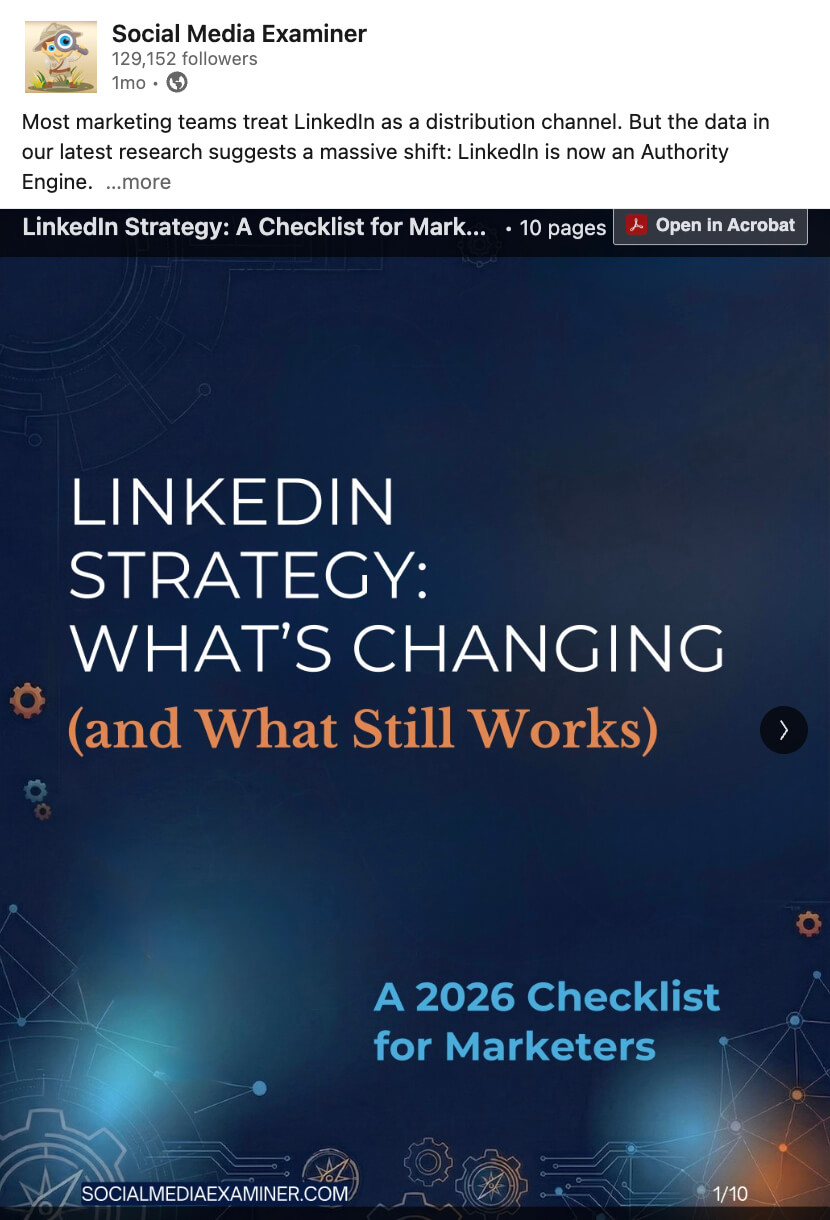
- Leverage Carousels/Documents: Multi-page document posts outperform single-image posts by a factor of 11. The simple act of swiping creates a tangible interaction signal that the platform rewards.
- The "See More" Hook: Because a significant portion of impressions occur in the first 48 hours, the initial two lines of your post are critical. A compelling hook that invites curiosity—without giving away the conclusion—is essential to force the "see more" click, which acts as a primary engagement signal.
- Strategic Questioning: To boost comment volume, avoid generic prompts like "What do you think?" Instead, ask specific, context-driven questions related to your post. This lowers the cognitive barrier for readers and increases the likelihood of a high-quality, substantive response.
Deepening the Dialogue: Comment Density
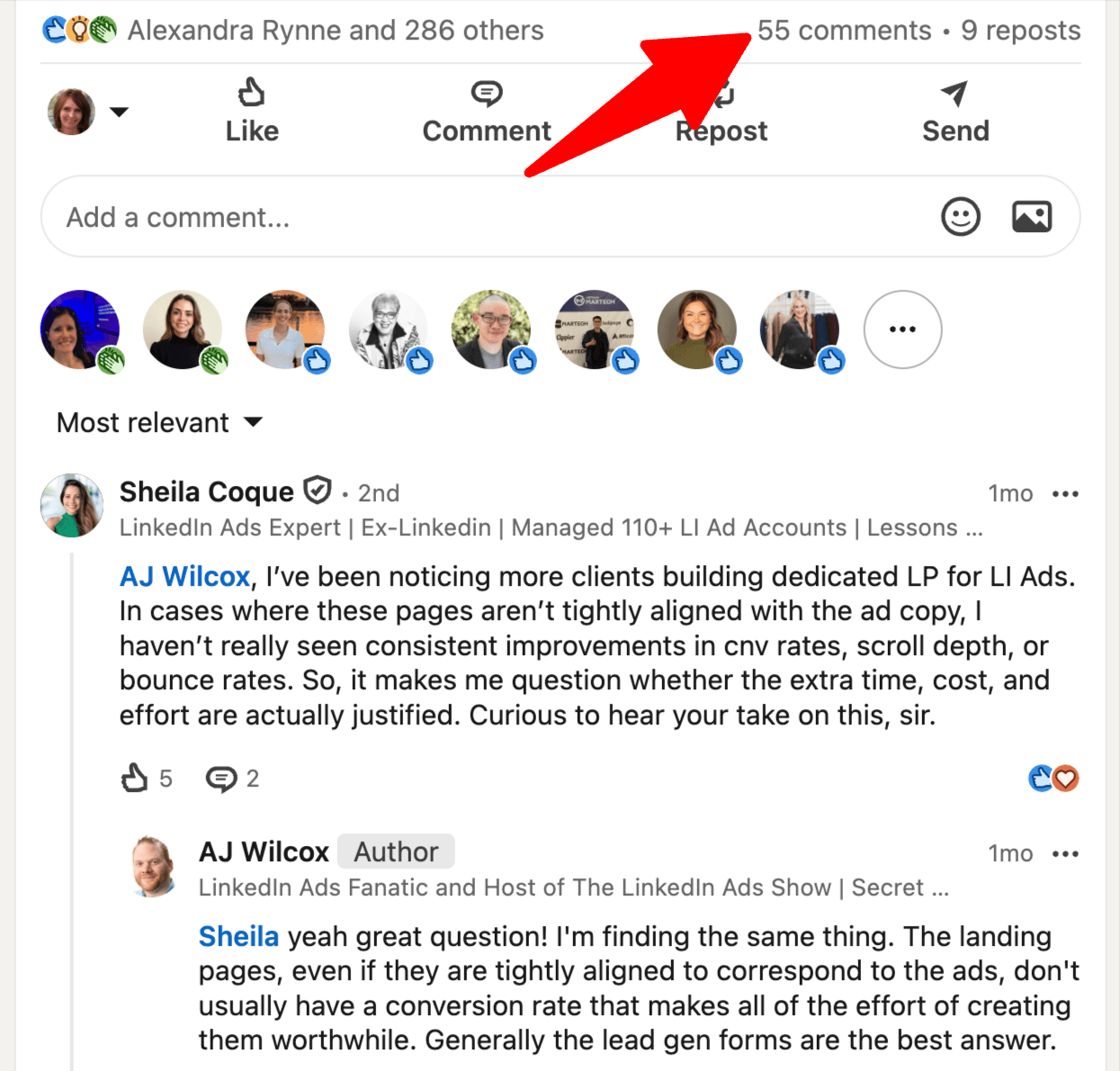
LinkedIn has moved beyond simply counting comments; it now analyzes the quality and depth of the conversation within a thread.
The Value of Back-and-Forth Engagement
A conversation consisting of substantive replies sends a much stronger signal than a thread of one-line reactions. To capitalize on this, creators should prioritize responding to comments within the first hour of publication. This "early engagement" acts as a multiplier, signaling to the algorithm that the post is active and worth surfacing to a wider, relevant audience.
The Anti-Spam Strategy
Not all comments are created equal. Avoid engaging with generic, AI-generated spam. The algorithm is increasingly adept at identifying these patterns, and by focusing your replies on users who provide thoughtful, relevant feedback, you ensure that your comment section remains a hub for authentic, high-value discussion.
Implications for the Future of B2B Marketing
The shift toward an AI-curated feed necessitates a shift in B2B marketing strategy. Brands can no longer rely on sporadic posting or "spray and pray" content tactics.
The Shift Toward Original Thinking
AI systems now actively evaluate content for originality. If your content appears to be a repurposed version of something already existing, its distribution will be throttled. By contrast, consistently offering unique perspectives establishes a digital footprint of authority. As the algorithm continues to learn, it will act as an increasingly accurate arbiter of who the true experts are in any given industry.
The Roadmap for Success
- Define Your Niche: Stop trying to cover everything. Pick a lane and stay in it.
- Optimize for Invisible Signals: Prioritize carousels, document formats, and high-engagement hooks.
- Foster Community: Treat comments as a two-way street. The goal is not just to talk to your audience, but to engage in a dialogue that keeps the algorithm interested in your content.
- Listen to Your Audience: The questions you receive in DMs or comments are your best source of future content. Every question is a roadmap for a new, high-authority post.
Conclusion
The "new" LinkedIn is not a place for passive posting. It is a dynamic, intelligent ecosystem that rewards consistency, depth, and genuine engagement. By understanding the shift from follower-based distribution to interest-based AI curation, you can position yourself—or your brand—as an authority in your field.
The strategy is clear: stop competing for likes and start competing for relevance. Those who master the art of the invisible signal and the science of the niche will find their reach not only recovered but expanded, regardless of the constant changes in the platform’s underlying code.