The PayPal Honey Shakeup: A Watershed Moment for Affiliate Marketing Integrity

The affiliate marketing landscape was sent into a state of shock this past week as PayPal Honey—one of the most ubiquitous browser extensions and a dominant force in the digital rewards space—found itself removed from the world’s two largest affiliate marketing networks. Following a confluence of investigative pressure and growing industry scrutiny regarding "attribution manipulation," the move signals a potential turning point in how networks and brands approach compliance, trust, and the "last-touch" attribution model.
For years, the rise of browser extensions has been a double-edged sword for e-commerce brands. While they drive massive transaction volumes, they have increasingly faced allegations of "link hijacking"—a practice where an extension overrides a consumer’s journey, effectively claiming credit for a sale that an earlier affiliate partner had already influenced. This week, the industry finally pushed back.
A Chronology of the Fallout
The removal of Honey from major networks was not a singular event but a rapid-fire sequence of institutional responses.
- The Investigative Catalyst: The momentum against Honey’s practices was fueled by a viral video from MegaLag and a detailed technical investigation by industry expert Ben Edelman. These reports brought to light specific mechanisms by which the Honey extension allegedly bypassed "stand-down" protocols—rules designed to prevent extensions from firing if another affiliate had already earned the conversion.
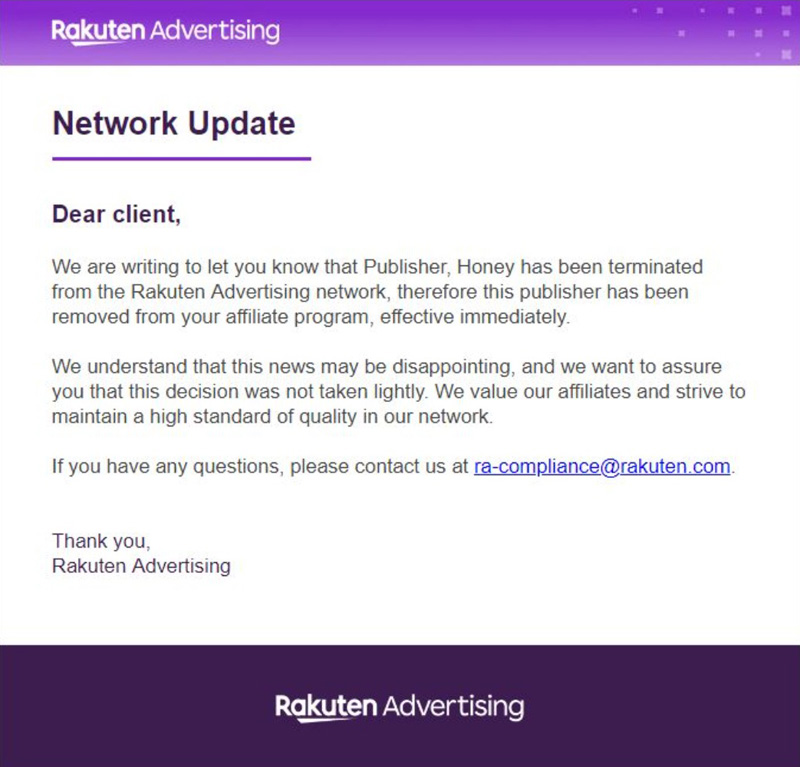
- January 12 (Rakuten Advertising): The first domino fell on Monday, the opening day of the prestigious Affiliate Summit West. Rakuten Advertising issued a definitive statement, confirming that Honey had been "terminated from the network." Rakuten framed the decision as a necessary measure to "maintain a high standard of quality," signaling that the network’s internal compliance threshold had been breached.
- January 16 (impact.com): By Friday, impact.com confirmed it had removed Honey from its "Discovery Marketplace." Unlike Rakuten’s permanent termination, impact.com characterized the move as a suspension, citing that the publisher was "out of compliance" with platform policies. The language used by impact.com’s leadership was particularly sharp, explicitly labeling the activity as "attribution manipulation."
The timing of these events, specifically the commencement of the industry’s largest annual gathering, underscored the gravity of the situation. "Rakuten" and "Honey" were the inescapable topics of conversation throughout the summit, highlighting the industry’s collective anxiety regarding how much power browser extensions have truly held over merchant revenue streams.
The Technical Core: Why "Stand-Down" Matters
At the heart of this controversy lies the "last-touch-wins" rule. In the standard affiliate model, the entity that places the final cookie on a user’s browser before a purchase is completed receives the entire commission for that sale.
Browser extensions like Honey sit at the very end of the customer journey. When a user clicks through a blog post, a review site, or an influencer’s link, they are effectively "tagged" by that partner. However, if a user has a browser extension installed that automatically checks for coupon codes at checkout, that extension can—and often does—trigger a new "last-touch" event.

If the extension is configured to "stand down" when another partner is present, it should respect the original affiliate’s contribution. The allegations against Honey suggest that this "stand-down" protocol was being bypassed or concealed. For affiliate managers, this represents a fundamental theft of marketing investment, as brands end up paying for a conversion they would have received anyway, while simultaneously cannibalizing the commissions of the top-of-funnel partners who actually introduced the customer to the brand.
Expert Analysis: The Five Pillars of Program Health
For those responsible for managing affiliate programs, this episode is a clarion call for reform. Industry experts, including the team at AM Navigator, have identified five critical lessons for brands navigating this new, more hostile environment.
1. The "One Bad Apple" Effect
A single, high-volume affiliate that engages in aggressive, rule-breaking behavior can effectively poison an entire program. When quality affiliates—such as reputable content creators or niche bloggers—see that a program allows aggressive "coupon snatching" by browser extensions, they often choose to leave. They recognize that their efforts to drive traffic are being systematically devalued. Maintaining a clean, high-integrity partner base is not just a moral choice; it is a competitive necessity.
2. Independent Policing is Non-Negotiable
There is a dangerous tendency for brands to assume that affiliate networks are monitoring for compliance on their behalf. While networks have compliance teams, their mandate is to protect the network at large, not necessarily the specific interests of every brand’s unique program. Brands must draft rigorous Terms and Conditions and, more importantly, proactively audit their own traffic. Relying solely on the network’s policing is an abdication of a brand’s responsibility to its own bottom line.
3. Understanding the Intricacies of DSPs
The landscape of Downloadable Software Publishers (DSPs) is incredibly complex. There is a meaningful difference between a benign "soft click" and a malicious violation of attribution protocols. Managers must educate themselves on these nuances. Resources like the Performance Marketing Association’s Affiliate Network DSP Policies Comparison and the APMA’s recent independent audit in the UK are essential reading. These documents help managers distinguish between legitimate marketing partners and those operating in the gray areas of technical manipulation.
4. Avoiding Generalization and Extrapolation
It is a mistake to ban entire classes of affiliates based on the actions of one prominent player. While browser extensions have been the focus of this week’s controversy, not all extensions are created equal. Some provide genuine value and operate within the rules. Managers should evaluate each partner individually, rather than engaging in sweeping bans that might inadvertently hurt revenue and customer experience.
5. The Imperative of Diversification
If a program sees a massive revenue drop when one major partner is removed, that program was never truly healthy. A robust affiliate program should be diversified across a wide array of publisher types. Relying on a handful of coupon or loyalty sites creates a "single point of failure."
A New Framework for 2026 and Beyond
To build a sustainable affiliate channel, brands should look toward a broader, more holistic ecosystem. Beyond the traditional coupon and loyalty sites, there are at least 28 distinct types of partners that can drive meaningful, incremental growth. From affinity groups and card-linked offers to podcasters, CTV placements, and post-checkout solutions, the modern affiliate manager must be a curator of a diverse, multifaceted partner ecosystem.
The removal of Honey from major networks is a signal that the era of "easy growth" through unpoliced attribution is coming to a close. The future of the industry belongs to brands that take an active role in their program’s governance, favor quality over sheer volume, and invest in deep, meaningful relationships with a diverse range of partners.
As we look toward the remainder of 2026, the mandate for the industry is clear: prioritize transparency, enforce your own standards, and stop building your house on the shifting sands of monopolistic, high-friction affiliate partnerships. By doing so, brands can foster a more sustainable, equitable, and profitable ecosystem that rewards actual influence rather than technical manipulation.