The Future of AI Operations: Why Platform-Agnostic Workflows are Your Best Insurance Policy
In the rapidly evolving landscape of generative AI, businesses are moving beyond the "experimental" phase. Marketing teams, creative agencies, and data analysts are now embedding AI directly into their core operational infrastructure. However, this transition has birthed a dangerous new dependency: AI Platform Lock-in.
When you build your entire business intelligence suite, copywriting pipelines, and project management logic within the confines of a single AI ecosystem, you are effectively tethering your company’s survival to that provider’s uptime, pricing models, and model performance. If that platform experiences a significant outage, hikes its subscription costs, or releases a model update that degrades your specific output, your business could grind to a halt.
In this deep dive, we explore how to build "portable" AI workflows—systems designed to function across multiple platforms—ensuring that no single provider holds your infrastructure hostage.
Main Facts: The Strategic Shift Toward Portability
The concept of portability in AI is not about using every tool simultaneously; it is about architectural flexibility. Experts like Nicole Leffer argue that the most robust AI strategies are "platform-agnostic." This means that the "brain" (the AI model) is decoupled from the "nervous system" (your instructions, data, and workflows).
Why Portability is an Operational Necessity
- Stability and Risk Mitigation: Relying on a single vendor creates a single point of failure. A widespread outage can paralyze your team.
- Performance Insurance: AI models are not static. Updates can occasionally lead to "drift," where a previously high-performing prompt suddenly produces subpar results. Portability allows you to switch to a competitor in minutes to maintain output quality.
- Financial Leverage: As AI providers transition from user-acquisition phases to profit-generation phases, pricing models are likely to fluctuate. A portable workflow allows you to move your operations to the most cost-effective provider without a total rebuild.
- Functional Diversity: Different models possess unique "superpowers." One might excel at image generation, while another is superior at logical reasoning or coding. Portability enables you to route tasks to the best tool for the specific job.
Chronology: The Evolution of Workflow Independence
Historically, AI users operated in "walled gardens." You built a custom GPT in OpenAI’s ecosystem, and it stayed there. You wrote a specialized prompt in Claude, and it was trapped in that chat history.
The shift toward portability began with the maturation of Model Context Protocol (MCP) and the standardization of Markdown-based instructions.
- Phase 1: The Walled Garden (2022–2023): Users built agents and workflows inside specific platforms, creating proprietary, non-transferable data silos.
- Phase 2: The Standardization Era (2024): The emergence of external storage solutions and the adoption of markdown as a "universal language" for AI instructions allowed users to store their logic outside of the AI chat box.
- Phase 3: The Modular Ecosystem (2025–Present): With the integration of plugins like "Claude for Excel" or "ChatGPT for Spreadsheets," the AI agent is no longer a static chatbot but a functional entity that can be deployed into common business software, reading instructions from your own local files rather than the vendor’s cloud memory.
Supporting Data: Building Your Portable Toolkit
Building a portable workflow does not require a computer science degree; it requires a shift in how you organize your digital assets.
1. Externalizing Your Context
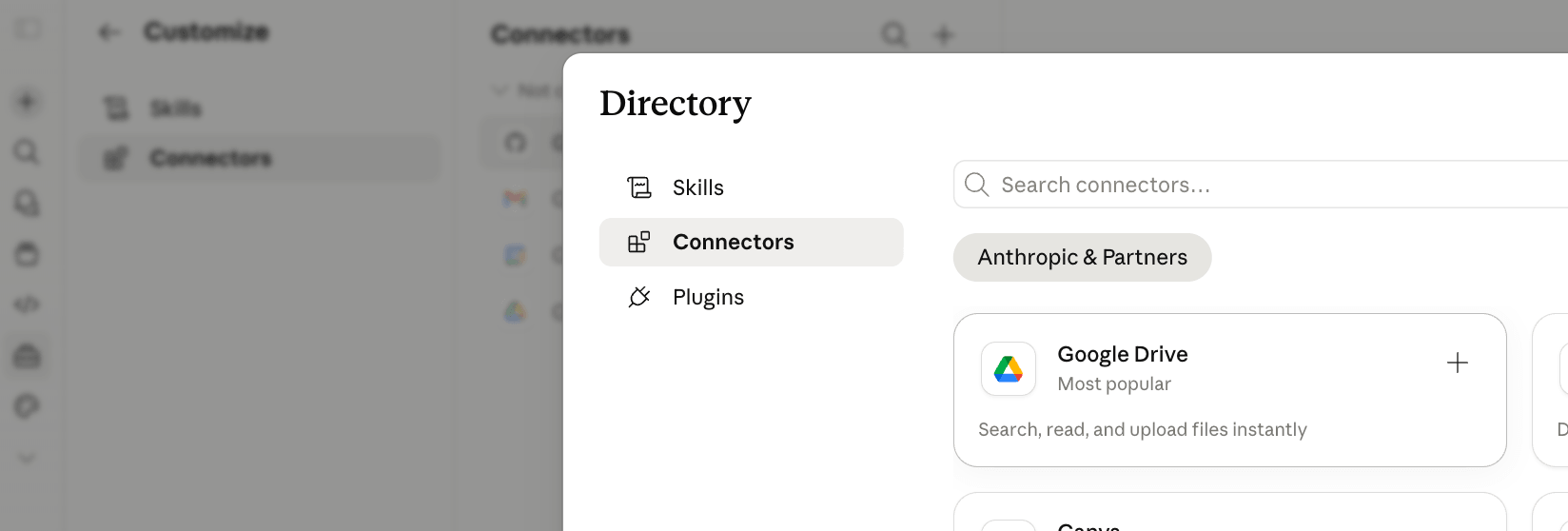
Stop storing your project instructions and brand assets inside the AI platform’s interface. Instead, create a centralized, external repository (Google Drive, SharePoint, or a local encrypted drive).
- The "Targeted Context" Rule: Avoid the common mistake of "data dumping." Feeding an AI your entire document library usually results in "noise" that degrades performance. Instead, curate specific, task-relevant folders. By pointing your AI to a single source of truth, you ensure that updating one file automatically updates the intelligence of every platform referencing that file.
2. The Power of "Skills"
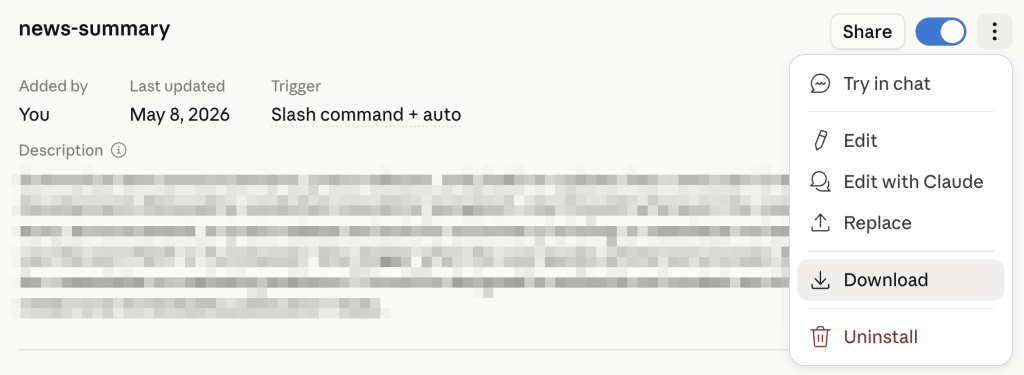
A "skill" is essentially a portable, zipped archive containing a SKILL.md file. This markdown file acts as a set of codified instructions.
- How it works: When you upload a skill file to a platform, the AI reads the markdown instructions, effectively "downloading" the expertise to perform a specific task.
- The Matrix Effect: Much like Neo downloading martial arts, once the AI parses your
SKILL.md, it immediately knows how to act, whether you are in Claude, ChatGPT, or an enterprise-grade agent.
3. The Excel-as-an-Agent Strategy
The most sophisticated implementation of portability involves using Excel as the "host" for your AI agents.
- Deployment: By activating AI plugins within Excel, you can create a workbook that acts as an independent agent.
- The "Self-Briefing" Workbook: By creating specific tabs in your spreadsheet labeled "Instructions" or "History," you can force the AI to read these tabs before starting any task. Because these instructions are embedded in the file, if one platform goes down, you simply switch plugins and open the same file in a different AI interface. The new agent will read the instructions, review the history log, and continue exactly where the previous agent left off.
Official Perspectives: The Risks of "Public" Skills
While the portability movement offers significant advantages, it introduces new security considerations. Experts warn against the casual downloading of "public skills" found on open forums or third-party repositories.
The Security Warning:
A "skill" is more than a prompt; it is a set of executable instructions. Malicious actors could theoretically craft a skill designed to:

- Extract data from your CRM.
- Redirect sensitive outputs to an external, unauthorized server.
- Execute scripts that compromise your local files.
The Golden Rule of Portability: Only use skills that you have created yourself, or those developed by verified, enterprise-level providers (e.g., Anthropic, OpenAI, or Google). If you are part of a team, rely on internal sharing mechanisms within your organization’s enterprise account. Never treat a third-party AI "skill" with the same level of trust as you would a standard software application.
Implications: Preparing for a Multi-Model Future
The shift toward portable AI workflows signals a maturation of the industry. As businesses move away from platform loyalty, the competitive landscape will shift. Vendors will no longer be able to compete solely on "lock-in" features; they will have to compete on the quality of their model, the speed of their API, and the transparency of their pricing.
What This Means for Your Business:
- Immediate Audit: Review your current AI usage. Identify which workflows are currently "trapped" in a specific platform.
- Standardization: Begin migrating your prompts and instructions into markdown files stored in your internal cloud environment.
- Documentation: Develop a "Library of Skills." As your team builds effective prompts for copywriting, data analysis, or market research, formalize these into
SKILL.mdfiles so they can be reused across the organization.
Final Thoughts
The "AI-first" business of tomorrow is not the one that chooses the best platform today; it is the one that builds an architecture capable of surviving the inevitable volatility of the AI market. By adopting a platform-agnostic approach, you gain the freedom to move your operations at the speed of innovation, ensuring that your business—not the AI provider—retains control over your most valuable intellectual property.
This article is based on insights from the AI Explored podcast, co-created by Nicole Leffer and Michael Stelzner. To stay ahead in the rapidly shifting AI landscape, organizations should prioritize modularity, security, and portability in every stage of their digital transformation.