The Great Indian Exam Crisis: Why Banning Telegram Won’t Save the Future of 2.2 Million Aspirants
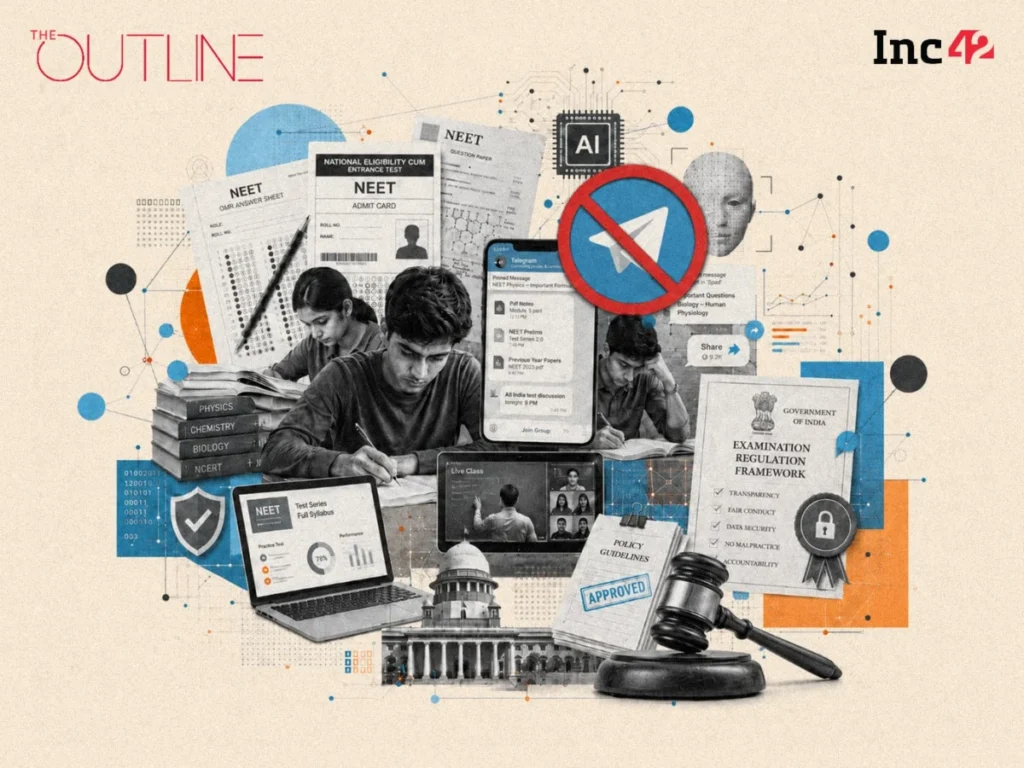
The recent NEET-UG examination cycle has transformed into a national tragedy, characterized by paper leaks, mass cancellations, and the subsequent rescheduling of exams that have left over 2.2 million medical aspirants in a state of existential limbo. This crisis is not merely a logistical failure; it is a systemic indictment of the integrity of the Indian education system. As the government pivots toward reactive, blunt-force measures—most notably the temporary, court-upheld ban on the messaging platform Telegram—a deeper, more uncomfortable question emerges: has India’s celebrated edtech ecosystem and governance structure fundamentally failed to solve the "last mile" problem of examination security?
The Chronology of a Crisis: From Leaks to Digital Blackouts
The turmoil began when reports of widespread paper leaks surfaced, casting doubt on the sanctity of an examination that serves as the gateway to the medical profession in India. As public outrage surged, the central government’s immediate response was not a structural overhaul, but a digital crackdown.
Invoking Section 69A of the Information Technology Act, the government ordered a temporary ban on Telegram, labeling the platform a "hub for bad actors" and equating its utility for criminals to that of the dark web. While Telegram challenged the order in the Delhi High Court, the judiciary declined to intervene, effectively rendering the platform inaccessible to Indian users until at least June 22. The court’s rationale—that the power to block "information" is broad enough to encompass entire platforms and that principles of natural justice were satisfied—has sent shockwaves through the legal and cybersecurity communities.
For millions of students, this backdrop of legal uncertainty and digital censorship is the final hurdle before they sit for the rescheduled NEET exam. The irony is palpable: while the government attempts to plug a digital leak by turning off the tap, the structural vulnerabilities that allowed the paper to be compromised in the first place remain largely unaddressed.
The Policy Hammer: Proportionality vs. Necessity
The decision to block Telegram has sparked a fierce debate over the limits of state power in the digital age. Proponents of the ban, including legal experts like Sohini Mandal of Nilaya Legal, argue that the move meets the test of "proportionality." Because the ban is temporary and aimed at preventing mass extortion and the dissemination of leaked materials, they argue it constitutes the least restrictive mechanism available to the state.
Rahul Rai, co-founder of the law firm Axiom5, highlights the difficulty of dealing with uncooperative "Big Tech." "If the government has secured evidence of a paper being circulated by masked IDs and seeks their identities, what can it do when a platform simply refuses to cooperate?" Rai asks. From this perspective, the ban is a tool of leverage designed to enforce accountability on intermediaries who have historically been perceived as conduits for criminal activity.
However, the Internet Freedom Foundation (IFF) and other digital rights advocates offer a starkly different warning. They argue that treating the speech of an entire population as a "single switch" sets a dangerous precedent. By normalizing platform-wide bans, the state creates a roadmap for future interventions during elections or civil unrest. Critics argue that the "temporary" nature of the ban is a deceptive framing, making it easier for authorities to bypass the high bar of justification required for such extreme measures.
The Edtech Void: A Failure of Innovation
Perhaps the most stinging criticism of the current situation is the silence and inaction of India’s massive edtech sector. Over the past decade, billions of dollars in venture capital have flowed into Indian edtech, primarily focused on coaching, test prep, and cohort-based learning. Yet, as the NEET crisis proves, this capital has been deployed to replicate offline experiences rather than solve foundational systemic problems.
The industry has become a byword for marketing-heavy, high-margin consumer applications. Investors have consistently favored models that promise rapid returns over the "arduous" task of B2G (business-to-government) innovation. Solving the integrity of national exams requires long-term, painful engagement with bureaucratic, often lethargic government departments—a challenge that most startups, driven by the pressure of VC exit timelines, have pointedly avoided.

"The ecosystem has failed to tackle the root causes of examination fraud," says a veteran industry analyst. "We have seen thousands of crores spent on teaching students how to pass, but zero investment in the technology required to ensure the exam itself isn’t a scam."
Beyond the Band-Aid: The Need for Structural Redesign
The fixation on Telegram is a symptom of a larger, systemic myopia. As Maheshwer Peri, founder of Careers360, aptly puts it, "You need to plug the loophole, which is the leak, not the distribution." If the state’s logic were applied consistently, any platform where illicit activity occurs—from YouTube to WhatsApp—would be subject to constant, erratic shutdowns.
Instead of reactive bans, experts point toward the necessity of radical technological integration. One such proposal is the Secure National Examination Conduction System (SNECS), developed by Dr. Santosh Ramrao Butle. The SNECS model proposes a paradigm shift: no physical or digital copy of an exam paper should exist in a readable format until 30 to 60 minutes before the test begins.
Under this system:
- AI-Driven Selection: Questions are drawn from a secure, massive repository only moments before the exam.
- High-Grade Encryption: The final paper remains locked, requiring simultaneous, authenticated keys from multiple independent institutions to decrypt.
- On-Site Printing: Papers are printed directly at the exam centers, eliminating the risk of transit leaks.
- Biometric Verification: Strict, multi-factor authentication ensures that the person taking the test is the authorized candidate.
Despite having been submitted to the National Testing Agency (NTA), such systems remain largely conceptual. The government’s reluctance to adopt these solutions speaks to a broader failure of political and administrative intent.
Implications: The High Cost of Stagnation
The human cost of this failure is catastrophic. The reports of students dying by suicide in the wake of the exam cancellation underscore the extreme pressure placed on the youth of India. When the state fails to secure the very process that determines the trajectory of a student’s life, it loses the "social contract" with its citizens.
Moreover, the collateral damage of the Telegram ban is not insignificant. Thousands of teachers and students who used the platform for legitimate academic collaboration—sharing study materials, conducting quizzes, and facilitating peer-to-peer learning—have been collateral damage. By cutting off these channels, the government has disrupted the educational lives of law-abiding citizens to reach a criminal minority, further fueling resentment.
Conclusion: A Call for an Edtech Renaissance
The path forward requires a drastic pivot. As long as human hands are permitted to handle examination papers, the cycle of leaks, arrests, and protests will persist. India’s edtech ecosystem stands at a crossroads. It can continue its current trajectory of high-margin test prep, or it can "step up to the plate" to build the infrastructure that the nation so desperately needs.
If the current crisis does not trigger a second coming of Indian edtech—one focused on deeptech, cryptographic security, and transparent, government-integrated systems—then the sector risks becoming entirely irrelevant to the core needs of the Indian student. The "hammer" of government regulation will continue to fall where it is easiest, not where it is most effective. The future of India’s intellectual capital depends not on banning messengers, but on fixing the message itself.