Navigating the Modern Web’s Motion Landscape: A Guide to CSS and UI Transitions
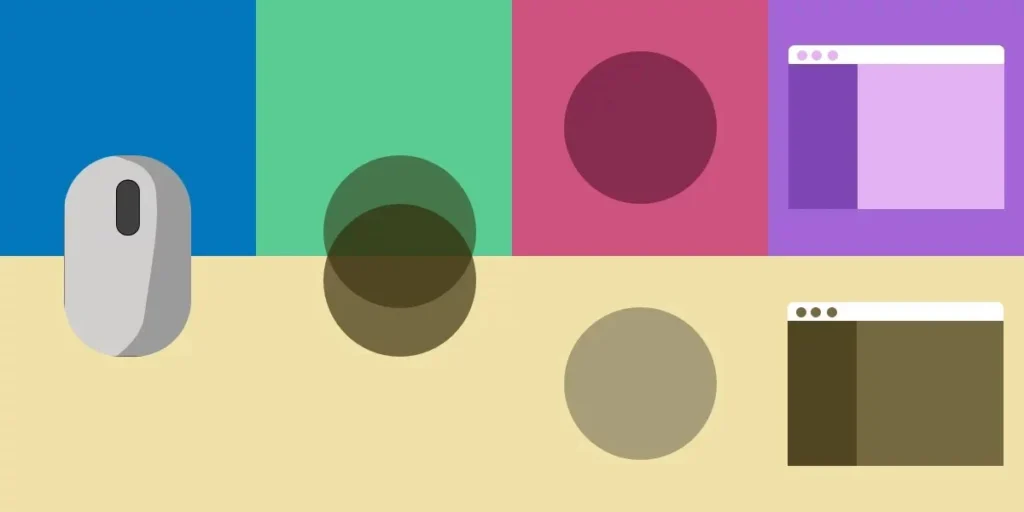
In the rapidly evolving ecosystem of web development, the terminology used to describe motion and state changes has become increasingly sophisticated—and, at times, confusing. As browsers implement powerful new APIs, developers are finding themselves at a crossroads: deciding which tool is the most appropriate for a specific visual outcome.
Terms like "scroll-driven," "scroll-triggered," "container scroll-state," and "view transitions" are frequently used interchangeably in developer forums, yet they represent fundamentally different technical implementations. To demystify these concepts, we must dissect their mechanics, their intended use cases, and their long-term implications for the future of interactive web design.
1. Main Facts: Defining the Core Concepts
To understand the current state of web animation, one must first distinguish between animations tied to the user’s physical interaction (scrolling) and those tied to document lifecycle events (view transitions).
Scroll-Driven Animations
A scroll-driven animation creates a direct, synchronous link between the user’s scroll position and the animation’s progress. It is a "scrubbable" experience: if a user scrolls halfway down a page, the animation stops exactly at the 50% mark. Reversing the scroll reverses the animation. This creates a highly performant, deterministic relationship between input and visual output.
Scroll-Triggered Animations
Unlike scroll-driven animations, these are binary. When an element enters a specific "activation range" within the viewport, the animation is triggered to play from start to finish. There is no direct link to the scroll speed; the trigger acts as a catalyst, not a controller.
Container Query Scroll State
This is perhaps the most nuanced addition to the CSS specification. While traditional container queries allow elements to respond to the size of their parent, these queries respond to the scroll state of a container. It allows developers to apply CSS styles (such as changing a navigation bar’s background or layout) specifically when a child element reaches a certain scroll threshold within its parent container.
View Transitions
View transitions represent a paradigm shift. Unlike the previous three, they are not strictly tied to scrolling. This API provides a native way to animate changes between states—either within a single document (same-document) or during navigation between two separate pages (cross-document).
2. Chronology: The Evolution of Web Motion
The path to these technologies has been a decade-long journey toward "declaring" motion rather than "scripting" it.
- The Early Era (2010–2018): Developers relied heavily on JavaScript libraries like ScrollMagic or GSAP to calculate scroll offsets and manually trigger animations. These methods were often heavy, prone to performance bottlenecks, and suffered from "jank" due to main-thread congestion.
- The Performance Shift (2019–2023): The industry began prioritizing "compositor-thread" animations. CSS animations were favored because they could run off the main thread, leading to smoother visuals even on low-powered mobile devices.
- The Modern Standardization (2024–Present): The W3C and browser vendors (Google, Apple, Mozilla) began standardizing the CSS APIs discussed here. The formal adoption of the
scroll-timelineproperty and the expansion of the View Transitions API marked the end of the "JavaScript-only" era for complex UI choreography.
3. Supporting Data: Comparative Analysis
To better understand how these features differentiate themselves, we can look at their underlying mechanics and typical performance impact.
| Feature | Primary Trigger | Dependency | Implementation Complexity |
|---|---|---|---|
| Scroll-Driven | Scroll progress | Direct link to timeline | Low (CSS only) |
| Scroll-Triggered | Intersection observer/range | Threshold crossing | Low/Moderate |
| Container Scroll | Container scroll state | CSS Conditional Rules | Moderate |
| View Transition | DOM change/Navigation | Snapshot/Diffing engine | High |
Performance Considerations
Scroll-driven animations are generally the most performant, as they are handled by the browser’s compositor. View transitions, while incredibly powerful, require the browser to capture "snapshots" of the DOM, which can lead to minor memory overhead if not managed correctly across large, complex document trees.
4. Official Responses and Industry Consensus
The CSS Working Group (CSSWG) has been vocal about the necessity of these features. In recent documentation, the consensus among browser vendors is that declarative motion is the only way to ensure the web remains accessible and performant.
"The goal is to move the heavy lifting of state management out of JavaScript and into the browser engine," says a lead architect at the Chrome team. By moving these animations into CSS, browsers can optimize the frame-by-frame rendering, ensuring that even complex page-to-page transitions do not block the UI thread.
However, there is caution regarding "motion fatigue." Accessibility experts have warned that while these technologies are impressive, developers must respect the prefers-reduced-motion media query. The consensus is that while the capability to animate everything is now available, the responsibility to provide a comfortable user experience rests entirely on the developer.
5. Implications for the Future of the Web
The implications of these tools are profound, signaling a departure from static, document-based web pages toward highly interactive, application-like experiences.
The Death of the "Janky" SPA
Single Page Applications (SPAs) have historically struggled with page transitions. The View Transitions API effectively solves this by allowing developers to define how elements should morph during navigation. We are entering an era where a website transition feels as fluid as a native mobile application, reducing the "perceived load time" of new content.
The Rise of Storytelling
Scroll-driven animations have democratized "scrollytelling." Previously, high-end journalism sites (like those from the New York Times or The Pudding) required custom-built, expensive animation engines. Now, these effects are accessible to any developer who knows basic CSS. This will likely lead to an influx of more immersive, long-form digital content across the web.
Architectural Complexity
While these tools simplify the code, they complicate the architecture. Developers must now be more careful about how they structure their CSS. Relying on scroll-state queries requires a clear understanding of container hierarchy. As these features become more prevalent, the industry will likely see a rise in "design systems" that explicitly define how these motion patterns should behave, preventing a "wild west" of disjointed UI animations.
Accessibility and Inclusion
Finally, the industry must grapple with the intersection of these features and accessibility. Because these animations are so easy to implement, there is a risk of over-animation. Modern tooling is already beginning to integrate automated checks to ensure that animations are not triggered in a way that disrupts screen readers or causes vestibular issues for users.
Conclusion
We are at the beginning of a golden age for web interaction. By shifting the burden of motion from brittle, custom-coded JavaScript libraries to robust, standardized CSS features, the web is becoming more reliable, more fluid, and more engaging. As we continue to refine the use of scroll-driven animations, container scroll-state queries, and view transitions, the gap between the "web" and "native software" continues to shrink, offering users an increasingly sophisticated digital environment.
For developers, the challenge is no longer about how to animate, but when to animate—a welcome shift that places the focus back on user experience and intentional design.