The Titan Awakens: Jio Platforms’ Landmark IPO Signals a Paradigm Shift for Indian Capital Markets
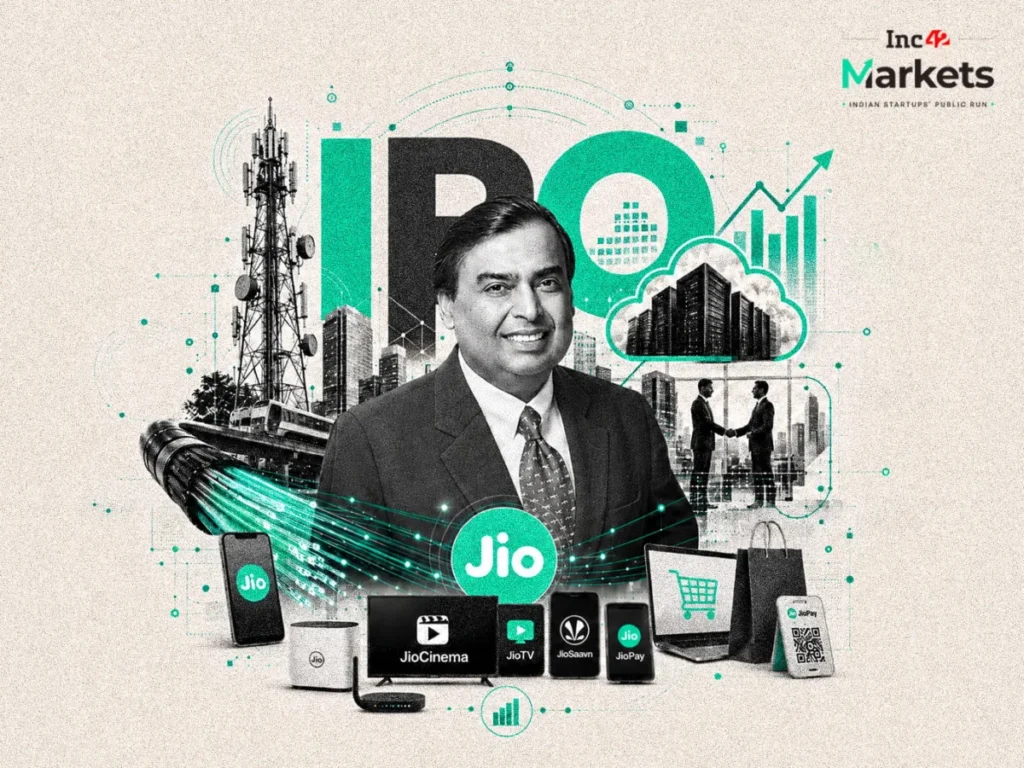
The Indian Initial Public Offering (IPO) landscape, which had languished under the weight of geopolitical instability, volatile equity indices, and inconsistent foreign institutional investment for much of the past eighteen months, is finally witnessing a definitive thaw. In a move that market participants are describing as a watershed moment for the Indian corporate sector, Reliance Industries Ltd (RIL) has officially filed its Draft Red Herring Prospectus (DRHP) for Jio Platforms.
Coming in quick succession to similar filings by the National Stock Exchange (NSE), the Jio IPO is not merely another market entry; it is a signal that the "wait-and-see" approach that defined early 2026 has been replaced by a renewed appetite for risk and growth. As India’s largest-ever public offering, the move marks the culmination of a decade-long capital expenditure cycle that transformed the nation’s digital infrastructure.
The Main Facts: A Colossal Undertaking
The scale of the proposed Jio IPO is staggering. The company plans to issue up to 270 million new shares, with market analysts projecting a valuation in the neighborhood of ₹11–12 Lakh Cr. The transaction is expected to raise approximately ₹37,700 Cr, a figure that would dwarf previous records in the Indian equity markets.
Crucially, this is an offering of entirely fresh capital. Unlike many IPOs that serve as a liquidity exit for early-stage private equity investors, the Jio filing contains no "offer-for-sale" (OFS) component. This strategic decision signals that Reliance is not looking to divest its stake but is rather seeking to establish an independent market benchmark for its digital crown jewel, while simultaneously infusing capital to fuel the next phase of its technological evolution.
Chronology: From Network Building to Market Listing
To understand the significance of this IPO, one must look at the arc of Jio’s history.
- 2016–2019: The Infrastructure Phase. Reliance poured hundreds of billions of dollars into laying massive fiber-optic networks, acquiring spectrum, and establishing a pan-India 4G footprint. This period was characterized by aggressive subscriber acquisition, which effectively democratized internet access in India.
- 2020–2023: The Ecosystem Build. With a dominant subscriber base, Jio pivoted toward a platform-first approach. It secured massive investments from global tech giants and private equity firms, expanding into retail-tech, cloud computing, and digital services.
- 2024–2025: The Stabilization Phase. Global macroeconomic headwinds, including high interest rates and geopolitical tensions, caused a global slowdown in IPO activity. Like many of its peers, Jio deferred its listing plans, opting to focus on operational efficiency and debt reduction.
- 2026: The Year of Monetization. With the IPO market showing early signs of recovery in mid-2026, and after a subdued start where total IPO fundraising hovered at just $3.5 Bn—a sharp decline from the $20 Bn annual peaks of 2024 and 2025—Jio has finally hit the "go" button, signaling a broader market revival.
Supporting Data: The Economics of Scale
Jio currently boasts a massive user base of 524.4 million subscribers. However, the "subscriber race" is largely considered over. The company’s focus has now shifted from raw acquisition to Average Revenue Per User (ARPU) maximization.

Market data suggests that the operating leverage inherent in Jio’s business model is significant. Analysts estimate that even a modest increase of ₹10 in monthly ARPU across the entire subscriber base could translate to roughly ₹6,000 Cr in additional annual profit. Because the capital-intensive phase of network deployment is largely behind it, future revenue growth is expected to flow more efficiently toward the bottom line.
Furthermore, Jio’s strategic push into Fixed Wireless Access (FWA) via 5G technology is a critical data point. By bypassing the need for expensive "last-mile" fiber connectivity to individual homes, Jio is positioning itself to capture the high-value home broadband market. Broadband users are statistically more likely to consume multi-layered services, including cloud storage, enterprise SaaS, and smart-home solutions, thereby increasing the "lifetime value" of the customer.
The "Optionality" Debate: Telecom vs. Tech
One of the most contentious aspects of the upcoming IPO is the valuation model. If Jio were valued solely as a telecom operator, its price-to-earnings ratio would be constrained by the cyclical and competitive nature of the sector. However, Reliance is positioning Jio as a "Digital Infrastructure Platform."
Investors are essentially being asked to pay for "optionality"—the potential for Jio to dominate in Artificial Intelligence, enterprise software, and satellite connectivity. This creates a dichotomy:
- The Telecom Reality: Currently, the vast majority of Jio’s cash flow is derived from core telecom services.
- The Tech Future: The long-term upside is predicated on AI-led growth, digital commerce, and data center dominance.
The burden of proof now rests on management to demonstrate that their AI investments are not merely buzzwords but foundational pillars for future revenue. While the market is currently littered with companies attempting to leverage the AI theme, Jio’s advantage lies in its massive proprietary dataset and the physical infrastructure required to deploy AI services at scale.
Official Responses and Strategic Intent
While Reliance has remained relatively tight-lipped regarding specific valuation targets beyond the initial DRHP, internal communications at recent Annual General Meetings (AGMs) have been clear: Jio is the cornerstone of the group’s future.

The decision to list Jio separately is, in many ways, an act of "value discovery" for the entire Reliance conglomerate. For years, investors have struggled to separate the value of the legacy Oil-to-Chemicals (O2C) business from the high-growth digital and retail arms. By spinning off a valuation for Jio, Reliance is forcing the market to recognize the hidden value in its retail and energy divisions. If the Jio IPO is successful, it provides a transparent benchmark that will likely lead to a re-rating of the entire Reliance stock complex.
Implications for the Broader Market
The ripples of this IPO are being felt throughout the Indian startup and public market ecosystem. Several other major players are accelerating their timelines in response:
- The Fintech Surge: Razorpay, the fintech major, has already filed confidential IPO papers targeting a $500–$600 Mn raise. With backing from global heavyweights like Tiger Global and Y Combinator, its entry signals that the "tech-growth" appetite is returning.
- Migration Trends: Companies like Veefin are migrating from the SME boards to the main board, indicating that smaller, high-growth firms are looking to capitalize on the expected liquidity influx.
- The Power of Vision: Nykaa’s recent stock rally, spurred by its ambitious FY30 roadmap, highlights that institutional investors are currently prioritizing companies with clear, AI-driven paths to profitability.
- The Global Pipeline: Even companies like BRND.ME are setting their sights on the public markets, aiming for an IPO within the next 12–18 months as the redomiciling trend continues to gain steam.
Conclusion: A New Era of Transparency
The Jio IPO represents more than just a capital-raising exercise; it is the opening of a new chapter for Indian equity. By choosing to list at a time when the market is still finding its footing, Reliance is effectively acting as the "anchor tenant" for the 2026 IPO cycle.
For investors, the next few months will be a period of intense scrutiny. They will have to weigh the reality of a mature telecom business against the promise of a digital-first AI future. For the broader Indian economy, the success of this listing will determine whether the market can support the next generation of multi-billion dollar tech listings. The infrastructure has been built, the platforms are in place, and the subscriber base is locked in. Now, the market must decide what that future is worth.