The Era of Compounding Intelligence: Insights from AWS Summit New York 2026
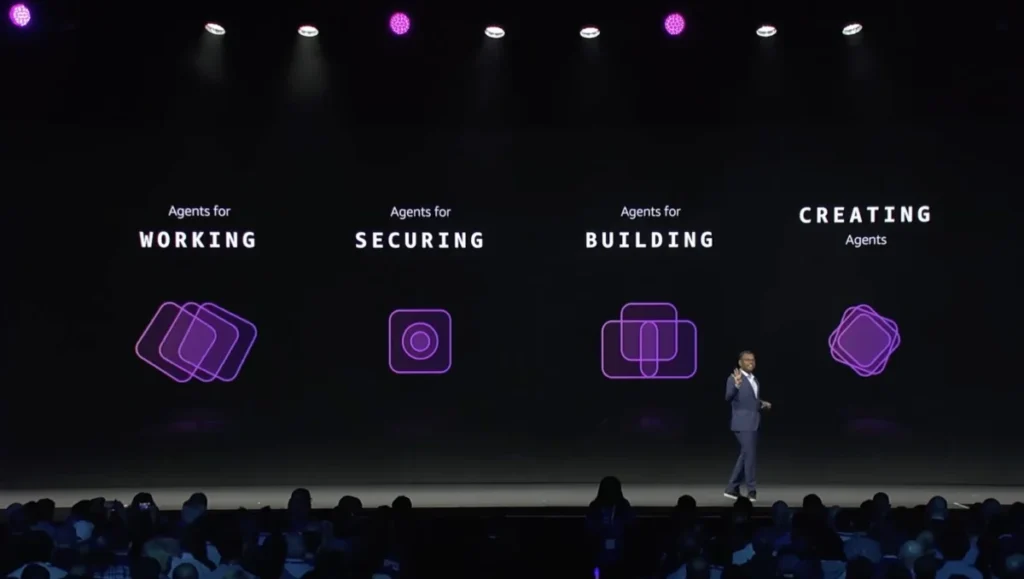
The cloud computing landscape witnessed a significant shift last week as thousands of developers, industry leaders, and enterprise architects converged in the heart of Manhattan for the AWS Summit New York City. This annual gathering, long recognized as a barometer for the state of enterprise cloud adoption, served as the launchpad for a new strategic vision from Amazon Web Services (AWS): the era of "Agentic AI."
As organizations move beyond the initial excitement of generative AI experimentation, the focus has shifted toward utility, reliability, and long-term compounding value. Dr. Swami Sivasubramanian, VP of Agentic AI at AWS, took center stage to articulate a future where AI is not merely a tool for text generation, but an active participant in complex workflows.
The Core Thesis: Agents That Compound Value
The defining narrative of this year’s Summit was the pivot from "Generative AI" to "Agentic AI." In his keynote, Dr. Sivasubramanian argued that the next phase of the AI revolution will be defined by systems that do not just perform isolated tasks but possess the ability to reason, plan, and execute multi-step workflows autonomously.
"The true potential of AI lies in its ability to compound value over time," Dr. Sivasubramanian stated. "We are moving away from simple chatbots toward intelligent agents that can understand business context, navigate complex toolsets, and learn from every iteration to deliver better outcomes."
This shift marks a departure from the "single-prompt" paradigm. Instead, AWS is positioning its infrastructure to support AI agents that act as persistent collaborators, capable of managing end-to-end processes—from software development lifecycles to complex data analytics and customer support orchestration.
Chronology of the Summit: A Day of Transformation
The AWS Summit New York City was structured to provide a holistic view of how these advancements intersect with real-world infrastructure.
Morning: The Visionary Keynote
The event opened with a high-energy keynote that set the technical tone for the day. AWS leadership highlighted the acceleration of their AI stack, emphasizing the integration of Bedrock and Q with deeper reasoning capabilities. The announcement of new, highly optimized compute instances designed specifically for agentic reasoning was met with significant enthusiasm, signaling that AWS is preparing its hardware layer for the intensive demands of autonomous systems.
Afternoon: Deep Dives and Builder Sessions
Following the keynote, the summit transitioned into a series of technical deep dives. Attendees had the opportunity to engage with AWS engineers on topics ranging from "Reasoning at Scale" to "Securing Agentic Workflows." These sessions served as a practical application of the morning’s theory, demonstrating how companies can utilize AWS services to build agents that possess the "memory" and "reasoning" necessary to function in production environments.
Closing: Ecosystem and Community
The final hours of the event focused on the broader ecosystem. AWS underscored the role of partners and independent software vendors (ISVs) in the agentic revolution. By providing the tools for third-party developers to plug their proprietary data and workflows into the AWS agentic framework, the company aims to foster a network effect that benefits all users of the AWS cloud.
Supporting Data and Technical Infrastructure
To support the transition to agentic workflows, AWS has introduced a series of infrastructure optimizations. The technical strategy revolves around three pillars:
- Low-Latency Reasoning: New compute instances, purpose-built for the high-memory requirements of agentic AI, allow for faster inference cycles. This is crucial for agents that need to iterate on plans in real-time.
- Context Retention: AWS has enhanced its managed vector database capabilities, enabling agents to retrieve relevant information from massive, heterogeneous datasets with greater precision and lower overhead.
- Security and Guardrails: Recognizing the risks inherent in autonomous agents, AWS unveiled expanded guardrail features. These tools allow enterprises to define strict boundaries for their agents, ensuring they operate within compliance, safety, and operational protocols.
Official Responses and Strategic Implications
The implications of the AWS Summit reach far beyond the immediate product announcements. Industry analysts have noted that by emphasizing "compounding value," AWS is attempting to solve the "ROI problem" that has plagued many early generative AI deployments.
"Many organizations are currently stuck in the ‘PoC purgatory’ of generative AI," says one industry observer. "By focusing on agents that can actually finish work, rather than just suggesting answers, AWS is trying to help their customers move from experimentation to tangible business value."
Official responses from AWS partners have been largely positive. Companies across sectors—from finance to healthcare—have expressed interest in deploying agentic workflows to automate high-touch processes. The ability to integrate these agents into existing AWS environments, without needing to overhaul their entire data stack, is cited as a major competitive advantage for the platform.
What This Means for Developers and Architects
For the professional community, the message from the Summit is clear: the skillset of the future is shifting. Developers are no longer just writing code; they are now "architecting agents." This involves designing the prompt chains, the memory architectures, and the tool-use capabilities that will define the performance of an AI agent.

AWS is doubling down on its support for this transition through the AWS Builder Center, which provides the resources, tutorials, and community connections necessary to navigate this shift. The company encourages developers to move beyond the basics and start experimenting with multi-agent systems—networks of specialized AI agents that collaborate to solve larger, more complex problems.
Looking Ahead: The Road to Re:Invent
As the dust settles on the New York Summit, the tech community is already looking toward the end of the year. The announcements made in New York serve as a preview for what is likely to be a massive push at AWS re:Invent later this year.
For those who missed the live event, AWS has provided a comprehensive library of session recordings and technical documentation. The "Top Announcements" blog post serves as an essential guide for those looking to integrate these latest capabilities into their current projects.
Key Takeaways for Enterprises:
- Prioritize Persistence: Focus on building agents that retain memory and context over time.
- Reasoning over Generation: Invest in infrastructure that supports multi-step reasoning capabilities.
- Security First: As agents gain more autonomy, governance and guardrails must be baked into the design, not added as an afterthought.
Conclusion
The AWS Summit New York City 2026 was more than just a gathering; it was a definitive statement on the direction of enterprise technology. By centering its strategy on the compounding value of Agentic AI, AWS has provided a clear roadmap for businesses looking to unlock the next level of productivity.
As we look toward the remainder of the year, the challenge for organizations will be to translate this vision into execution. The tools are now in place. The infrastructure is ready. The era of the autonomous agent has arrived, and for those ready to build, the opportunities for compounding value are limited only by the complexity of the problems they choose to solve.
For more information on the latest updates, stay tuned to the "What’s New with AWS" page and keep an eye on the AWS News Blog for the latest weekly roundups. Whether you are an individual builder or an enterprise architect, the upcoming months promise a wealth of new opportunities to learn, connect, and grow within the AWS ecosystem.