The Privacy Revolution: How Samsung’s S26 Ultra Display Tech is Reshaping the Smartphone Industry
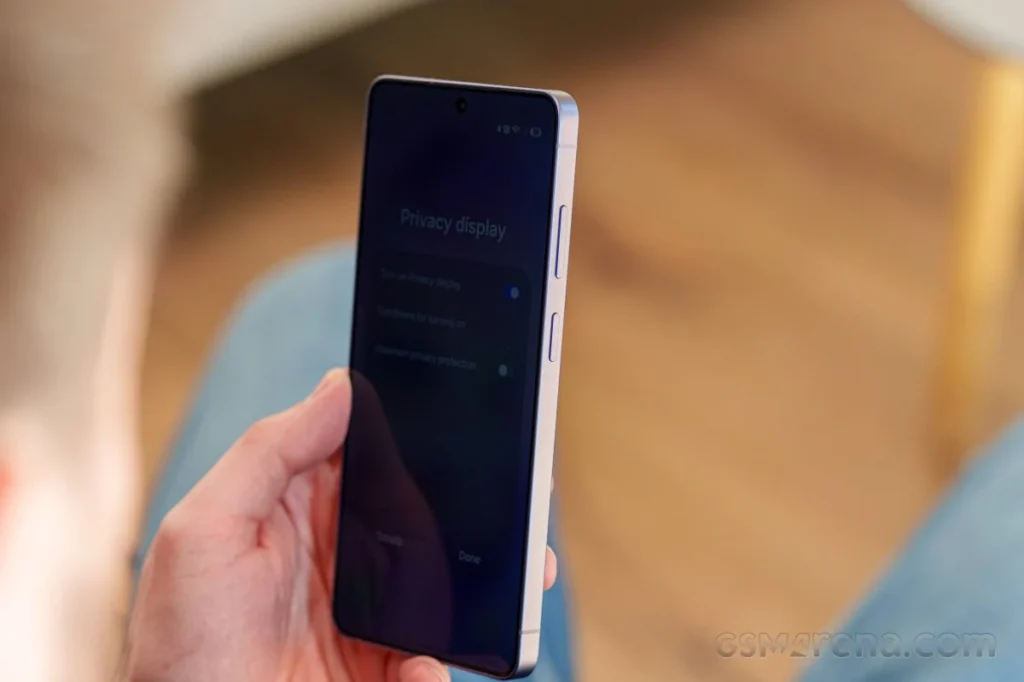
The launch of the Samsung Galaxy S26 Ultra earlier this year marked a pivotal moment in mobile display technology. Beyond the typical incremental upgrades in brightness, color accuracy, and refresh rates, Samsung introduced a feature that fundamentally changed the relationship between the user and their screen: the Privacy Display. By engineering a panel capable of physically restricting viewing angles to prevent "shoulder surfing" in public spaces, Samsung created a unique selling proposition that left competitors scrambling to catch up.
However, the industry landscape is shifting rapidly. Emerging reports suggest that while Samsung Display intends to maintain exclusivity for a period, the rest of the market—led by aggressive Chinese OEMs—is racing to develop proprietary alternatives. As we look toward the horizon of 2028, the "Privacy Display" is poised to transition from a luxury flagship novelty to a standardized security requirement in the smartphone ecosystem.
The Genesis: Understanding Samsung’s Privacy Innovation
The Privacy Display on the Galaxy S26 Ultra is not merely a software filter or a screen protector; it is a hardware-level integration within the OLED panel itself. Traditional privacy screens, often applied as adhesive films, frequently suffer from reduced touch sensitivity, muted colors, and a significant drop in peak brightness. Samsung’s implementation, by contrast, utilizes advanced light-path control within the pixel structure, allowing for a sharp, high-contrast image for the user while effectively obscuring the content from those viewing at a 30-degree offset or greater.
This technology has proven to be the S26 Ultra’s most significant market differentiator. In an era where mobile banking, sensitive corporate emails, and private communications are handled entirely on handheld devices, the demand for "visual privacy" has moved from a niche requirement for executives to a broad consumer desire.
A Chronology of the Privacy Arms Race
The trajectory of this technology can be mapped through a series of industry shifts occurring over the past twelve months:
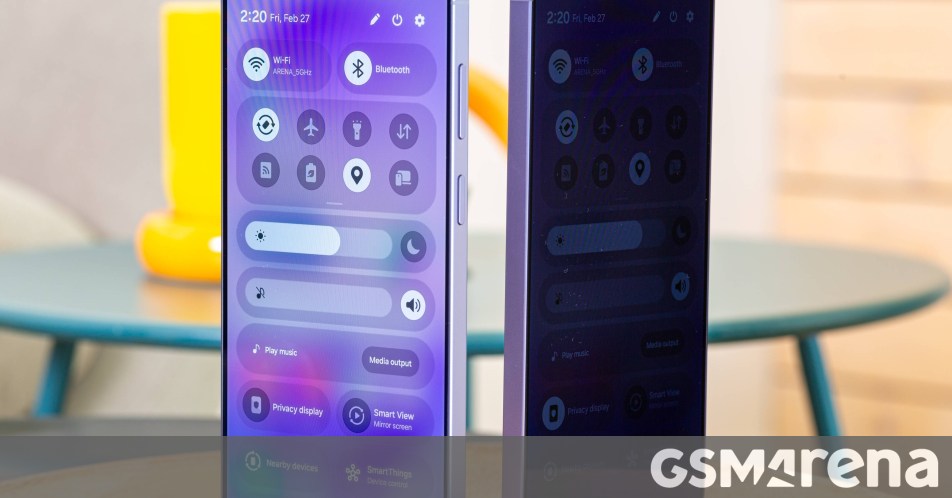
- Q1 2026: Samsung officially unveils the Galaxy S26 Ultra, highlighting the Privacy Display as a primary security feature. Early reviews praise the seamless transition between standard viewing and privacy mode.
- Q2 2026: Competitors and analysts begin dissecting the display’s efficacy. It becomes clear that Samsung holds a significant lead in manufacturing complexity, utilizing specialized thin-film transistor (TFT) layouts to control light dispersion.
- Q3 2026: Rumors begin to circulate within the supply chain that Samsung Display—the manufacturing arm of the conglomerate—has established a roadmap to license this technology to third-party manufacturers, with a projected window of late 2028.
- Q4 2026: Chinese OEMs, recognizing the market appeal, begin heavy R&D investment. Reports surface that Xiaomi is actively prototyping a "Privacy Display" for its 18 Pro series.
- Early 2027 (Present): Honor joins the fray. Supply chain leaks suggest Honor is currently testing dual-panel configurations (6.3-inch and 6.8-inch) for its upcoming Magic9 series, signaling that the race for "Privacy Display" parity is now in full swing.
Supporting Data: Market Dynamics and Device Specs
The market’s obsession with this technology is reflected in the current pricing and demand for the Galaxy S26 Ultra. Despite its premium positioning, the device has seen strong adoption rates, with many consumers citing privacy concerns as a key factor in their upgrade path.
Galaxy S26 Ultra Market Snapshot
| Configuration | US Price (USD) | Canada Price (CAD) |
|---|---|---|
| 256GB / 12GB RAM | $934.99 | C$1,599.00 |
| 512GB / 12GB RAM | $1,134.99 | C$1,650.00 |
While these figures reflect current retail pricing, the entry of competitors like Xiaomi and Honor will likely trigger a price war for "Privacy-First" hardware. Honor’s development is particularly notable; by testing across two different screen sizes, the brand is clearly positioning its future lineup to cater to both the compact flagship market and the "Ultra" phablet enthusiast demographic.
The Response from the Industry
While Samsung has remained characteristically tight-lipped regarding its specific supply chain agreements, the move to open up its display technology by 2028 is a strategic calculation. Historically, Samsung has utilized exclusivity to drive sales of its own hardware, but eventually, the licensing of high-end components to other manufacturers creates a lucrative revenue stream for its display division.
Chinese OEMs are taking a different path. Rather than waiting for Samsung’s licensing window, companies like Xiaomi and Honor are collaborating with local display manufacturers—such as BOE and CSOT—to replicate the physics of the privacy display.
"The goal is not to copy Samsung, but to iterate on the concept of visual security," says one industry analyst. "Chinese manufacturers have become masters at domesticating supply chains. If they can produce a 90% effective privacy screen at 60% of the cost, they will capture the mid-to-high-end segment that cannot afford the S26 Ultra."

Implications: The Future of Mobile Security
The widespread adoption of Privacy Displays will have profound implications for the mobile industry and society at large:
1. The Death of the "Privacy Screen Protector"
For over a decade, the mobile accessory market has thrived on selling tempered glass privacy filters. These products are notoriously difficult to install, often collect dust at the edges, and diminish the quality of high-end displays. If integrated privacy becomes a standard hardware feature, the third-party screen protector industry will face a significant existential threat.
2. Shifts in Software-Based Privacy
We are likely to see an integration between software and hardware. Imagine a phone that detects a secondary face looking at your screen and automatically tightens the light-dispersion angle via the hardware, while simultaneously blurring sensitive notification previews. This synergy between AI-driven awareness and hardware-based viewing angles is the next frontier.
3. Corporate and Enterprise Adoption
The "bring your own device" (BYOD) model in corporate settings has always struggled with data security. A smartphone with a built-in privacy display could become the new standard for enterprise-issued devices, as it mitigates the risk of sensitive financial or proprietary data being viewed by unauthorized persons in airports, public transit, or crowded offices.
4. Consumer Habits and Social Norms
As we move toward 2028, we may see a cultural shift where the ability to view a screen from an angle is considered a "leaky" device, much like how open-ear audio became a social faux pas in quiet environments. Privacy will become a fundamental expectation, not an optional premium feature.

Conclusion
The journey of the Privacy Display from a Samsung-exclusive feature to a potential industry standard is a testament to how quickly mobile innovation moves. While Samsung currently holds the crown with the S26 Ultra’s sophisticated panel, the rapid response from Honor and Xiaomi proves that the industry has identified a major pain point for the modern user.
Whether these Chinese-developed alternatives can match the color fidelity and viewing angle precision of Samsung’s flagship technology remains the most pressing question. However, one thing is certain: by 2028, the ability to control who sees your digital life will be a core pillar of smartphone hardware design. As manufacturers continue to battle for consumer attention, the Privacy Display is rapidly evolving from a "nice-to-have" luxury into an essential safeguard for the increasingly public nature of our private digital lives.