WhatsApp Unveils Major Update: Transforming iPad Connectivity, In-Car Integration, and Media Sharing
WhatsApp, the world’s most popular messaging platform under the Meta umbrella, has officially announced a significant feature rollout aimed at enhancing user productivity, accessibility, and convenience. The latest update, which is currently being distributed to users globally, marks a pivot toward making the platform more hardware-agnostic and feature-rich. By decoupling the iPad experience from the primary smartphone and deepening integration with automotive software, WhatsApp is signaling a clear intent to dominate the cross-device ecosystem.
Main Facts: A New Era for iPad and Automotive Utility
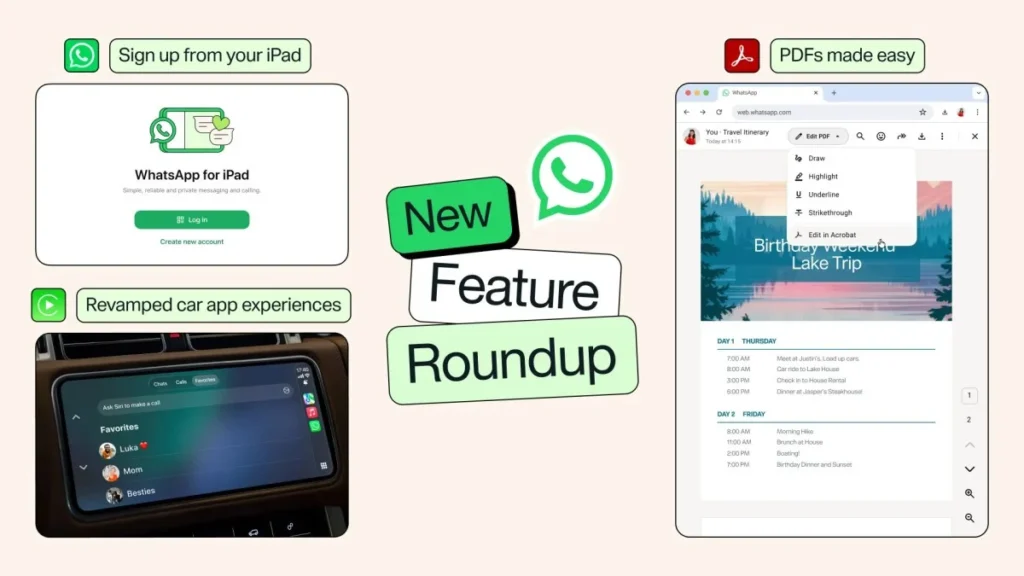
The core of this update rests on four pillars that redefine how users interact with the application. Perhaps most notable is the decoupling of the iPad experience. Previously, users were required to tether their iPads to an existing smartphone account via a QR code system, which often proved cumbersome and unreliable. Now, WhatsApp allows for native account creation directly on the iPad, removing the dependency on a primary handset.
Simultaneously, the platform has overhauled its integration with Apple CarPlay and Android Auto. Drivers can now manage their communication ecosystem—including reading messages, initiating calls, and accessing favorites—entirely via voice commands and dashboard interfaces.
Beyond device connectivity, the update introduces productivity enhancements. PDF handling within the app has been streamlined to allow for instant viewing and in-app annotation. Finally, music integration takes center stage, as users can now broadcast their current Spotify or Apple Music tracks directly to their WhatsApp Status, turning the platform into a more social, multimedia-rich experience.
Chronology: The Evolution of WhatsApp’s Feature Set
The journey to this update has been a multi-year effort to transition WhatsApp from a phone-only service to a truly multi-device powerhouse.
- 2021: The Multi-Device Beta: WhatsApp initiated a long-awaited shift by allowing users to link up to four devices to a single account without requiring the primary phone to be online. This laid the foundation for today’s announcement.
- 2023: The iPad Debut: After years of requests from the Apple community, WhatsApp finally launched a dedicated iPad app. However, it was hampered by the "linked device" architecture, which required an active phone.
- Early 2024: Stability Refinement: Throughout the first half of the year, Meta focused on backend synchronization, ensuring that message history and encryption keys remained consistent across tablets and desktops.
- Mid-2024 (Current): The Feature Rollout: The latest update marks the culmination of these efforts, removing the final hurdle of phone-dependency for tablet users while expanding the platform’s footprint into the automotive and productivity sectors.
Supporting Data: Why This Matters for User Experience
The move to make WhatsApp "phone-independent" on tablets is not merely a convenience feature; it is a strategic response to changing consumer habits. Data from market research firms suggests that tablet usage is increasingly becoming a secondary productivity hub for professionals and students. By enabling native account creation, WhatsApp is directly competing with platforms like Telegram, which has long offered standalone tablet and desktop applications.
Furthermore, the PDF annotation feature speaks to the "work-from-anywhere" culture. WhatsApp has evolved from a simple messaging tool into a business communication channel. Integrating native PDF editing allows professionals to review documents, sign contracts, or mark up designs without switching between apps, thereby reducing friction in the workflow.
Regarding the automotive update, the integration of hands-free controls is a response to the growing necessity for safety. As drivers increasingly rely on dashboard-integrated systems for navigation and communication, WhatsApp’s deeper integration ensures that users do not feel compelled to reach for their phones while behind the wheel, significantly mitigating distracted driving risks.
Official Responses and Strategic Rationale
In a statement accompanying the release, Meta representatives emphasized that the update is designed to "make the platform more intuitive and responsive to the way people live their lives today." The company highlighted that the demand for an iPad-native version was one of the most consistent pieces of feedback received through their community channels.
"We recognize that for many of our users, the phone is no longer the sole device in their daily workflow," said a Meta spokesperson. "By allowing users to set up their accounts directly on their iPad, we are respecting the autonomy of their hardware choices. Similarly, our focus on CarPlay and Android Auto reflects our commitment to bringing seamless communication into every environment our users inhabit, especially the car, where safety and simplicity are paramount."
The company also noted that the music-sharing feature was developed in response to the "social discovery" trend. By allowing users to share their current listening habits, WhatsApp is attempting to recapture the social spark that defined early social networking, where music and personal status updates were the primary way of connecting with friends.
Implications: A Shift in Platform Philosophy
The implications of these updates are significant for both the competition and the end-user.
1. The Death of the "Phone-Only" Era
By allowing users to sign up on an iPad, WhatsApp has effectively moved away from the "SIM-card-as-identity" model that defined its early years. This suggests that the platform may eventually expand to other devices, such as smartwatches or standalone smart displays, where a phone might not be present.
2. Deepening the Ecosystem Moat
By integrating Spotify and Apple Music, WhatsApp is positioning itself as a hub for content consumption. If users start checking WhatsApp to see what their friends are listening to, they will spend more time within the Meta ecosystem, increasing ad revenue potential and user retention.
3. Productivity as a Growth Engine
The inclusion of PDF annotation is a direct shot across the bow of professional communication tools like Slack or Microsoft Teams. While WhatsApp is not yet a full project management suite, its ability to handle documents efficiently makes it a formidable tool for small business owners and freelancers who prefer to keep their operations within the app they already use for personal messaging.
4. Safety and Regulatory Compliance
The enhancements to Android Auto and Apple CarPlay are timely. As regulators globally tighten laws around mobile phone usage in vehicles, providing a robust, voice-first interface allows WhatsApp to remain accessible without falling afoul of safety legislation. This also provides Meta with a degree of "future-proofing" as connected vehicles become more common.
Looking Ahead: The Future of WhatsApp
While these four features are currently being rolled out to the global user base, they are likely just the beginning. The industry is watching to see how Meta will handle the next logical step: full cross-device synchronization of stickers, custom wallpapers, and archived chats across platforms.
For the average user, these changes represent a more fluid, less restrictive experience. Whether you are a student editing a PDF on an iPad, a commuter using voice commands to manage your calendar, or a music lover sharing your current favorite track, WhatsApp is clearly working to ensure that the app remains the central nervous system of your digital life.
As the rollout continues, users are encouraged to ensure their app is updated to the latest version via the Apple App Store or Google Play Store to access these functionalities immediately. The transition from a simple "messenger" to a "communication operating system" is now firmly underway, and the latest update is a massive stride in that direction.