The Architect of Automation: How Custom AI Agent Systems Are Redefining Entrepreneurial Productivity
In the rapidly evolving landscape of artificial intelligence, the promise of "automation" often feels like a mirage—easily discussed in theory but difficult to implement in practice. For many business owners, the initial excitement of using tools like ChatGPT or Claude often gives way to frustration when "one-size-fits-all" prompts fail to capture the nuance of their specific business processes.
However, Keith Moehring, founder and CEO of L2 Digital, has cracked the code on a more sophisticated approach. By moving away from generic AI interactions and toward a structured, custom system of AI agents, Moehring has successfully automated 60% of his workload. Most notably, he has reduced a complex monthly client onboarding and task-setting process that once took two weeks down to a single hour of oversight.
This report explores the methodology, technical architecture, and strategic implications of Moehring’s "bottom-up" approach to AI agent orchestration.
I. Main Facts: Beyond the Six-Step Hype
The prevailing narrative on social media suggests that building an AI agent is a "six-step" weekend project. Moehring offers a necessary reality check: true automation requires a significant upfront investment in process mapping and context setting.
The 80/20 Rule of AI
Moehring’s system is built on the philosophy that an agent should not aim for 100% autonomy. Instead, the goal is for the AI to handle 80% of a task—the repetitive, data-heavy, and administrative portions—leaving the final 20% for human review, refinement, and strategic decision-making. This ensures quality control while still delivering massive time savings.
The "Second Brain" Benefit
Perhaps the most unexpected outcome of building a custom agent system is the creation of a "second brain." Because the agents operate within a structured file system where every meeting note, client deliverable, and process is logged, the entire business becomes queryable. Moehring no longer has to hunt through old emails or project management software to remember a specific decision; he simply asks the system.
II. Chronology: The Blueprint for Building a Custom Agent System
Building a reliable AI agent system is an architectural challenge rather than a coding one. Moehring recommends a specific sequence of operations to ensure the system scales without breaking.
Phase 1: Mapping the Accountability Chart
Before touching a single line of code or an AI interface, an entrepreneur must define how their business actually operates. Moehring utilizes an "accountability chart"—a more functional version of an organizational chart.
- Identify Functions: Sales, Marketing, Operations, Finance, and Client Delivery.
- Assign Roles: Even if a solo entrepreneur wears every hat, those roles must be separated.
- List Recurring Tasks: Every role has daily, weekly, and monthly tasks. These tasks become the "targets" for automation.
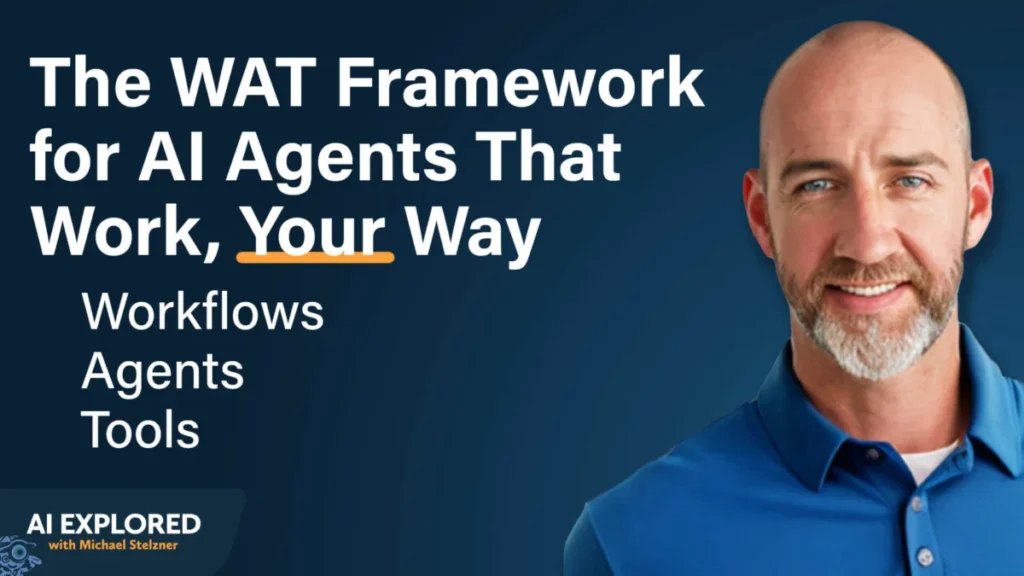
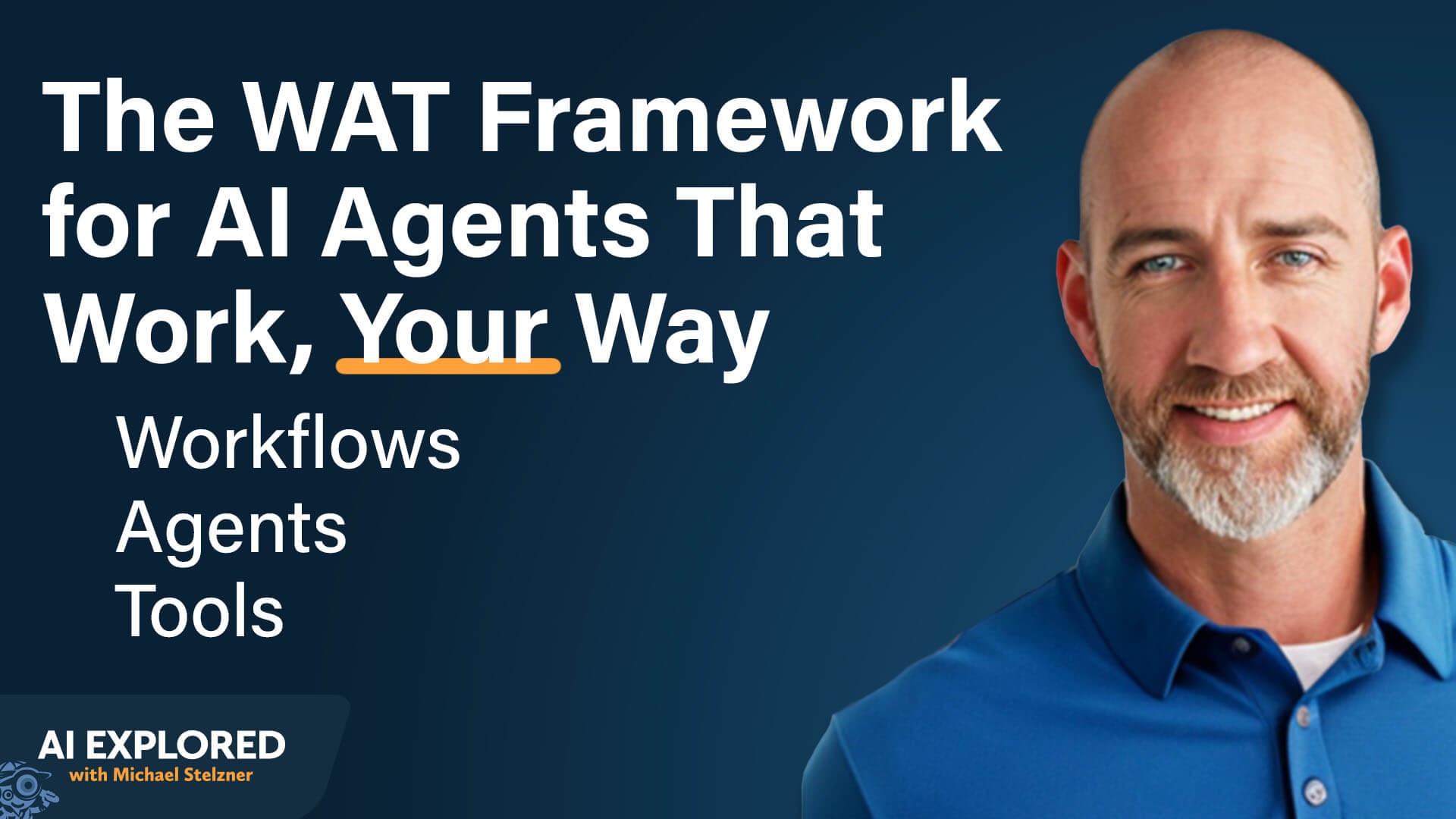
Phase 2: The WAT Framework (Workflows, Agents, Tools)
Once a task is identified, Moehring applies the WAT Framework:
- Workflows: Documenting the exact human steps currently taken to complete the task.
- Agents: Defining the specific persona and instructions the AI needs to follow.
- Tools: Identifying the necessary connectors, such as API keys or Model Context Protocols (MCP), to allow the AI to interact with software like ClickUp, Granola, or Slack.
Phase 3: The Build and Iteration Cycle
The actual "build" happens within a specialized environment (like the Cursor code editor). The user provides the AI with the workflow and the desired output template. The AI then drafts a technical plan. Moehring emphasizes that this is a collaborative process; the user reviews the plan, identifies potential friction points, and only then triggers the "Build" command. This phase can take anywhere from a few minutes to an hour of iterative refinement.
III. Supporting Data: Case Studies in Orchestration
The power of Moehring’s system is best illustrated through two specific implementations: the "Follow-Through Agent" and "Leo," the Orchestration Agent.
Case Study A: The Automated Meeting Follow-Through
One of the most common "leaks" in professional services is the failure to document action items immediately after a call. Moehring’s first agent solved this by connecting three distinct tools:

- Granola: An AI-powered meeting notepad.
- Cursor: To act as the processing hub.
- ClickUp: The final destination for tasks.
The Data Flow:
- Meetings are named with a specific convention (e.g.,
CLIENT_Strategy_Call). - The agent uses an MCP connector to pull these notes.
- The agent categorizes the meeting based on the first line of the note.
- The agent identifies "Action Items" owned by Moehring.
- Tasks are automatically created in ClickUp with full context, including the client name and deadline.
Case Study B: "Leo" and the Power of Orchestration
At the "Advanced Level" of Moehring’s hierarchy sits Leo, an orchestration agent. Leo does not perform individual tasks; instead, he manages other agents.
On the first day of the month, Moehring gives Leo a single prompt: "Set up all client tasks and start executing on the work for all distributor clients."
Leo then:
- Activates the "Project Setup Agent."
- Triggers the "Email Draft Agent."
- Coordinates with the "Reporting Agent."
By stacking these task-level agents, a two-week administrative burden is compressed into 60 minutes of review.
IV. Official Perspectives: The Tech Stack and Security
For this system to function, the technology must have a "Context Layer." Moehring’s setup relies on a specific folder structure he calls L2 Ops, which acts as the AI’s reference library.
The "L2 Ops" Folder Hierarchy:
- Reference: Contains the "Who, What, and Why" of the business, including client lists and brand voice guidelines.
- Playbooks: The SOPs written specifically for AI consumption.
- Prompts: A library of optimized instructions.
- Files: Raw data and temporary working documents.
- Clients: Individual folders for every client, containing their history and specific preferences.
- Output: The final destination for AI-generated drafts before human approval.
Expert Insight on Tool Selection
Moehring utilizes Cursor, a fork of VS Code, as his primary interface. Unlike standard web-based AI chats, Cursor allows the AI to "see" the entire folder structure on a local computer.
"This is the piece most people miss," Moehring notes. By giving the AI access to a local file directory, you provide it with a "long-term memory" that web interfaces lack. From a security perspective, Cursor restricts the agent to the specific folder opened by the user, ensuring the AI doesn’t wander into sensitive system files.
V. Implications: The Future of the "AI-Enhanced" Workforce
The success of Moehring’s system suggests a fundamental shift in how small businesses and agencies will scale in the coming years.
From "Doing" to "Reviewing"
The primary implication of 60% workload automation is the transformation of the entrepreneur’s role. Moehring’s day is no longer consumed by the "how" (drafting emails, setting up tasks, organizing notes) but by the "what" (strategy and client relationships). This shift allows for higher-margin work and prevents the burnout typically associated with scaling a service-based business.

The End of the "One-Size-Fits-All" Agent
The industry is moving away from generic GPTs and toward "Agentic Workflows." Moehring’s approach proves that the value isn’t in the AI model itself (he uses Claude, OpenAI, and Gemini interchangeably) but in the proprietary context provided to the model. The business with the best-organized data and the clearest SOPs will be the one that automates most effectively.
Accessibility for Non-Developers
Crucially, while Moehring uses a code editor (Cursor), he emphasizes that he is not a professional developer. The natural language capabilities of modern LLMs mean that the barrier to entry for building these systems is no longer coding knowledge—it is process clarity.
Final Outlook
As AI agents become more autonomous, the competitive advantage will lie in the "Accountability Chart." Businesses that fail to document their processes will find themselves unable to automate them. Conversely, those who follow Moehring’s lead—building from the bottom up, starting with small tasks, and layering orchestration on top—will find themselves operating with a level of efficiency that was previously reserved for large-scale corporations.
The future of work isn’t just about "using AI"; it’s about building a custom digital workforce that understands your business as well as you do.