Stop the Bleeding: A Masterclass in Ecommerce Conversion Rate Optimization

Your business is bleeding. Every day, thousands of potential customers visit your digital storefront, interact with your brand, and then disappear into the ether. In the world of ecommerce, traffic is the lifeblood of your operation. Yet, for many online retailers, this lifeblood is being wasted at an alarming rate. Instead of perpetually trying to "inject" more traffic through expensive advertising campaigns, the most successful merchants focus on a more surgical approach: stopping the bleed.
This is the essence of Ecommerce Conversion Rate Optimization (CRO). By refining the path your customers take, you can unlock hidden revenue without spending an extra cent on marketing. In this comprehensive guide, we dissect the mechanics of conversion, the diagnostic tools required for success, and the strategic best practices that separate industry leaders from the rest of the pack.
What is a Conversion Rate? The Pulse of Your Business
At its core, a conversion rate is a fundamental metric that measures the efficiency of your sales process. In a physical retail store, if 100 people walk through the door and 10 walk out with a purchase, your conversion rate is 10%. In the digital landscape, the concept remains the same: it is the ratio of users who complete a desired action—such as purchasing a product, signing up for a newsletter, or downloading a resource—against the total number of visitors.
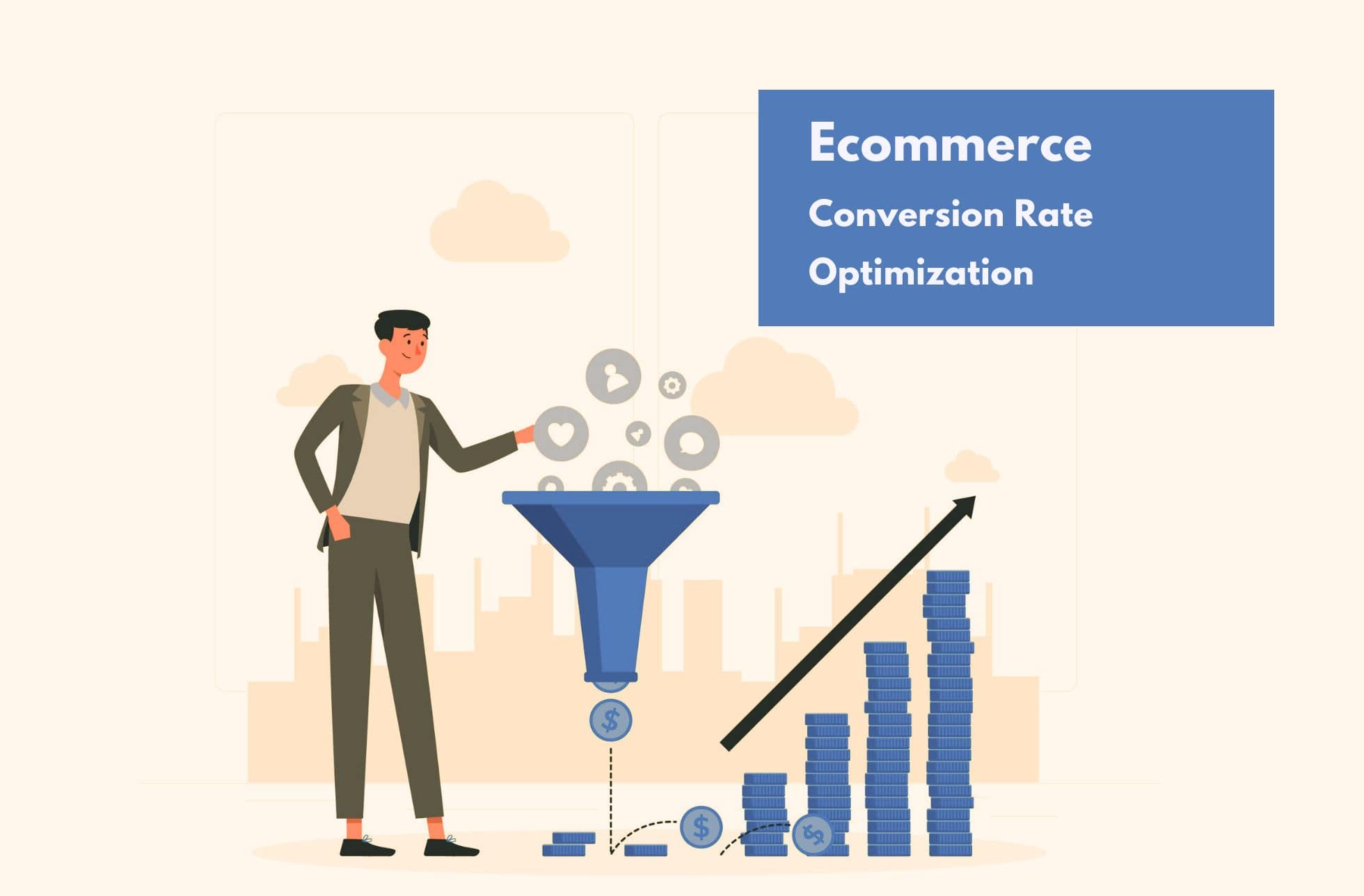
The process of CRO is not merely about changing the color of a "Buy" button. It is a systematic, data-driven approach to understanding user behavior, identifying friction points, and removing obstacles that prevent visitors from becoming loyal customers. When you optimize for conversion, you are essentially increasing the return on investment (ROI) for every visitor you already have.
The Mathematical Foundation
To improve, you must measure. The formula for calculating your conversion rate is straightforward:
Conversion Rate (%) = (Total Number of Conversions / Total Number of Visitors) x 100

For instance, if your online store receives 5,000 unique visitors in a month and generates 150 sales, your conversion rate stands at 3%. This simple percentage serves as your baseline. It tells you exactly how effectively your website is performing as a salesperson. If that number drops, you have a problem; if it rises, your business is scaling without the overhead of increased customer acquisition costs.
Chronology of Optimization: A Systematic Approach
Optimization is not a "one-and-done" task; it is a cyclical process of hypothesis, testing, and implementation. To effectively manage your growth, follow this chronological workflow:
- Data Collection & Auditing: Before making changes, ensure your tracking tools (like Google Analytics or Hotjar) are correctly configured. You cannot fix what you cannot measure.
- Bottleneck Identification: Analyze your sales funnel to find where users drop off. Are they leaving at the product page? Or are they abandoning the cart?
- Hypothesis Generation: Once you identify a bottleneck, develop a theory. For example: "If I simplify the checkout form, users will be less likely to abandon their carts."
- A/B Testing: Implement the change for a subset of users and measure the performance against the original version.
- Scaling Results: If the change proves successful, roll it out globally and start the process again with the next bottleneck.
The Four Pillars of Proven Conversion Optimization
While every business is unique, our extensive experience in the ecommerce landscape has identified four universal pillars that consistently drive higher conversion rates.

1. The Necessity of Trustable Data
Operating a website without accurate data is akin to driving a car at night with the headlights off. You might move forward, but you are destined for an accident. Business intelligence (BI) is the cornerstone of modern CRO. You must utilize tools that provide qualitative and quantitative insights. Use Google Analytics to track what is happening (e.g., high bounce rates on a landing page) and tools like Hotjar to see how users interact with your pages (e.g., heatmaps showing where users click or ignore).
2. Identifying and Eliminating Bottlenecks
Think of your website as a highway. If the road narrows suddenly, traffic jams occur. In ecommerce, these "narrowing" points are your bottlenecks. They might be slow-loading images, complex registration requirements, or confusing navigation menus.
By calculating conversion rates between individual stages of your funnel (e.g., Product View → Add to Cart → Checkout → Payment Success), you can pinpoint exactly where you are losing customers. The stage with the lowest percentage conversion is your "bleeding" point and must be the primary focus of your optimization efforts.

3. The Power of Trust Signals
Skepticism is the default state of an online shopper. When users reach for their credit cards, they are essentially asking, "Is this business safe?" You must proactively answer this question with robust trust signals:
- Trust Badges: Display logos from reputable security services (Norton, McAfee, BBB) to signal legitimacy.
- Secure Payments: Offer diverse, recognized payment gateways like PayPal or Stripe.
- SSL Encryption: Ensure your site displays the padlock icon and "HTTPS" in the URL bar.
- Social Proof: Nothing is more persuasive than the voice of another customer. Feature reviews, star ratings, and user-generated content prominently on your product pages.
4. Professionalism as a Conversion Multiplier
The digital age has ushered in a "design-first" economy. Modern consumers equate aesthetic quality with product quality. If your website looks outdated, features broken links, or uses pixelated images, customers will subconsciously assume your products are also of poor quality. Invest in high-resolution photography, clean typography, and a seamless mobile-responsive design.
The Benchmarks: What Defines "Good"?
A common question is: "What is a good conversion rate?" While the answer varies by industry—a luxury watch retailer will have a different benchmark than a grocery store—a conversion rate of 2% to 5% is generally considered the "gold standard" for healthy ecommerce operations.

However, do not let these numbers lull you into complacency. If your conversion rate is 3%, your goal should be 4%. Optimization is a pursuit of incremental gains that compound over time.
Categorizing Your Metrics
To get a granular view of your performance, track these specific conversion types:
- Sales Conversion Rate: The percentage of visitors who complete a purchase.
- Email Conversion Rate: How effectively your email marketing drives clicks and sales.
- Landing Page Conversion Rate: The effectiveness of specific campaign pages. An excellent landing page should aim for a conversion rate of 10% or higher.
- Lead Conversion Rate: For B2B or high-ticket items, this tracks the percentage of visitors who fill out a contact form or request a demo.
Implications for Your Business Growth
The implications of ignoring conversion rate optimization are dire: you will continue to pay an "acquisition tax" by buying traffic that does not convert. Conversely, the implications of embracing CRO are transformative.

When you double your conversion rate, you effectively double the revenue generated from your existing traffic. This lowers your Customer Acquisition Cost (CAC) and increases the Lifetime Value (LTV) of your visitors.
In conclusion, stopping the bleeding is the most effective growth strategy in ecommerce. By prioritizing data-backed decisions, identifying funnel bottlenecks, building trust, and maintaining a professional digital presence, you move from a reactive business model to a proactive one. Start by fixing the leaks in your funnel today, and you will find that growth is not just about bringing in more people—it’s about serving the people who are already here.