An Echo of the Past: Dissecting the Narrative Failures of Ananthan Kaadu
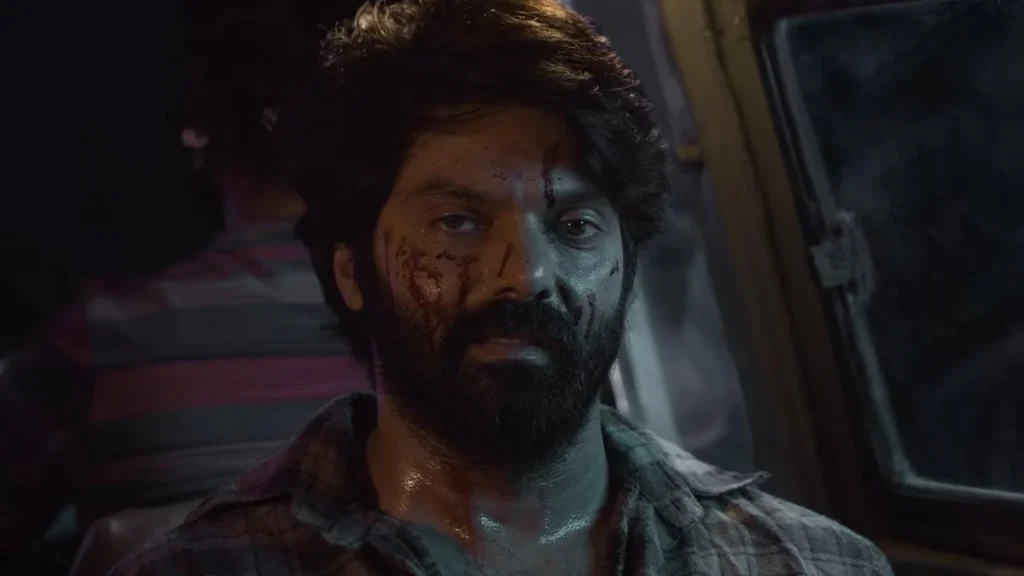
The release of Ananthan Kaadu, directed by Jiyen Krishnakumar and penned by the prolific Murali Gopy, has arrived in theatres with the weight of expectation. However, for those seeking a nuanced exploration of the socio-political landscape of 1990s Kerala, the film proves to be a perplexing, uneven experience. Despite an ensemble cast and a premise rooted in the volatile intersections of politics and individual agency, the film struggles to reconcile its grand ambitions with a narrative structure that feels jarringly out of step with contemporary cinema.
Main Facts and Overview
Ananthan Kaadu is a 157-minute Malayalam socio-political drama that attempts to map the transition of marginalized individuals caught in the machinery of systemic violence. The film features a star-studded cast including Arya, Murali Gopy, Santhi Balachandran, Nikhila Vimal, and the veteran Indrans.
The central plot follows a group of men who have sought to distance themselves from their violent histories, only to be forcibly coerced into committing one final, catastrophic act of violence at the behest of a powerful political figure. While the film attempts to weave in themes of Tamil nationalism and the historical trauma associated with the Sri Lankan civil war, these elements are often introduced as ornamental rather than foundational, leaving the audience with a film that feels less like a cohesive narrative and more like a collection of disparate, often regressive, stylistic choices.
Chronology of Narrative Disconnects
The film’s most significant flaw is its erratic pacing and lack of tonal consistency. One of the most discussed sequences occurs early in the film, set within a Thiruvananthapuram college campus in the early 1990s. In this segment, the screenwriter, Murali Gopy, makes a cameo appearance in an "imaginary" scenario that bears almost no functional relationship to the central plot.
Critics have noted that the scene feels as if it were spliced in from an entirely different production. Its primary purpose appears to be the injection of regressive political discourse into the narrative, a move that harkens back to the controversies surrounding the 2017 film Tiyaan, also a collaboration between Krishnakumar and Gopy. By prioritizing ideological sermonizing over character development, the film alienates the viewer, creating a disconnect between the audience and the stakes of the story.
Supporting Data and Performance Analysis
Despite the film’s overarching flaws, there are pockets of brilliance that highlight the potential that remained largely untapped.
- The Standout Performance: Indrans, portraying a veteran henchman, provides the film with its only true emotional anchor. His performance is a masterclass in subtlety; he radiates an "intimidating calmness," conveying a history of bloodshed through expression rather than action. In a film that relies heavily on physical brutality, Indrans’ restraint is a welcome, albeit fleeting, contrast.
- The Cast Dynamics: Arya is utilized primarily for his star power, appearing in choreographed action sequences that do little to deepen his character’s interior life. Conversely, Santhi Balachandran delivers a moderately impactful performance, whereas Nikhila Vimal is relegated to a minor role that restricts her ability to make any lasting impression.
- The Violence Metric: The film leans heavily on the trope of the corrupt political boss who maintains a clean image while delegating violence to the disenfranchised. The portrayal of police officers is similarly one-dimensional, characterized by gratuitous cruelty—most notably a sequence involving a high-ranking officer whose sadism serves as a shock-value device rather than a meaningful critique of systemic corruption.
Political Implications and Thematic Underpinnings
The film’s attempt to incorporate the politics of Tamil nationalism and the fallout of the Liberation Tigers of Tamil Eelam (LTTE) struggle feels, at best, superficial. By using these complex geopolitical realities as mere backdrops for a standard "gangster vs. politician" plot, the filmmakers risk trivializing historical suffering for the sake of cinematic grandiosity.
Furthermore, the persistent reliance on regressive political messaging suggests that the creators have, in many ways, remained trapped in the very era they are depicting. While the 1990s were indeed a volatile time in Kerala’s political history, the screenplay’s inability to modernize its perspective results in a "hangover" effect. The film feels like an artifact of the past—not in its setting, but in its regressive attitudes toward power, gender, and morality.

Critical Implications: A Missed Opportunity
The failure of Ananthan Kaadu lies in its inability to balance the "human drama" with the "political thriller" aspects of the script. The film posits that political maneuvering is merely the act of "bumping off" one’s rivals, a reductive view that strips the political arena of its ideological complexity.
The final act of the film offers a glimpse into what the directors were aiming for: a poignant, emotional resolution that touches upon the tragedy of the lives lost to the whims of the powerful. However, because the audience has not been adequately invested in the character arcs throughout the previous two hours, this climax feels unearned. The "human drama," which had the potential to be the film’s core strength, remains dangerously underexplored.
Official and Industry Response
While the film has garnered attention for its scale and production design, the reception from both critics and the public has been largely tepid. The consensus is that the film is a "typical, old-fashioned socio-political potboiler" masquerading as a modern epic.
Industry analysts point out that while the film possesses all the aesthetic requirements of a high-budget production, it lacks the intellectual rigor required to handle its chosen subject matter. The decision to prioritize specific, often polarizing political talking points over a well-rounded screenplay has drawn scrutiny, suggesting that the "mass" appeal of the film is undermined by its lack of narrative substance.
Conclusion
Ananthan Kaadu serves as a cautionary tale for filmmakers attempting to blend high-stakes political history with genre-based action cinema. By failing to bridge the gap between its ideological ambitions and its execution, the film remains a flatly narrated experience that prioritizes stylistic nostalgia over authentic storytelling.
For a project that features such a diverse and talented cast, the ultimate result is a film that feels remarkably small. It is a work that clings to the sensibilities of the early 90s, not as an artistic choice, but as a limitation of its own making. As the credits roll, the audience is left not with a sense of the gravity of the events depicted, but with the realization that beneath the veneer of its political posturing, Ananthan Kaadu had very little to say.
In an era where audiences are increasingly demanding narratives that are both structurally sound and socially aware, this production serves as a stark reminder that even the most ambitious projects will falter if they lack a coherent heart. Whether the makers will address these critiques in future collaborations remains to be seen, but for now, Ananthan Kaadu will be remembered as a missed opportunity—a film that aimed for the heights of historical drama but settled for the depths of predictable, regressive tropes.