The M4 Method: A Blueprint for Scaling eCommerce Brands on Facebook
Are your Facebook ads generating a flurry of clicks but failing to convert into meaningful revenue? For many eCommerce entrepreneurs, the platform has become a graveyard of wasted budgets and "vanity metrics." However, according to Sam Piliero, co-creator of the M4 Method, the issue isn’t the platform—it’s a fundamental misunderstanding of how modern ad ecosystems function.
In a deep dive into high-level account management, Piliero outlines a rigorous four-stage system designed to move brands beyond the "guesswork" phase and into a state of predictable, scalable profitability. By shifting the focus from short-term efficiency to long-term contribution margin, brands can transition from small-scale operations to enterprise-level growth.
The Core Problem: Why Most Advertisers Get Stuck
Piliero identifies two primary hurdles that keep advertisers trapped in a cycle of stagnation: an obsession with efficiency metrics and a misconception of control.
The Efficiency Trap
Many marketers obsess over Return on Ad Spend (ROAS) and Cost Per Acquisition (CPA) as if these are the ultimate arbiters of success. While these metrics are useful as guardrails, they often mask the actual financial health of a business.
Piliero argues that the true "North Star" should be the contribution margin. For most eCommerce brands, a 10%–20% profit margin on revenue is a sustainable target. A brand that generates $1,000 in revenue and retains $200 in profit is far healthier than a brand chasing a 10x ROAS that limits their ability to spend, scale, and acquire market share. By sacrificing a high ROAS for a slightly lower, yet more scalable, figure, brands can acquire a larger customer base, compounding lifetime value and word-of-mouth growth over time.
The Illusion of Control
The second pitfall is a binary approach to account management: either over-engineering campaigns with dozens of conflicting ad sets or ceding total control to the algorithm. The M4 Method posits that there is a "sweet spot" between these extremes. When executed correctly, the results can be staggering. Piliero points to five clients who, within a year of adopting this framework, scaled from under $30,000 in monthly ad spend to over $50 million in annual revenue.

The M4 Method: A Four-Stage Framework
The M4 Method is built upon four pillars: Account Structure, Creative Strategy, Deep Dive Analysis, and Scaling. These stages are cumulative, meaning the efficacy of the final stage is entirely dependent on the rigor applied to the first.
1. Account Structure: The Foundation
Piliero compares account structure to the architecture of a house. Without a logical layout, even the most compelling creative will fail to gain traction. The core of this structure involves:
- The Prospecting Campaign: A single campaign utilizing Campaign Budget Optimization (CBO). This allows the algorithm to allocate spend toward "packs"—groups of creative—that are currently performing best.
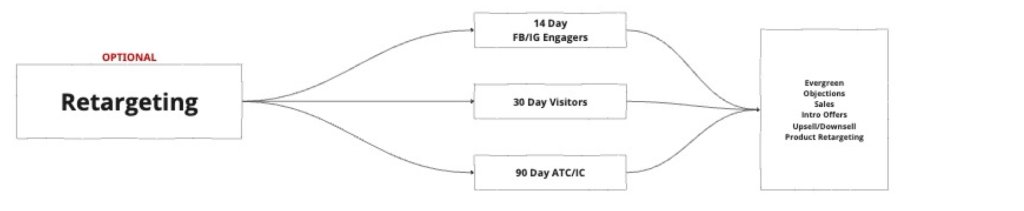
- The Retention Campaign: Separating existing customers from prospects is vital. It prevents the algorithm from muddling the data, ensuring that your ad spend is clearly delineated between new customer acquisition and repeat purchases.
- Optional Specialized Campaigns: These include targeted retargeting for those who engaged but didn’t buy, and a dedicated scaling campaign that forces spend toward your top three to five proven winners.
2. Creative: The Engine of Growth
Since the Meta "Andromeda" update, targeting has shifted from technical settings to the content itself. Your creative is now your targeting.
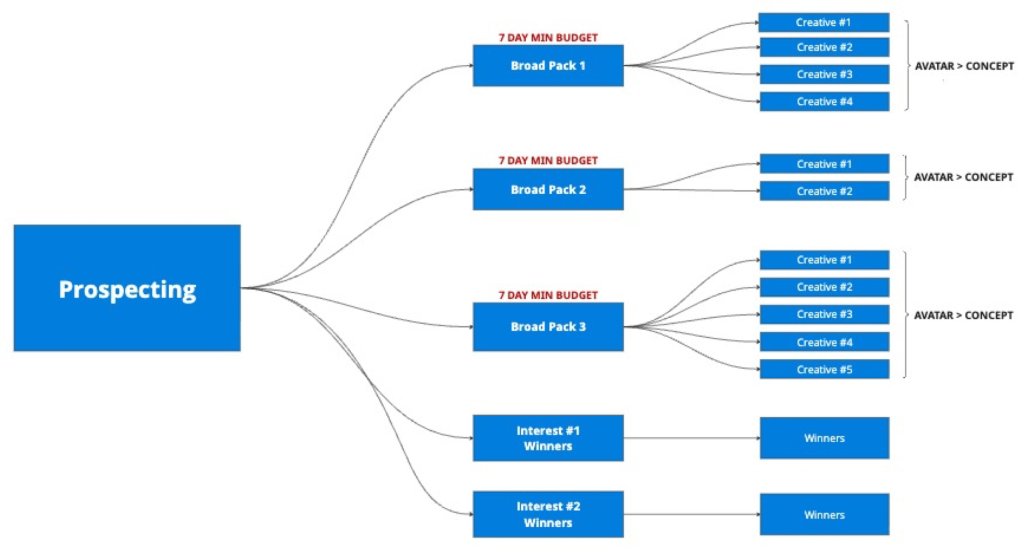
To succeed, brands must move away from generic messaging. The winning formula is the Problem-Solution model. Instead of advertising a "back brace for pain," a brand should create content specifically for "construction workers suffering from chronic lower back pain due to repetitive lifting." By speaking directly to the avatar’s specific pain point, the algorithm naturally finds the right audience.
Tactics for Creative Success:
- The "Hit" Threshold: Define a "hit" as an ad that exceeds your ROAS target and captures 10% of total spend. Focus on manufacturing these hits by increasing the volume of creative tests.
- Leverage Research: Use the Facebook Ads Library and tools like MagicBrief to identify long-running competitor ads. Longevity is a proxy for performance.
- The Power of Iteration: Do not reinvent the wheel. If a "thumbs-up" image works, create variations by changing the headline, the background, or the talent. This is significantly more efficient than starting from scratch.
3. Deep Dive Analysis: Uncovering Hidden Patterns
Most advertisers make the mistake of maintaining a flat daily budget. However, consumer behavior is rarely uniform across a seven-day week.

Piliero’s team suggests analyzing 90 to 180 days of non-promotional data to identify performance spikes. For instance, pet brands often see a surge on weekends when owners are home, while gift-focused brands may spike early in the week. By analyzing data by day-of-week, placement, and demographic, advertisers can identify segments with 20%–30% performance variances. The strategy is not to cut low-performing days, but to optimize budget flow—lowering spend on slow days and fueling the "fire" on high-performing days.
4. Scaling: When and How
Scaling is not an objective in itself; it is a tool to be used only when performance is proven.
- Vertical Scaling: Increasing the budget on existing, high-performing campaigns in 10%–30% increments. This allows the algorithm to recalibrate without re-entering the "learning phase."
- Horizontal Scaling: Launching temporary, separate campaigns for specific promotional events. This keeps the primary account "clean" and free from the volatility of sales-driven data.
- The Twin Engine Approach: The most potent form of scaling. It involves simultaneously increasing budget (vertical) while injecting new iterations of your "hit" ads into the same prospecting campaign.
Implications for the Future of eCommerce
The M4 Method represents a shift from "hacks" to professional, data-backed business management. The implication is clear: the era of "set it and forget it" Facebook advertising is over. To compete in today’s market, brands must embrace:
- Financial Literacy: Understanding contribution margins over superficial ROAS.
- Creative Agility: Viewing ad content as the primary vehicle for audience identification.
- Algorithmic Partnership: Using account structure to guide the machine rather than trying to micromanage every micro-decision.
The "King Goal" Philosophy
Ultimately, Piliero stresses the importance of the "King Goal." Whether it is Cost Per Acquisition, Return on Ad Spend, or total profit, every brand must identify its one North Star metric. When proxy metrics—like CPMs or Click-Through Rates—fluctuate, it is the King Goal that dictates whether you should stay the course or pivot. By stripping away the noise, businesses can remain focused on what actually fuels the bottom line: sustainable customer acquisition.
For the modern marketer, the path forward is not found in the latest AI "trick" or a secret settings toggle, but in the deliberate application of a structured, iterative, and financially sound framework. Whether you are scaling to $5 million or $50 million, the principles of the M4 Method provide a clear roadmap to navigate the complexities of the Facebook advertising ecosystem.