The Great Unbundling: How Google’s Play Store Fee Overhaul Redefines the App Economy
In a watershed moment for the digital marketplace, Google has announced a fundamental restructuring of its Google Play Store fee model. Following the high-profile legal battle with Epic Games—a conflict that questioned the very architecture of mobile app distribution—Google is officially lowering its commission rates and expanding third-party billing flexibility. This move marks a seismic shift for developers, effectively dismantling the long-standing "walled garden" approach that has defined Android’s economic ecosystem for over a decade.
Main Facts: The New Financial Landscape
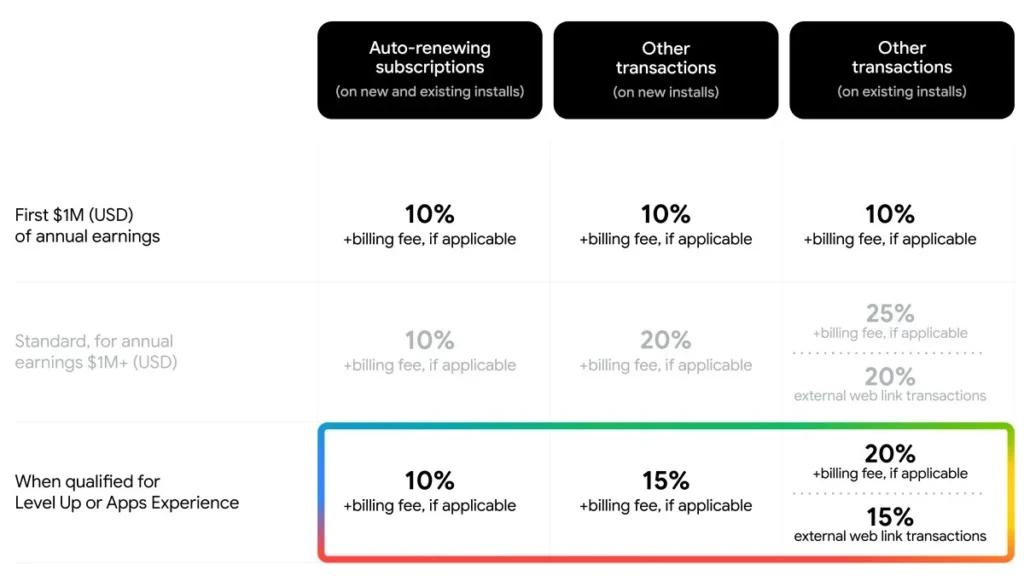
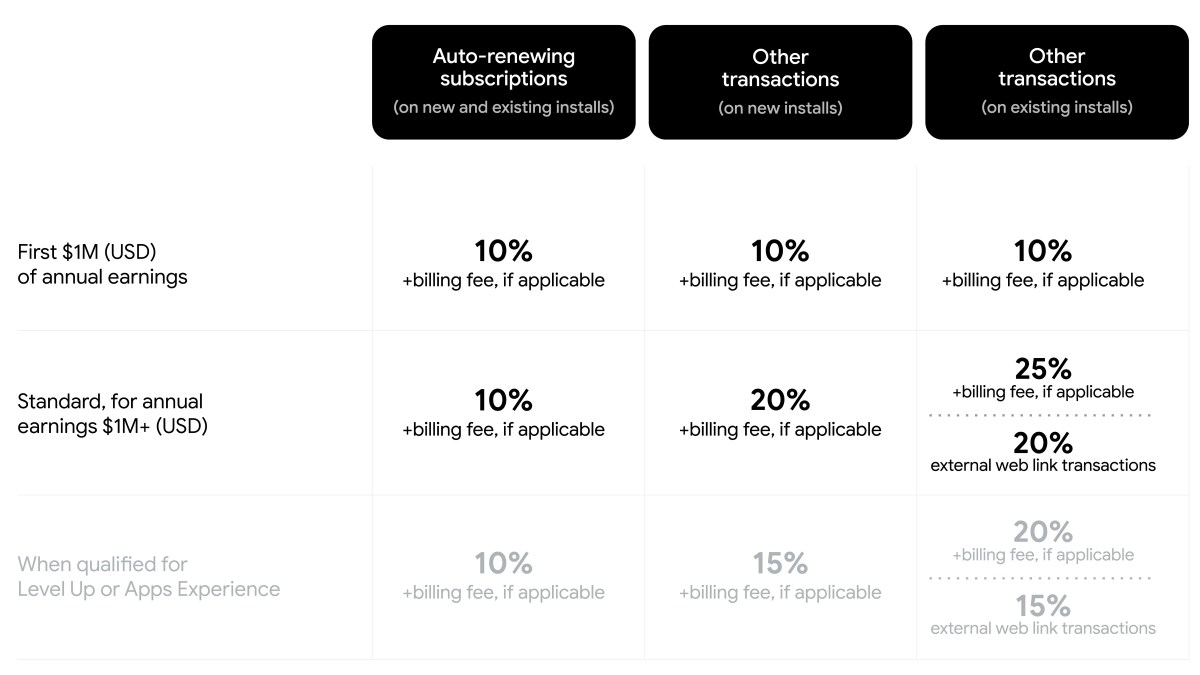
The core of Google’s announcement centers on a tiered commission structure designed to alleviate the financial burden on smaller and mid-sized developers. Under the new guidelines, the standard service fee will drop significantly for the first $1 million in annual revenue generated by a developer.
Previously, the "standard" rate across the Play Store was a blanket 30% commission on digital goods and services. Under the new policy, that rate is being slashed to 10% for the initial $1 million in annual revenue. This reduction is intended to empower startups and independent studios, providing them with more capital to reinvest in product development and user acquisition.
However, the transition is not a total abandonment of Google’s billing infrastructure. If a developer opts to continue using Google Play’s proprietary billing system, an additional 5% "billing fee" is applied in specific regions, including the United States, the United Kingdom, and the European Economic Area (EEA).
Furthermore, Google is introducing the "Games Level Up" and "Apps Experience" programs. These initiatives establish specific quality and engagement benchmarks. Developers whose applications meet these rigorous standards become eligible for even more competitive rates, incentivizing high-quality, user-focused development over simple quantity-based volume.

Chronology: From Courtroom Clash to Policy Shift
The road to this announcement was paved by years of litigation and regulatory pressure. The timeline of events highlights the accelerating pace of change in Big Tech regulation:
- 2020–2023: The Epic Games v. Google Litigation: Epic Games, the creator of Fortnite, filed a landmark antitrust lawsuit against Google, alleging that the Play Store functioned as an illegal monopoly. Epic argued that forcing developers to use Google’s billing system while charging exorbitant fees stifled innovation.
- Late 2023: The Verdict: A jury found that Google had maintained an unlawful monopoly in the Android app distribution market. This loss forced Google to re-evaluate its compliance strategies to avoid further regulatory intervention.
- June 2026: The Announcement: Google formally outlines its new fee structure and billing flexibility, acknowledging the changing legal landscape.
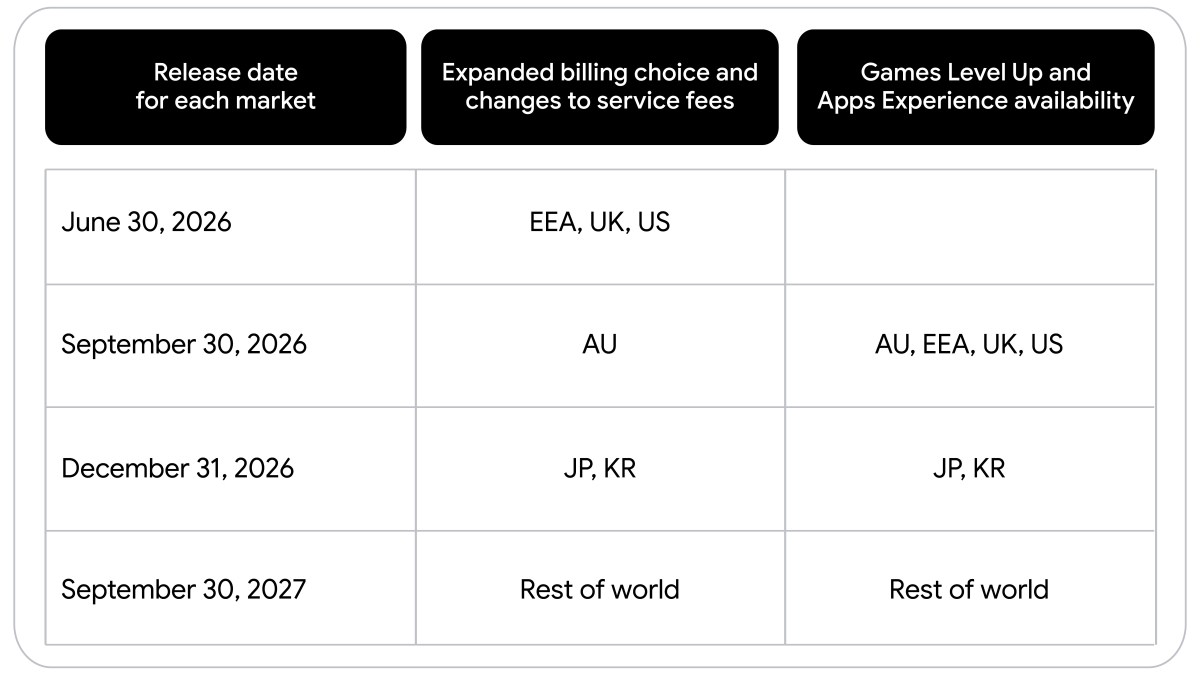
- June 30, 2026: The initial rollout begins for the United States, the United Kingdom, and the EEA. This includes the implementation of the reduced 10% fee and the initial expansion of third-party billing options.
- September 30, 2026: The rollout expands to include the "Games Level Up" and "Apps Experience" programs, alongside the availability of third-party billing in Australia.
- December 31, 2026: Third-party billing options become available in the critical markets of Japan and South Korea.
- September 30, 2027: The final phase of the rollout, bringing third-party billing flexibility to the remainder of the global market.
Supporting Data: Understanding the Fee Breakdown
To understand the impact of these changes, one must look at the granular breakdown of the new fee structure. Google has shifted toward a "choice-based" model.
The Standard Revenue Split
For the majority of developers, the 10% rate on the first million dollars is the headline. This represents a 66% reduction in fees compared to the previous 30% standard. The 5% billing fee, while seemingly an "add-on," is framed by Google as a cost associated with the maintenance, security, and global reach of their proprietary billing infrastructure—a service that many smaller developers may still find worth the premium.
Eligibility and Incentives
The "Games Level Up" and "Apps Experience" programs are the most intriguing aspects of the new policy. By requiring developers to hit specific metrics—such as crash-free rates, app size optimization, and high user retention—Google is essentially gamifying the quality of the Play Store. These programs are designed to filter out "junk" apps, rewarding developers who invest in the long-term health of their software.
Official Responses and Strategic Positioning
Google’s official blog posts have framed these changes as an evolution of the Android ecosystem rather than a capitulation to legal pressure. The company emphasizes its commitment to "developer success," noting that the vast majority of developers on the platform already fall within the revenue brackets that will benefit most from these reductions.
Critics, however, argue that these changes are "too little, too late." Industry analysts point out that while the 10% fee is a major win, the 5% billing fee for using Google’s system essentially keeps the company in the driver’s seat. By keeping the billing fee as an optional but convenient service, Google maintains a significant portion of its transactional revenue while appearing to comply with antitrust mandates.
Epic Games and other proponents of the "open ecosystem" movement have viewed the announcement with cautious optimism. While they applaud the end of the mandatory Google billing requirement, they remain concerned about "dark patterns"—design choices that might make it artificially difficult for users to choose third-party billing over Google’s native option.
Implications: A New Era for the App Economy
The implications of this policy shift are vast, touching upon everything from corporate bottom lines to the experience of the average smartphone user.
For Developers: A More Sustainable Business Model
For indie developers, this change is transformative. In the mobile gaming industry, where thin margins and high user acquisition costs are the norm, saving 20% on the first million dollars of revenue is the difference between a studio surviving or folding. This shift will likely lead to an influx of higher-quality, niche applications as the barrier to entry—in terms of financial sustainability—is lowered.
For the Platform: Maintaining Quality Control
Google’s introduction of the "Games Level Up" and "Apps Experience" programs suggests that the company is moving toward a curated model. By incentivizing specific development practices, Google is effectively outsourcing its quality assurance to the developers themselves. This may lead to a more polished, stable, and performant Play Store, which in turn could increase user trust and time spent within the ecosystem.
For Competition: The Rise of Third-Party Payment Processors
The most significant long-term implication is the normalization of third-party billing. By allowing developers to choose their own payment gateways, Google is effectively inviting companies like Stripe, Adyen, and regional fintech players into the Android ecosystem. This creates a competitive market for payment processing, which will likely drive down costs even further for developers over the next several years.
For the Regulatory Landscape: A Blueprint for Big Tech
Google’s strategy may serve as a template for other platform holders, including Apple. By preemptively adopting these changes, Google is attempting to shape the regulatory conversation rather than being dictated to by court orders. Other tech giants are watching closely; if this model succeeds in mollifying regulators without gutting Google’s revenue, it may well become the industry standard for digital storefronts globally.
Conclusion
The restructuring of the Google Play Store is more than a simple fee adjustment; it is a fundamental shift in the power dynamic between platform owners and the developers who build upon them. By lowering the financial barrier for smaller creators and introducing transparency in billing, Google is signaling a departure from the rigid control of the past.
As we look toward the 2027 global rollout, the long-term effects remain to be seen. Will this lead to a more vibrant and diverse ecosystem, or will the "billing fees" and program requirements create new, more subtle forms of gatekeeping? The answer lies in the hands of the developers who now have the agency to decide how they do business. One thing is certain: the era of the monolithic, one-size-fits-all app store is rapidly coming to an end, giving way to a more complex, competitive, and ultimately, more open digital frontier. The choices made by developers in the coming months will define the next decade of mobile innovation, and for the first time in a long time, those developers finally have a seat at the table.