AWS Summit NYC 2026: Ushering in the Era of Agentic AI and Intelligent Cloud Operations
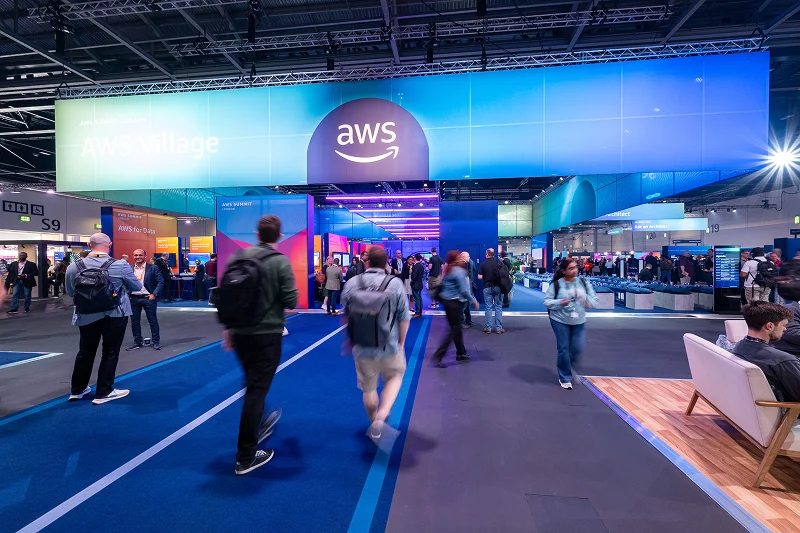
The technology landscape is shifting beneath our feet, and this week’s AWS Summit in New York City serves as the epicenter of that transformation. Held at the iconic Javits Center, the summit has brought together thousands of builders, enterprise customers, and AWS engineering teams to unveil the next generation of cloud infrastructure. While the summit floor buzzed with live demos and technical deep dives, the overarching narrative was clear: we are moving beyond the era of simple AI assistance into a new paradigm of "Agentic AI"—systems capable of autonomy, reasoning, and complex execution.
For those unable to make the pilgrimage to Manhattan, the keynote—led by Dr. Swami Sivasubramanian, VP of Agentic AI, and Chet Kapoor, VP of Security Services and Observability—has set the stage for the remainder of the year. The announcements centered on three pillars: accelerating developer velocity through AI, operationalizing cost management via autonomous agents, and hardening security postures in an automated world.
The Frontier of AI-Native Development
Perhaps the most significant revelation from this week’s gathering was not a specific tool, but a paradigm shift in how engineering teams should operate. In a major blog post released alongside the summit, Dr. Swami Sivasubramanian shared unprecedented insights drawn from internal data across hundreds of Amazon engineering teams. This "Frontier Teams" framework offers a blueprint for organizations struggling to transition from manual coding to AI-assisted workflows.
Supporting Data: The Case for Autonomous Velocity
The metrics shared by Amazon represent a radical departure from traditional software development lifecycles (SDLC). By treating AI not as a chatbot, but as a core member of the engineering team, Amazon saw staggering results:
- The Bedrock Rebuild: A team of six engineers successfully rebuilt the Amazon Bedrock inference engine in just 76 days—a project originally scoped for 30 developers over a period of 12 to 18 months.
- Productivity Multipliers: Across structured pilots within the Amazon Stores organization, teams reported a median productivity gain of 4.5x in normalized deployment velocity, with high-performing "frontier" teams achieving gains exceeding 10x.
- Operational Efficiency: The "Perfect Order Experience" project reduced its feature release cycle from two weeks to a single afternoon. Furthermore, the WW Grocery division slashed the time required for design document creation from five days to a mere few hours.
The Five Pillars of the "Frontier Team"
To achieve these results, AWS suggests that organizations must move past "chatty" AI and adopt five core operational practices:
- Invest in Agent Context: Before writing production code, teams must invest in "steering files," coding standards, and structured repositories. The AI is only as effective as the context provided to it.
- Embrace the "J-Curve" Slowdown: Organizations should expect an initial dip in velocity as workflows are restructured. Resistance here often leads to premature abandonment; persistence is required to reach the acceleration phase.
- Parallel Execution: Maintain a steady, well-scoped backlog of tasks. This allows agents to operate in parallel, significantly reducing the bottleneck of human supervision.
- Explicit Intent: Code generation should only begin after structured specifications are finalized. Vague prompts lead to technical debt; clear, explicit intent leads to production-ready code.
- Shift Testing Left: Agents must be integrated into a self-correcting loop, where testing occurs automatically before code ever reaches the CI/CD pipeline.
Intelligent FinOps: The AWS FinOps Agent
While developers are gaining speed, the complexity of managing cloud spend has remained a persistent friction point for CTOs and CFOs. To address this, AWS has announced the preview of the AWS FinOps Agent, a sophisticated tool designed to automate the lifecycle of cloud financial management.
Capabilities and Implications
The FinOps Agent functions as an autonomous assistant for engineering and finance teams. It doesn’t just surface data; it takes action. Its key features include:
- Proactive Optimization: The agent continuously scans for rightsizing opportunities, idle resources, and underutilized Savings Plans, leveraging data from the AWS Cost Optimization Hub and AWS Compute Optimizer.
- Autonomous Workflows: When the agent identifies a cost anomaly, it doesn’t wait for a human to investigate. It triggers an automated root-cause analysis and posts the findings directly to the relevant Slack channels.
- Closed-Loop Remediation: Perhaps most impressively, the agent can be configured to automatically open Jira tickets for engineering teams, assigning tasks to remediate over-provisioned infrastructure.
This move marks a significant evolution in AWS’s strategy: providing tools that bridge the gap between financial governance and technical execution. By delegating the "detect-investigate-remediate" loop to an agent, companies can pivot their human talent toward high-value architectural improvements rather than chasing down billing anomalies.
Chronology of the Summit: A Week of Transformation
The AWS Summit serves as a milestone for the company’s 2026 roadmap. The event timeline highlights the transition from theoretical AI research to applied enterprise deployment:
- Day 1 (Kickoff): Focus on AI-native infrastructure. Dr. Sivasubramanian outlines the shift from "Generative AI" to "Agentic AI," emphasizing that 2026 is the year where agents move from the lab to the production environment.
- Day 2 (Security & Governance): Chet Kapoor takes the stage to discuss the intersection of security and observability. The conversation centers on how agents can be used to monitor infrastructure in real-time, effectively creating a "self-healing" security perimeter.
- Day 3 (Developer Experience): Deep-dive workshops on the "Frontier Team" methodology. Engineering leads from Amazon share the failures and successes of the Bedrock rebuild project.
- Day 4 (Community & Future): Closing sessions focused on the AWS Builder Center, encouraging attendees to contribute to the growing ecosystem of open-source AI solutions and infrastructure-as-code patterns.
Implications for the Future of Cloud Infrastructure
The announcements this week at the Javits Center carry profound implications for the industry. First, the definition of an "engineer" is evolving. As AWS provides more tools for agent orchestration, the premium on low-level coding is being replaced by a premium on system design, prompt engineering, and intent-driven architecture.

Second, the "frontier" data suggests that we are hitting a point of diminishing returns for purely manual software development. Organizations that refuse to integrate autonomous agents into their SDLC will likely find themselves unable to compete with the velocity of their "AI-native" counterparts. The 10x productivity gains observed within Amazon are not just "nice to have"—they represent a fundamental shift in the cost-to-value ratio of software development.
Finally, the introduction of the FinOps Agent signals a broader trend toward "Autonomous IT." As infrastructure becomes increasingly complex and distributed, human-led management is becoming a bottleneck. By offloading cost management, security monitoring, and routine maintenance to specialized agents, AWS is paving the way for the next iteration of the cloud: an environment that manages, optimizes, and secures itself with minimal human intervention.
Conclusion: The Path Forward
As the AWS Summit concludes, the challenge for attendees—and the broader developer community—is implementation. The tools presented this week, from the FinOps Agent to the frameworks defined in the frontier team documentation, are designed to move the industry forward, but they require a fundamental rethink of internal processes.
Whether you are a developer, a FinOps practitioner, or a CTO, the message from New York is clear: the era of the agentic cloud has arrived. The builders who adopt these tools today are not just gaining a competitive advantage; they are setting the new standard for what it means to build in the cloud.
For those looking to deepen their engagement, the AWS Builder Center remains the primary hub for documentation, community support, and upcoming sessions. As we look toward the remainder of 2026, the focus will undoubtedly shift from the "why" of agentic AI to the "how" of scaling these systems across the enterprise. Stay tuned for follow-up discussions on release management, security operations, and EOL upgrades, as the conversation around AI-native development is only just beginning.