The Dawn of the Graviton5 Era: AWS Redefines Cloud Compute with the M9g Instance Family
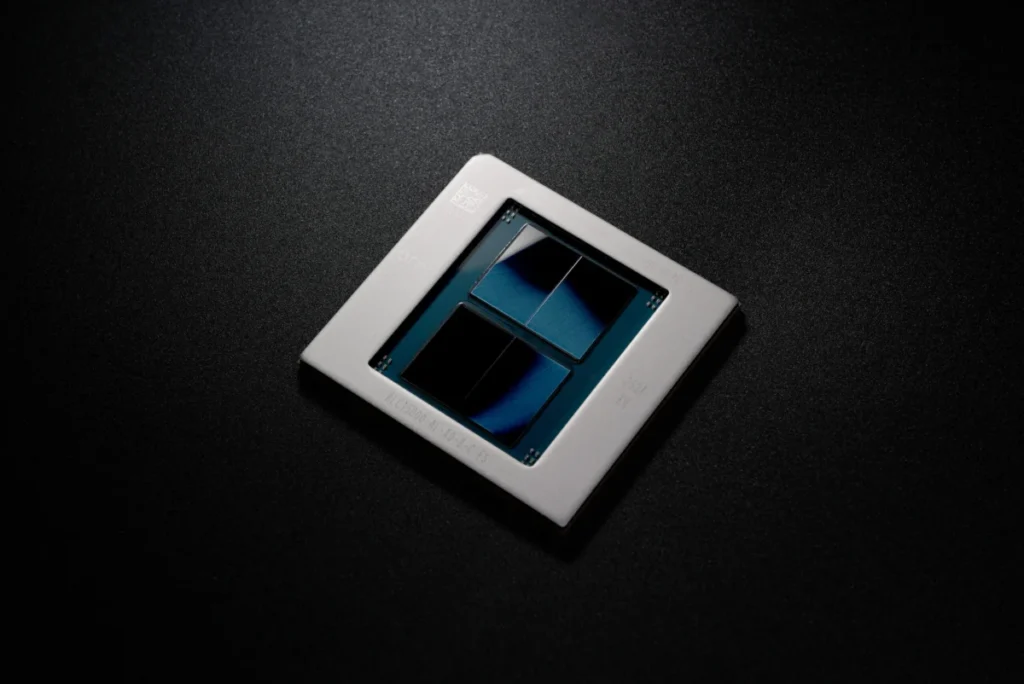
In the relentless pursuit of cloud-native efficiency, Amazon Web Services (AWS) has officially launched its fifth-generation custom silicon: the Graviton5 processor. Marking a significant milestone in an eight-year journey of continuous silicon innovation, the general availability of the new Amazon EC2 M9g and M9gd instances signals a major shift in how modern enterprises handle compute-intensive, data-driven, and AI-forward workloads.
By integrating 192 cores, a massive L3 cache, and the industry’s first formal verification of cloud hypervisors via the Nitro Isolation Engine, AWS is not merely offering a performance upgrade—it is setting a new benchmark for cloud security, sustainability, and raw computational throughput.
The Evolution of Custom Silicon: A Chronology of Graviton
The story of AWS Graviton is a testament to long-term R&D investment. What began in 2018 as a niche offering for simple workloads has transformed into the backbone of the AWS global infrastructure.
- 2018: The Genesis. AWS introduces the first-generation Graviton processor, designed to offer a cost-effective alternative for scale-out workloads.
- 2019–2020: Maturation. The launch of Graviton2 delivered a massive leap in performance and price-performance, proving that Arm-based architectures could handle demanding production environments.
- 2021–2022: Industry Leadership. Graviton3 introduces DDR5 memory and improved floating-point performance, establishing AWS as a leader in server-side silicon design.
- 2023–2024: The Graviton4 Era. With further gains in core count and bandwidth, Graviton4 cemented the architecture as the default choice for general-purpose applications.
- 2025–2026: The Graviton5 Breakthrough. Announced at re:Invent 2025 and moving to general availability in mid-2026, Graviton5 introduces PCIe Gen6, DDR5-8800 memory, and the Nitro Isolation Engine, pushing the boundaries of what is possible in a virtualized cloud environment.
Technical Specifications: The Power Behind M9g
The M9g and M9gd instances are engineered to tackle the modern complexity of "Agentic AI"—a paradigm shift where AI systems move beyond static query-answering to active, multi-step task orchestration.
Core Performance Metrics
Graviton5 provides a staggering 25% increase in compute performance compared to its predecessor. This is bolstered by:
- Memory Bandwidth: The integration of DDR5-8800 memory provides the fastest memory throughput in the cloud sector.
- Cache Capacity: A 5x increase in L3 cache allows processors to keep larger datasets closer to the cores, significantly reducing latency for memory-bound tasks.
- Reduced Latency: With a 33% reduction in inter-core latency, the processor is uniquely suited for parallel processing and high-frequency data logging.
Storage and Connectivity
For organizations requiring high-speed local storage, the M9gd instance family offers up to 11.4 TB of NVMe SSD storage. Furthermore, the introduction of Instance Bandwidth Configuration (IBC) allows architects to dynamically reallocate network and EBS throughput—up to 25%—to better align with specific application demands, such as high-volume database transactions or real-time media processing.
Real-World Impact: Evidence from Early Adopters
The transition to Graviton5 has yielded immediate, measurable benefits for a diverse range of industry leaders. Before the general availability announcement, selected partners stress-tested the M9g instances with impressive results:
- ClickHouse: The high-performance database provider reported a 36% performance improvement over the M8g instances without requiring a single line of code changes.
- Honeycomb: During a six-month A/B test of production observability workloads, Honeycomb achieved a 36% increase in throughput per core compared to the Graviton4 architecture.
- HubSpot: By migrating their MySQL database workloads to the M9g family, HubSpot observed a reduction in query duration of up to 60%, a massive win for user experience and resource efficiency.
- Meta: As one of the largest adopters of AWS silicon, Meta is currently deploying tens of millions of Graviton cores. Their focus is specifically on "Agentic AI"—the complex, compute-intensive orchestration of multi-step AI reasoning and code generation tasks that benefit directly from the core density and high memory bandwidth of Graviton5.
The Nitro Isolation Engine: A New Security Standard
Security remains the primary barrier to cloud adoption for many regulated industries. With the M9g series, AWS has introduced the Nitro Isolation Engine. This is not merely an incremental update to the Nitro System; it is a fundamental shift in hypervisor architecture.
By employing formal verification, AWS can now mathematically prove the isolation between virtual machines. This means that access to memory, CPU registers, and I/O devices is mediated by a minimal set of APIs that have been vetted for correctness through rigorous mathematical modeling. For enterprises in finance, healthcare, and government, this provides a "mathematically proven" security layer that goes beyond traditional testing, ensuring that multi-tenant environments remain strictly segregated.
Strategic Implications for the Cloud Ecosystem
The "Agentic" Shift
The rapid rise of AI agents—systems that can "think," "act," and "tool-use"—is fundamentally changing compute requirements. These agents are significantly more CPU-intensive than standard web applications. Graviton5 is purpose-built to handle these concurrent, long-running processes, keeping accelerators like GPUs and TPUs fed with data without bottlenecking at the CPU level.
Sustainability as a Default
Energy efficiency is no longer an optional "green" initiative; it is a critical cost-management strategy. Graviton5’s ability to process more instructions per watt allows organizations to meet their sustainability targets while simultaneously lowering their Total Cost of Ownership (TCO). By maximizing the packaging of compute, memory, and I/O, AWS has ensured that customers do not have to choose between performance and the environment.
The Ecosystem Advantage
With over 120,000 customers and 350+ instance types, the AWS Graviton footprint is unmatched. This depth provides a robust ecosystem for developers, including:

- AWS Transform: An AI-powered service that automates the migration of legacy Java applications from x86 architectures to Graviton.
- Graviton Savings Dashboard: A dedicated tool within the AWS console that provides clear visibility into cost optimization and efficiency gains.
- Getting Started Guides: A comprehensive library of resources on GitHub that simplifies the transition process for containerized applications, microservices, and databases.
Conclusion: Preparing for the Next Decade
The launch of the M9g and M9gd instances marks the beginning of a new era for AWS. By consistently investing in custom silicon, Amazon has decoupled its infrastructure destiny from the limitations of third-party hardware vendors.
For the developer, the CTO, and the system architect, the message is clear: the future of high-performance, secure, and sustainable computing is no longer a distant roadmap—it is available today. As AI workloads grow more complex and data requirements scale, the Graviton5 processor provides the necessary "headroom" for innovation.
Whether it is powering the next generation of AI agents, accelerating database performance, or securing sensitive financial data through formal verification, the M9g series is poised to become the new workhorse of the modern digital economy. Organizations that act now to migrate their workloads to this fifth-generation architecture are positioning themselves to capture significant performance gains and cost efficiencies, ensuring they remain competitive in an increasingly automated and data-heavy world.
Quick Reference: Availability and Pricing
M9g and M9gd instances are now generally available in the following regions:
- US East (N. Virginia)
- US East (Ohio)
- US West (Oregon)
- Europe (Frankfurt)
Customers can procure these instances via On-Demand, Spot, Reserved Instances, or Savings Plans. For detailed pricing and to begin a migration assessment, users are encouraged to visit the AWS Graviton portal and utilize the Graviton Savings Dashboard.