The Oppo Reno16 Dilemma: High-End Aspirations in a Crowded Mid-Range Market

The global smartphone landscape has shifted dramatically this week following Oppo’s official unveiling of the Reno16 series. Comprising the standard Reno16, the Reno16 Pro, and the supplementary Reno16 F and FS variants, this lineup represents a bold, if controversial, strategy for the Chinese manufacturer. As Oppo attempts to reposition the Reno series further up the value chain, industry analysts and consumers alike are left questioning whether the hardware specifications justify the substantial pricing shift. With the Reno16 and Reno16 Pro now entering the global market, the conversation has moved from feature sets to a fundamental re-evaluation of what constitutes a "mid-range" device in the current economic climate.
Main Facts: A Hardware Overview
The Reno16 series introduces a sophisticated design language paired with internals that, while impressive, place the devices in direct competition with last year’s flagships. Both the vanilla Reno16 and its Pro sibling feature high-quality 6.32-inch 10-bit OLED panels. These displays are technical marvels, boasting HDR10+ certification and a resolution of 1,216 x 2,640 pixels. While the vanilla model utilizes a 120Hz refresh rate, the Pro pushes to 144Hz, though both share an identical brightness profile—hitting 1,800 nits in high-brightness mode and peaking at an impressive 3,600 nits.

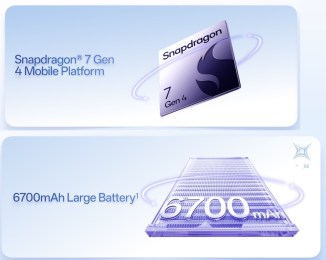
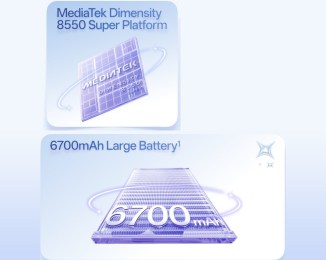
Under the hood, the divergence becomes more pronounced. The standard Reno16 is powered by the Qualcomm Snapdragon 7 Gen 4 chipset, paired with a substantial 6,700mAh battery that supports 80W fast charging (or 55W via PPS adapters). The Reno16 Pro, conversely, opts for the MediaTek Dimensity 8550. This chipset provides a significant uptick in both CPU overhead and graphical fidelity, further bolstered by an increased 12GB RAM allotment, compared to the 8GB found in the entry-level Reno16.
The camera systems are perhaps the most contentious aspect of the launch. The Pro model features a massive 200MP ISOCELL HP5 main sensor (1/1.56"), complemented by a 50MP 3.5x/80mm telephoto lens and a 50MP ultra-wide unit. The standard Reno16 employs a smaller 50MP Sony Lytia 600 sensor for its primary duties but retains the same high-end 50MP telephoto module—a rarity in the mid-range segment that suggests Oppo is prioritizing long-range photography across its entire new lineup.

Chronology: The Road to the Reno16
The path to this launch was paved with rumors of a significant price hike. Following the initial teasers in early June, the tech community began to speculate on the impact of integrating such advanced camera modules and high-density battery technology into a series traditionally known for its accessibility.
- Early June 2026: Leaks regarding the ISOCELL HP5 integration surfaced, signaling that the Pro model would aim for "ultra-premium" imaging status.
- Mid-June 2026: Certification filings revealed the existence of the Reno16 F and FS variants, confirming that Oppo intended to segment the market aggressively.
- June 2026 Launch Week: The official global announcement confirmed that the Reno16 would start at €900 for the 8/512GB configuration, with the Pro model scaling to €1,100 for the 12/512GB version.
- Post-Launch: Immediate consumer feedback centered on the promotional "early bird" discounts—€100 off the standard and €200 off the Pro—which effectively function as a bridge to make the devices appear more palatable before the end of July.
Supporting Data: Comparative Analysis
To understand the position of the Reno16, one must look at the surrounding competitive ecosystem. The pricing strategy adopted by Oppo invites direct comparison to devices that occupy the same price bracket but offer arguably better silicon or more refined internal sensors.

The Realme 16 Pro+ Factor
The Realme 16 Pro+ serves as the most immediate "spoiler." Utilizing the same Snapdragon 7 Gen 4 chipset and the identical 200MP HP5 main camera/50MP telephoto setup, the Realme offers nearly equivalent photography performance for roughly half the cost of the Reno16 Pro. While the Realme 16 Pro+ features a larger 6.8-inch display, which may not appeal to those seeking the compact ergonomics of the 6.32-inch Reno, the price-to-performance gap is difficult for consumers to ignore.
The Flagship Alternatives
The "flagship killer" era is not dead; it has simply evolved. The Xiaomi 17, retailing at approximately €900, provides a 6.3-inch display that rivals the Reno16 in form factor but upgrades the user to the Snapdragon 8 Elite Gen 5—a clear tier above the Dimensity 8550. Similarly, the vivo X300 and X300 FE series offer LTPO 120Hz panels and sophisticated camera arrays that, for the same price, provide a more "premium" experience in terms of display efficiency and raw processing power.

Official Responses and Strategic Positioning
Oppo has remained relatively quiet regarding the pricing criticism, choosing instead to focus on the "total experience" of the Reno16 series. Marketing materials emphasize the longevity of the 6,700mAh battery and the unique inclusion of a 50MP telephoto camera in the mid-range segment. By highlighting the premium quality of the lenses and the high-resolution OLED panels, Oppo is attempting to shift the perception of the Reno series from "mid-range value" to "compact premium."
The company’s reliance on the "early bird" discount strategy suggests they are aware of the market resistance to the higher base prices. By effectively lowering the entry barrier during the initial launch window, Oppo hopes to secure a user base that will provide positive reviews, potentially justifying the standard retail price once the promotional period concludes at the end of July.

Implications: A New Era for Mid-Range Pricing
The launch of the Reno16 series marks a critical juncture for the mobile industry. If consumers accept a €900 starting price for a Snapdragon 7-series device, the industry will undoubtedly follow suit, marking the end of the traditional mid-range price ceiling.
The "Compact Premium" Niche
Oppo is banking on the idea that users are tired of the "phablet" trend. By sticking to a 6.32-inch form factor, they are targeting a demographic that values one-handed usability and pocketability—a segment currently underserved by many of the top-tier flagship manufacturers who favor 6.7-inch and larger panels.
The Risk of Over-Segmentation
However, the existence of the Reno16 F and FS versions suggests a cluttered portfolio. When a manufacturer spreads its marketing efforts across four distinct models, it risks diluting the brand identity. If the Reno16 and Reno16 Pro fail to outperform the lower-cost alternatives from Realme or the high-spec flagships from Xiaomi, the brand could see its market share erode in the crucial European market.
Final Verdict Considerations
As we await the results of our comprehensive, in-house laboratory testing, the question remains: is the Oppo Reno16 a breakthrough in hardware, or a failure in pricing strategy?
For the average consumer, the Reno16 offers a compelling camera package and a battery that promises industry-leading endurance. Yet, when placed on a balance sheet against competitors that offer superior chipsets for the same or less money, the value proposition weakens. The success of the Reno16 will ultimately depend on whether the average user values the "Oppo experience"—the software polish, the design aesthetics, and the specific camera implementation—enough to pay a premium that was, until this year, reserved for true flagships.
The market has been served notice: the era of the budget-friendly mid-ranger is under siege. Whether the Reno16 series leads the charge into a new, more expensive standard or serves as a cautionary tale remains to be seen. As we continue our testing at the office, the primary focus will be on whether the Dimensity 8550 and the Snapdragon 7 Gen 4 can sustain their performance under the pressure of these high-resolution displays over the long term. For now, potential buyers should weigh the benefits of compact design against the undeniable performance advantages found elsewhere in the market.