The State of Blogging: Why Effort, Strategy, and "Rented Land" Are Defining the New Content Era
For over a decade, the corporate blog has been a cornerstone of digital marketing. From SEO benefits and thought leadership to the fundamental need for providing value to prospective customers, the blog remains a non-negotiable asset. However, as the digital landscape shifts—impacted by AI, evolving search engine algorithms, and changing user behaviors—the "standard" approach to blogging is no longer enough.
To understand how high-performing brands are navigating this volatility, we turn to the 11th Annual Blogger Survey from the experts at Orbit Media. This longitudinal study provides an authoritative, data-backed look at the realities of modern content production. The findings suggest that while the mechanics of writing may be changing, the principles of success remain anchored in one non-negotiable trait: effort.
The Illusion of AI-Driven Speed: A Reality Check
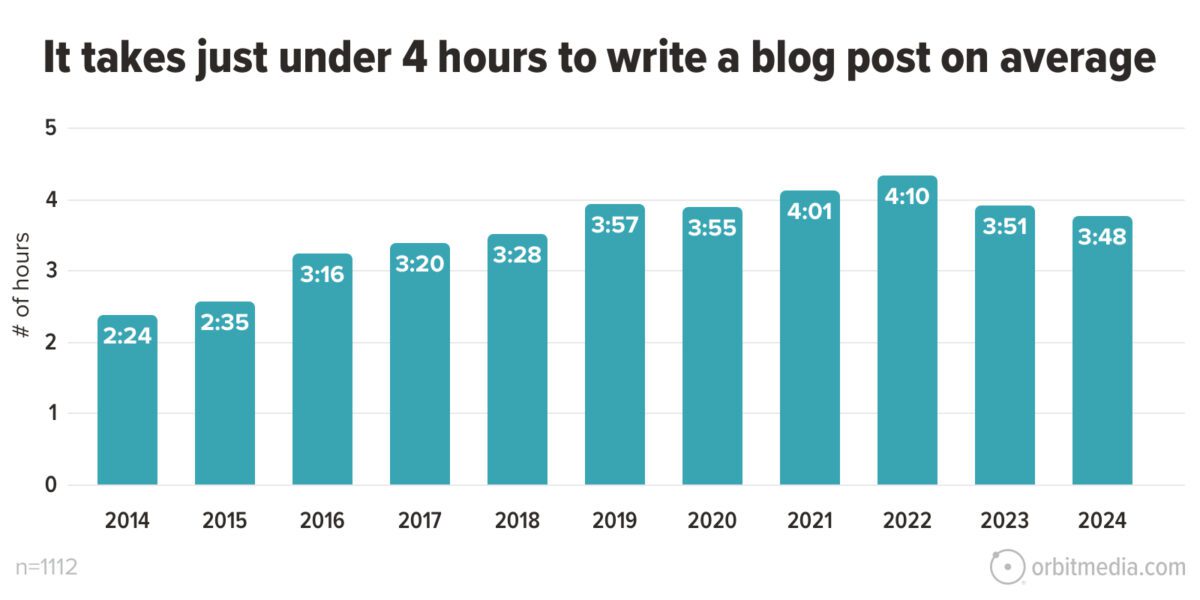
One of the most pressing questions for content teams in 2024 was whether the proliferation of generative AI tools would drastically reduce the time required to produce high-quality blog posts. With AI now a staple in the marketing toolkit—usage has surged from near-zero in 2022 to 80% among respondents—many anticipated a significant "efficiency revolution."

The data, however, tells a different story. The average time to produce a blog post currently sits at three hours and forty-eight minutes, a marginal decrease of just three minutes compared to the previous year.
This stability in production time highlights a critical nuance: while AI can assist in brainstorming, outlining, and even drafting, it has not replaced the human element required for success. Strategic direction, fact-checking, brand voice integration, and the "creative spark" required to stand out in an AI-saturated market still require significant human intervention. Simply put, AI has changed how we work, but it hasn’t necessarily made the work "fast" if you are aiming for high-quality outcomes.
The Correlation Between Effort and Outcome
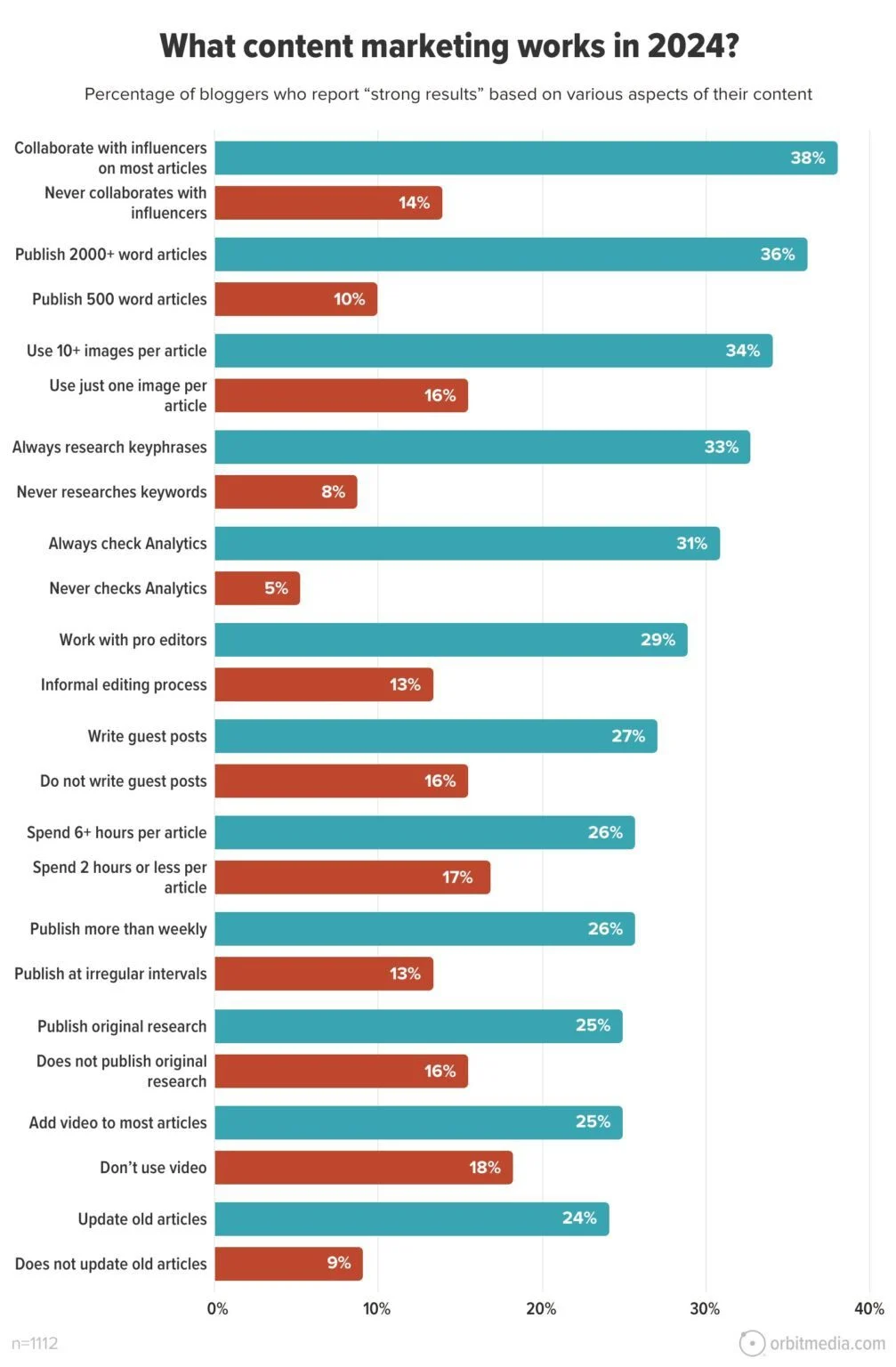
The survey reinforces a recurring theme in content marketing: big efforts yield big outcomes. The data shows a clear divide between "low-effort" content programs and those that invest in depth.
The 2,000-Word Benchmark
Bloggers who consistently produce long-form content—defined as 2,000 words or more—are significantly more likely to report "strong results." This is not merely about word count; it is about the depth of research, the complexity of the argument, and the value provided to the reader.
The Frequency Fallacy
There is a common misconception that quality and frequency are mutually exclusive. However, the data suggests that for sustained performance, a bi-weekly cadence is the minimum threshold. Audiences today are discerning; they have high expectations for content and are quick to abandon brands that fail to deliver consistent, high-value insights.
Treat Your Blog Like a Social Feed
Perhaps the most transformative takeaway is the need to treat a blog feed with the same rigor as a social media stream. Top-performing blogs share several characteristics with successful social platforms: they are visually engaging, highly scannable, and designed for immediate value. By adopting the user-testing principles and engagement strategies used by major social networks, brands can optimize their blogs for the modern reader who values time and clarity.

Expert Insight: A Q&A with Andy Crestodina
To peel back the layers of this research, we sat down with Andy Crestodina, CMO and Co-Founder of Orbit Media, to discuss what these trends mean for marketing leaders in 2025.
Q: What research findings were the most surprising to you personally?
Andy Crestodina: "The data tells us, year after year, that big efforts drive big outcomes. It’s not necessarily ‘surprising’ as a concept, but seeing the side-by-side performance of low-effort versus high-effort programs is always stark. What is surprising is how many companies continue to stick with low-effort programs—short-form posts, monthly cadences, no original research, no collaboration. If you aren’t putting in the work, you should rightfully set your expectations low."
Q: Why do you believe podcasters report higher success rates in the survey?
Andy Crestodina: "It’s a pattern of behavior. Podcasters aren’t just typing on a keyboard; they are collaborating, interviewing, and capturing authentic, expert-led audio. They are building relationships and capturing unique insights that can be repurposed across every other channel. They are doing the hard, connective work that creates real authority."

Measuring What Matters: Beyond Traffic
One of the most sobering insights from the 11th Annual Blogger Survey is the decline in reported "strong results" over the past five years. This coincides with a broader, industry-wide decline in organic search traffic.
For years, many marketers defined "success" almost exclusively by traffic. However, as "zero-click" searches become the norm and search engines prioritize direct answers, traffic is becoming a less reliable North Star.
Redefining Success Metrics
Marketers must pivot toward deeper metrics that align with business outcomes rather than vanity metrics.

- Conversion Rates: Are readers taking the next step?
- Time on Page/Engagement: Is the content actually being consumed?
- Lead Quality: Is the content attracting the right audience?
- Direct Attribution: Are readers mentioning your content in the sales cycle?
As Crestodina notes, "The most important outcomes from marketing are the hardest to measure: word-of-mouth, top-of-mind, and bottom-of-funnel impact."
Strategic Implications: The Path Forward
The decline of traditional search traffic is not a signal to abandon blogging, but a signal to evolve the strategy. For content marketing leaders, the implications are clear:
- Embrace "Rented Land": If your audience is on LinkedIn or other platforms, meet them there. The "don’t build on rented land" rule is increasingly outdated. By launching a LinkedIn newsletter, you can tap into existing audiences, build visibility, and drive traffic back to your owned channels.
- Prioritize Originality: AI can generate information, but it cannot generate experience. Original research, proprietary data, and unique expert interviews are the most defensible assets in an AI-driven web.
- Repurpose Ruthlessly: Every major piece of content should be the engine for dozens of smaller assets. A single research report can become a series of blog posts, a podcast episode, a LinkedIn newsletter, and a deck of social media graphics.
- Focus on Collaboration: Whether through guest posting or co-creating content with industry experts, collaborative content creates natural distribution channels and increases the credibility of your brand.
Conclusion
The era of "set it and forget it" blogging is over. The 11th Annual Blogger Survey serves as a reminder that content marketing is a craft that rewards intentionality, human expertise, and a willingness to adapt to new platforms. By shifting focus from high-volume, low-effort traffic to high-impact, expert-led storytelling, brands can ensure their content remains a competitive advantage rather than a commodity.

As we head into 2025, the winners will be those who stop chasing the "easy button" and start investing in the deep, strategic work that truly resonates with their audience.