The Silent Erosion: Unmasking and Remedying Internal Link Decay in SEO
[City, State] – In the intricate ecosystem of search engine optimization, while external backlinks often steal the spotlight, a more insidious threat silently erodes the foundation of many websites: internal link decay. This gradual degradation of a site’s internal link equity distribution, often unnoticed until its impact on search rankings becomes undeniable, is a critical yet frequently overlooked challenge for digital marketers and SEO professionals. It’s a phenomenon where the carefully constructed architecture of a website subtly drifts into disarray, undermining its ability to distribute valuable "PageRank" and maintain topical authority.
Main Facts: The Unseen Threat to Website Authority
Internal linking, often hailed as an SEO’s secret weapon, possesses the power to significantly influence a website’s performance in search engine results. Yet, its strength is susceptible to a slow, almost imperceptible decline. This "internal link decay" is not the result of malicious intent or a single catastrophic error, but rather the cumulative effect of a website’s natural evolution. As new content is published, old pages are updated or removed, and navigational structures undergo redesigns, the delicate balance of link equity can be disrupted, often leaving critical business pages starved of the internal authority they deserve.
The core issue lies in the misdistribution of link equity—the value or authority passed from one page to another via hyperlinks. While external links inject this equity into a site, internal links are responsible for its strategic allocation. When this internal distribution system falters, pages crucial for revenue, lead generation, or establishing topical expertise can lose their competitive edge in search rankings. The problem is exacerbated by the fact that its impact is rarely immediate; instead, it manifests as a slow, steady decline, making diagnosis challenging until significant harm has been done. Addressing internal link decay is not merely a technical fix; it’s a strategic imperative for any website committed to sustained growth and robust search visibility.
Chronology: How the Web’s Architecture Slowly Unravels
Internal link decay is a process, not an event. It unfolds over months and years through a series of seemingly minor, yet cumulatively significant, changes. Understanding this chronology is key to preventing and reversing its effects.
The Gravitational Pull of New Content
The lifecycle of content creation inherently contributes to link decay. Each time a new article, product page, or resource is published, it becomes the natural focal point for internal links. Writers, often guided by recency and relevance, instinctively link to the newest pieces, which are fresh in their minds and frequently referenced in content briefs. This phenomenon is further amplified by trends, such as the perceived prioritization of newer content by large language models (LLMs) and search algorithms, encouraging a constant influx of fresh material.
While linking to new content is essential for discoverability, it inadvertently starves older, foundational pages. High-converting product pages, evergreen pillar content, or comprehensive guides that were once robustly linked may gradually cease to receive new internal links. Their existing links remain, but the continuous flow of fresh equity is diverted elsewhere, often to less commercially critical pages. The PageRank doesn’t vanish entirely from these older pages, but its strategic utility diminishes as it flows towards potentially less impactful destinations within the site’s architecture. This creates a scenario where the "new" often overshadows the "valuable," leading to an imbalance in equity distribution.
Silent Redistribution Through Navigation Changes
Website redesigns and navigational overhauls, while often driven by user experience (UX) enhancements, represent a significant inflection point for internal link equity. A seemingly innocuous change—trimming a mega menu, redesigning a header navigation, cleaning up a footer, or removing sidebar widgets—can have profound, site-wide SEO consequences. These decisions, typically made with UX or branding in mind, can drastically alter how link equity flows throughout the site.
When a link in the global navigation (e.g., header or footer) is removed, every page on the site instantly stops passing equity to that specific destination. This can translate into thousands of internal links disappearing overnight, without any technical redirect or error to flag the change. The affected page, if it’s a critical category or service page, suddenly finds its internal authority significantly diminished. SEO professionals must be deeply integrated into such redesign projects, advocating for the preservation and strategic redistribution of link equity to ensure that crucial pages do not suffer an unintended and silent demotion.
The Equity Sinkholes: Pagination and Faceted Navigation
E-commerce sites and large content archives frequently employ pagination and faceted navigation to manage vast amounts of content. However, these features, if misconfigured, can become notorious "equity killers." Pagination, where content is spread across multiple pages (e.g., page 1, page 2, page 3), often leads to dilution of equity. If internal links point extensively to paginated URLs beyond the first page, and these pages lack proper canonical tags, valuable link equity can be drained into pages that hold little direct SEO value or even compete with the main category page.
Similarly, faceted navigation, which allows users to filter content (e.g., /products?color=red&size=large), creates unique URLs for each filter combination. If these filter pages are indexed and receive internal links, they can compete with core category pages or, if not indexed, become dead ends for link equity. In both scenarios, the most important product or category pages are deprived of the equity they need, while resources are inadvertently diverted to less strategic or even counterproductive URLs.
Orphaned Equity: Deleted and Redirected Pages
The lifecycle of a website inevitably involves deleting old content or migrating pages to new URLs. While 301 redirects are a standard SEO practice for handling such changes, they are not a complete solution for internal link decay. A redirect successfully guides users and search engine bots from an old URL to a new one, but the original internal links pointing to the old URL often remain unupdated.
This creates a chain: a user or Googlebot follows an internal link, hits a 301 redirect, and then is sent to the final destination. While functional, each hop in a redirect chain consumes crawl budget, adds latency, and increases the risk of Googlebot abandoning the chain before reaching the intended page. Over years, a growing website accumulates hundreds, even thousands, of internal links pointing to redirects. This "orphaned equity" is still passed, but inefficiently, weakening the signal consolidation and hindering crawl efficiency. Updating these internal links to point directly to the final destination is crucial for maintaining a clean link graph and maximizing equity flow.
Supporting Data: Measuring the Invisible Decline
You cannot fix what you cannot see. Identifying and quantifying internal link decay requires a systematic approach, leveraging specialized tools and a clear understanding of your business objectives.
Step 1: Crawl Your Site and Map Internal PageRank
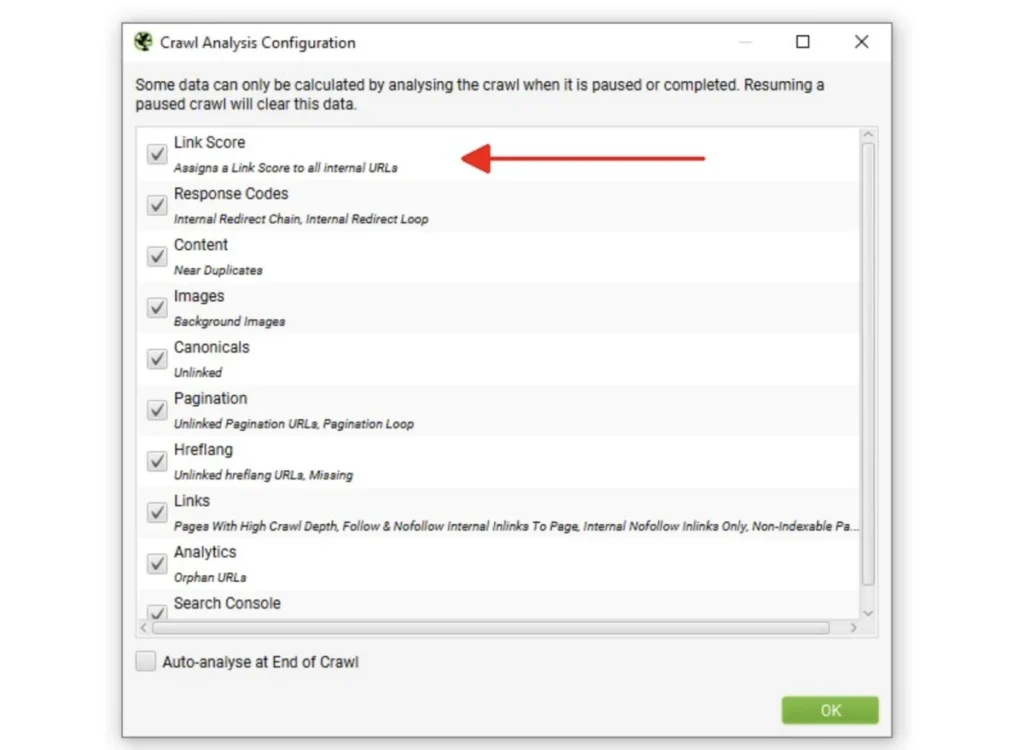
The first critical step is to conduct a comprehensive site crawl using SEO tools like Screaming Frog, Sitebulb, or JetOctopus. These tools are capable of simulating internal PageRank distribution, providing a nuanced view beyond a simple count of inbound links. The goal is to generate a list of all indexed pages, ranked not just by the sheer number of links they receive, but by the weighted equity of the pages linking to them. Screaming Frog, for instance, refers to this metric as "Link Score."
Exporting this data and sorting it by the highest Link Score reveals which pages within your site are receiving the most internal authority. This initial output provides a raw snapshot of your site’s current equity distribution. The fundamental question to ask at this stage is: Do the pages at the top of this list truly align with the pages that are most vital to your business’s success? For a significant number of websites, the answer is a resounding no, immediately highlighting the presence of internal link decay.
Step 2: Identify Your Strategic Pages
To truly diagnose the extent of decay, you must overlay your business priorities onto the technical data. This involves identifying your "strategic pages"—those URLs that are paramount for your business goals. This typically includes:
- Top Revenue-Driving Pages: Product pages, service pages, or conversion-focused landing pages directly contributing to sales or leads.
- Highest-Converting Landing Pages: Pages designed to capture user information or drive specific actions.
- Pillar Content/Topic Hubs: Comprehensive guides or central resources that establish topical authority and support a cluster of related content.
Once identified, map these strategic pages against the internal PageRank distribution obtained in Step 1. The discrepancies will be glaring. The gap between the "pages that matter most" and the "pages receiving the most internal equity" is precisely where internal link decay manifests. It highlights where your site’s internal authority is misdirected or insufficient, indicating a significant opportunity for optimization.
Step 3: Check for Redirect Chains in Internal Links
Beyond the overall equity distribution, a granular audit of your internal links is essential. Utilize your crawl data to identify any internal links pointing to non-200 status codes, specifically 301s (permanent redirects), 302s (temporary redirects), or, worse, redirect chains (multiple redirects).
Every internal link that passes through a redirect represents an inefficiency. It consumes crawl budget, adds unnecessary latency, and slightly diminishes the strength of the equity passed. Identifying these links provides immediate, actionable opportunities. By updating these internal links to point directly to the final, resolved URL, you can consolidate signal, recover lost equity, and improve crawl efficiency without needing to build a single new external backlink.
Step 4: Audit Orphaned Pages
Orphaned pages are those that exist on your website but receive no internal links. Unless they are explicitly included in your sitemap or linked externally (a less common scenario for many pages), they are virtually invisible to search engines. This means valuable content might be languishing in obscurity, unable to contribute to your site’s overall authority or attract organic traffic.
A thorough content audit, cross-referencing your crawl data with your content inventory, will reveal these orphaned pages. Once identified, a strategic decision must be made for each: either establish relevant internal links to connect them to the rest of your site’s architecture, thereby making them discoverable and passing equity, or, if they are no longer relevant, consider removing them entirely to streamline your site. Leaving them as they are is a missed opportunity for both SEO and user experience.
Official Responses: Rebuilding and Maintaining a Robust Link Structure
Addressing internal link decay requires a proactive and strategic approach, moving beyond reactive fixes to establish ongoing maintenance protocols.
The Equity Vs. Entropy Framework
To guide this process, consider the "Equity vs. Entropy" framework. Imagine your website as a complex network of pipes. External links pump fresh equity (authority) into this network. Internal links are the valves and conduits that redistribute this equity throughout the system.

- Entropy: This represents the natural state of neglect. The system runs on autopilot, and equity accumulates randomly based on what was recently linked, what categories happen to have a lot of content, or what was mentioned in a footer years ago. It’s a passive, undirected flow.
- Equity: This represents deliberate choice and active steering. You are intentionally directing the flow of authority towards the pages that deserve it most—those strategic pages identified earlier.
The goal isn’t a perfectly flat distribution; some pages inherently deserve more equity than others. What truly matters is alignment: the pages receiving the most internal equity should precisely correspond to the pages where you most want ranking strength and business impact.
Audit and Update High-Value Pages First
Begin your remediation efforts with your highest-priority pages. For each of these strategic URLs, undertake the following steps:
- Identify Potential Link Sources: Use your site crawl data to find existing, high-authority internal pages that are topically relevant and could logically link to your target strategic page. Prioritize pages with high internal PageRank themselves.
- Analyze Anchor Text Opportunities: For each potential source page, identify natural opportunities to embed a contextual internal link. The anchor text should be descriptive and relevant to the target page’s content.
- Build Contextual Links: Manually or programmatically insert these new internal links. A single, well-placed contextual link from an equity-rich internal page can meaningfully shift rankings, enhance crawlability, and reinforce topical authority for the destination page. This targeted approach ensures maximum impact for your efforts.
Use Your Content Archive as an Equity Distribution Tool
Your website’s blog archive or repository of older articles is often your most underutilized internal linking asset. Over time, these older posts accumulate significant link equity, both internally and externally. However, if they aren’t actively reviewed and updated, this accumulated equity can stagnate or be passed inefficiently.
A link audit will reveal which older posts are equity-rich but are not effectively passing that value to your strategic pages. Make it a routine practice to revisit and update these older posts. Intentionally add relevant, contextual internal links from these authoritative pieces to your current high-priority pages, especially as resources, products, or services they might reference evolve. This reactivates dormant equity and directs it to where it can have the most impact.
Build Hub Pages That Consolidate and Redistribute
The concept of topic clusters is a powerful SEO strategy, but its effectiveness hinges on proper internal linking. If you have a cluster of 20 supporting articles around a specific topic but lack a central "hub" page, your internal link equity can become fragmented and diluted across the individual articles.
A well-constructed hub page—a comprehensive guide, a central resource, or a pillar content piece—serves as the nexus for the entire cluster. It receives internal links from all 20 supporting articles, consolidating their collective equity. Crucially, this hub page must then be designed to pass this consolidated equity onward to your most important product, service, or conversion pages. The common mistake many SEOs make is building the cluster and the hub but failing to ensure that the hub effectively channels its accumulated authority to the business-critical pages it’s meant to support.
Fix Redirect Chains in Bulk
Addressing redirect chains is a technical cleanup that yields immediate benefits. Run a comprehensive crawl and export all internal links that point to non-200 status codes (especially 301s and 302s).
For large-scale websites, this can be a programmatic fix. Work with developers to implement a database-level find-and-replace operation within your Content Management System (CMS) to update all instances of the old URLs to their final destinations. For smaller sites, tools like Screaming Frog’s "Replace" feature under URL Rewriting, or dedicated CMS plugins, can facilitate semi-automatic updates. This process streamlines crawl paths, conserves crawl budget, and ensures that link equity is passed directly and efficiently, consolidating signals effectively.
Implement an Internal Linking Review in Your Content Process
The easiest way to prevent future internal link decay is to embed proactive internal linking practices directly into your content creation workflow. Every content brief or editorial checklist should include specific questions regarding internal links:
- "What existing strategic pages can this new piece of content link to?" This ensures that new content is always designed to support and strengthen existing valuable assets.
- "What existing, high-authority content can be updated to link to this new piece of content (if relevant)?" This question is frequently overlooked. Every new piece of content is an opportunity to retroactively pass equity back to your existing strategic pages or to other relevant content that might benefit from additional internal links.
If writers and content creators aren’t consistently asking and answering these questions, the internal link structure will inevitably decay by default, as the gravitational pull of new content continues its silent work.
Implications: The Long-Term Vision for SEO Success
Neglecting internal link decay has far-reaching implications, often leading to a plateau in SEO performance despite other efforts. Conversely, a deliberate and disciplined approach to internal linking yields compounding benefits that contribute significantly to long-term search visibility and business growth.
Compounding SEO Results vs. Stagnation
Websites that treat internal linking as an ongoing discipline, auditing quarterly or bi-annually, and adapting their strategies as priorities shift, consistently see compounding SEO results. Their hard-won external equity is efficiently distributed, reinforcing their most important pages, leading to sustained improvements in rankings and organic traffic.
In contrast, sites that ignore internal link decay often find their rankings stagnating after an initial period of growth. They publish thousands of articles, invest heavily in expensive external link-building campaigns, yet wonder why their visibility plateaus. The real problem often lies within: the valuable equity they’ve earned is silently disappearing into pagination, redirect chains, or simply being misdirected, never reaching the pages that truly need it to compete.
Optimizing Existing Resources and Crawl Efficiency
A robust internal link structure is about maximizing the value of what you already have. Before chasing another backlink, ensuring that the equity you’ve already earned is reaching your highest-priority pages is a highly efficient and cost-effective SEO strategy. It optimizes your existing assets and ensures that Googlebot can efficiently discover and crawl your entire site, allocating crawl budget effectively to your most important content. This directly contributes to better indexation and faster recognition of new or updated content.
Enhanced User Experience and Topical Authority
Beyond search engines, a well-thought-out internal linking strategy significantly improves user experience. Logical, contextual internal links guide users through relevant content, helping them find answers, discover related products, and deepen their engagement with your site. This improved user journey can lead to lower bounce rates, higher time on site, and increased conversions.
Furthermore, a strong internal linking structure reinforces your website’s topical authority. By consistently linking related content, you signal to search engines that your site is a comprehensive and authoritative resource on specific subjects. This strengthens your overall domain authority and makes it easier for your content to rank for a wider array of relevant keywords.
Future-Proofing Your Digital Presence
In an ever-evolving search landscape, a solid internal link architecture provides a critical layer of future-proofing. It creates a stable, resilient foundation that can withstand algorithm updates and accommodate future growth. A site with clear, intentional equity distribution is inherently more adaptable and easier to scale than one with a haphazard, decaying internal link profile.
The difference between a site with compounding SEO results and one that plateaus is often structural. If you aim for equity and targeted distribution within your internal linking, your visibility in search will inevitably follow, cementing your position as a reliable and authoritative source in your niche.
Key Takeaways for Proactive SEO Management:
- Audit Regularly: Crawl your site and simulate internal PageRank (or Link Score) to understand the true distribution of equity.
- Align with Business Goals: Compare this equity distribution against your strategically or commercially important pages to identify critical gaps.
- Clean Up Technical Debt: Fix redirect chains in internal links immediately to recover lost equity and improve crawl efficiency.
- Leverage Existing Content: Utilize your content archive and hub pages to actively pass equity towards priority pages.
- Integrate into Workflow: Embed an internal linking review into your content creation process to prevent future decay and foster continuous improvement.
By embracing internal linking as an ongoing, deliberate discipline, websites can transform a silent erosion into a powerful engine for sustained SEO growth.
More Resources:
- Internal Linking Critical for SEO
- Leveraging Technical SEO to Boost Crawl Efficiency & Visibility
- How to Implement Faceted Navigation Without Hurting Crawl Efficiency
Featured Image: Collagery/Shutterstock