The Fall of ‘Dort’: Inside the Collapse of the Kimwolf Botnet Empire
In a sweeping cross-border operation, Canadian and U.S. authorities have apprehended Jacob Butler, a 23-year-old Ottawa resident identified as the mastermind behind "Kimwolf," a formidable Internet-of-Things (IoT) botnet responsible for some of the largest and most disruptive distributed denial-of-service (DDoS) attacks in internet history.
The arrest marks the culmination of a months-long international manhunt that exposed the reckless intersection of high-stakes cyber warfare, personal vendettas, and the vulnerabilities inherent in the modern connected home. Butler, known in dark-web circles by the handle “Dort,” now faces a litany of criminal hacking charges in both Canada and the United States, effectively ending a reign of digital terror that caused millions of dollars in damages and threatened critical national security infrastructure.
The Anatomy of an IoT Menace
The Kimwolf botnet was not merely a collection of hijacked computers; it was a sophisticated, self-propagating weapon that weaponized the "Internet of Things." By targeting devices typically considered peripheral—such as digital photo frames, webcams, and smart home appliances—Butler was able to exploit equipment that was often firewalled from standard security scrutiny but lacked the robust defensive protocols of enterprise-grade hardware.
According to the U.S. Department of Justice (DOJ), Kimwolf enslaved millions of these devices, creating a distributed network capable of generating traffic spikes that defied previous technical records. At its peak, the botnet was linked to DDoS attacks measuring a staggering 30 terabits per second. To put this into perspective, such volume is sufficient to overwhelm the infrastructure of major financial institutions, government agencies, and internet service providers simultaneously.
The impact was not limited to commercial enterprises. The Department of Defense (DoD) confirmed that Kimwolf’s reach extended to targeting specific internet address ranges assigned to the military. This escalation drew the ire of the Defense Criminal Investigative Service, which coordinated with the FBI’s Anchorage field office to untangle the complex web of servers and compromised devices that constituted the botnet’s core.
Chronology of a Cyber-Criminal Career
The trajectory of Jacob Butler’s downfall follows a classic arc of hubris. While he maintained a degree of technical proficiency in orchestrating the botnet, his failure to adequately separate his “Dort” persona from his real-world identity became his undoing.
Phase 1: The Rise of Kimwolf (Late 2025)
Over the latter half of 2025, Kimwolf emerged as a dominant force in the underground marketplace. It did not operate in a vacuum; it was part of a hyper-competitive ecosystem of botnets, including rivals like "Aisuru," "JackSkid," and "Mossad," all vying for the same pool of vulnerable IoT devices. During this period, Butler allegedly issued over 25,000 attack commands, renting out his botnet to other cybercriminals or deploying it for his own disruptive agendas.
Phase 2: The Unmasking (February 2026)
In February 2026, investigative journalist Brian Krebs publicly identified Butler as the individual behind the "Dort" moniker. By tracing email addresses, forum registrations, and footprints left on public Telegram and Discord servers, investigators and researchers were able to link the handle to Butler’s physical location in Ottawa. Rather than retreating, Butler responded with a campaign of intimidation, escalating his activities to include doxing and swatting—the act of triggering a false police emergency response at a victim’s address—targeting the very researchers who were tracking him.
Phase 3: The Multi-Front Siege (March–May 2026)
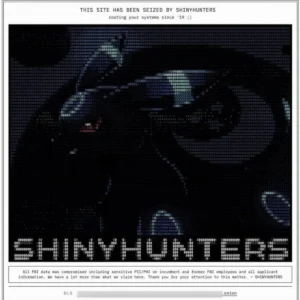
On March 19, a major turning point occurred. International law enforcement partners, led by the U.S. and Canadian authorities, executed a coordinated operation to seize the technical infrastructure underpinning Kimwolf and its rival botnets. Simultaneously, the Ontario Provincial Police (OPP) served a search warrant at Butler’s Ottawa residence, seizing a cache of digital hardware.
The subsequent legal filings were unsealed this week, confirming Butler’s arrest and the initiation of formal extradition proceedings. He is currently held in Canadian custody, awaiting an initial hearing scheduled for May 26.
The Role of Private Security and ‘Swatting’ Retaliation
One of the most disturbing aspects of the Kimwolf case was the personal harassment of security professionals. Ben Brundage, founder of the security startup Synthient, found himself in the crosshairs of the botmaster after his firm identified and helped patch a critical vulnerability that Kimwolf was using to spread its infection.
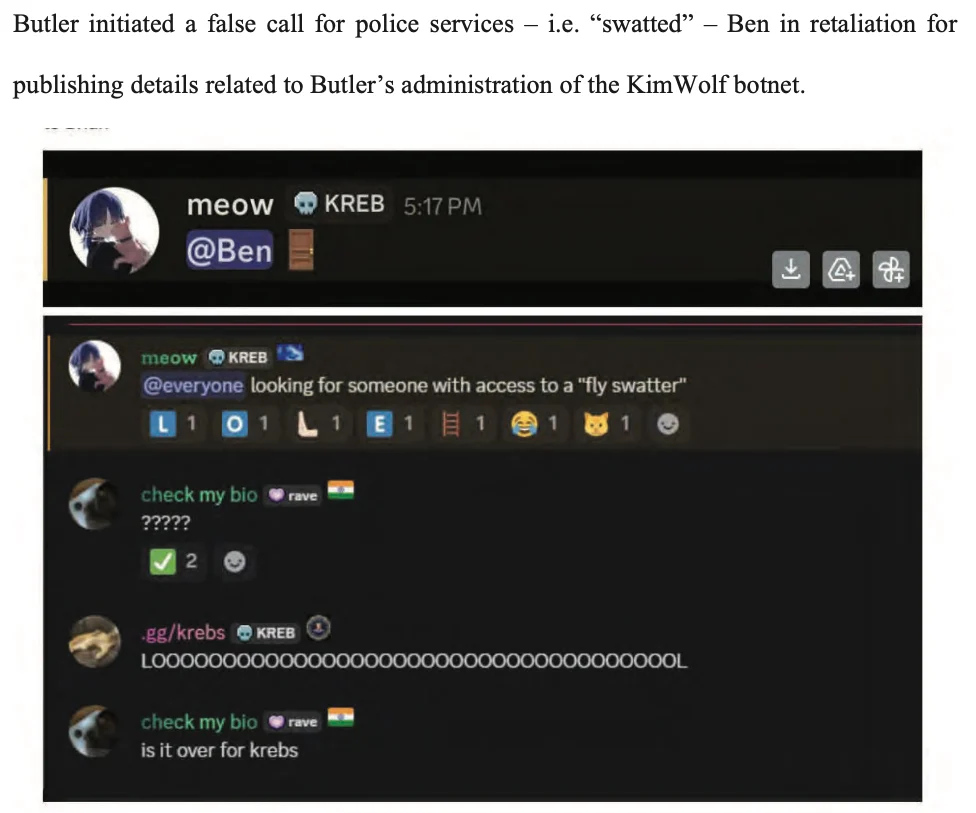
The criminal complaint details that Butler ordered at least two swatting attacks against Brundage as retaliation for his efforts to "immunize" the internet against Kimwolf’s propagation methods. These attacks were not just digital annoyances; they were life-threatening physical threats that illustrate the increasingly blurred line between online crime and real-world violence.
"Hopefully, this will end the harassment," Brundage stated following the news of the arrest. His relief is shared by a broader community of security researchers who have spent months under the shadow of anonymous digital threats.
Official Responses and Strategic Implications
The Department of Justice has been clear about the significance of this takedown. The case against Butler is not just about one individual; it is part of a larger global crackdown on "DDoS-for-hire" services. In April, the DOJ and European law enforcement agencies successfully seized domain names tied to nearly four-dozen such platforms. Investigators have confirmed that at least one of these services was in direct collaboration with Butler’s operation.
The Ontario Provincial Police have charged Butler with multiple offenses under Canadian law, including unauthorized use of a computer, possession of devices for unauthorized use, and mischief related to computer data. In the United States, he faces one count of aiding and abetting computer intrusion.
While the maximum sentence in the U.S. could reach 10 years, legal experts suggest that the final outcome will likely be determined by the U.S. Sentencing Guidelines. Factors such as Butler’s relative youth, his lack of a prior criminal history, and the potential for cooperation with federal investigators will likely play a significant role in the final sentencing.
The Wider Impact on Cybersecurity
The collapse of Kimwolf provides a vital case study in modern cyber-defense. It highlights three critical takeaways:
- The IoT Vulnerability Gap: The reliance on "firewalled" IoT devices that are essentially "set it and forget it" creates a massive attack surface. Manufacturers must be held to higher security standards, and consumers must be educated on the importance of updating firmware for devices as mundane as digital photo frames.
- The Importance of OSINT: The role of Open Source Intelligence (OSINT) in this case cannot be overstated. By meticulously documenting the digital breadcrumbs left by "Dort," researchers were able to provide the evidence necessary for law enforcement to act. This demonstrates the growing power of collaborative intelligence between the private sector and government agencies.
- The Deterrence Factor: By targeting the "botmasters" rather than just the infected devices, authorities are sending a clear signal to the cyber-underground. The dismantling of the Kimwolf, Aisuru, JackSkid, and Mossad infrastructures in such a short window demonstrates a newfound ability for international law enforcement to act in concert, creating a much more dangerous environment for those looking to profit from digital chaos.
As the legal proceedings move forward, the case of Jacob Butler will undoubtedly serve as a landmark in the history of internet regulation. While the arrest of one individual does not end the threat of botnets, the systematic dismantling of Kimwolf represents a significant victory in the ongoing effort to secure the digital landscape. For now, the "Dort" persona has been silenced, and the millions of devices that once formed his private army have been reclaimed by their rightful owners.