The Dawn of the Agentic Era: AWS Unveils Major Advancements at Summit NYC 2026
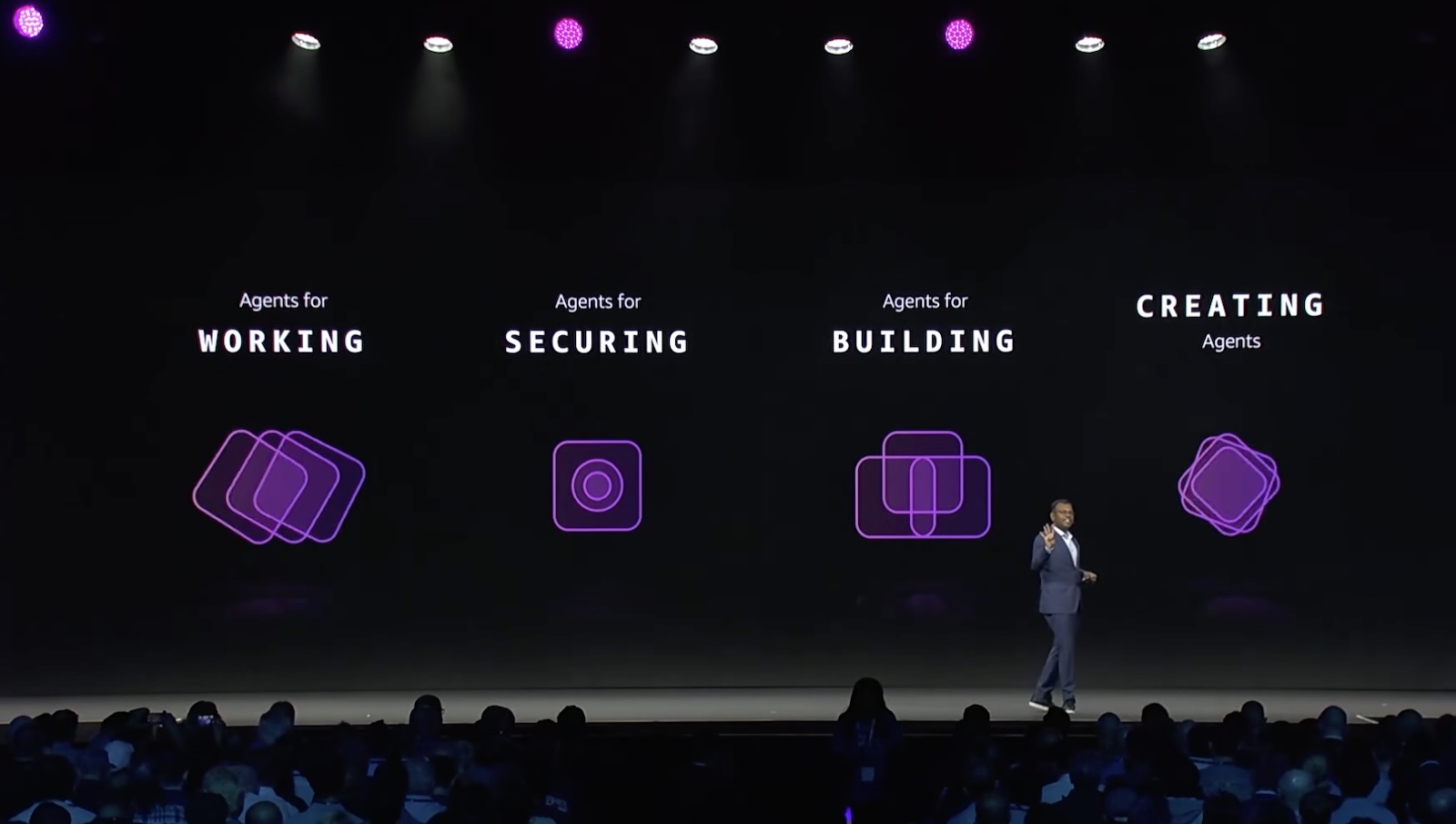
NEW YORK CITY — The landscape of enterprise artificial intelligence shifted significantly this week as Amazon Web Services (AWS) took the stage at the AWS Summit in New York City. Swami Sivasubramanian, AWS VP of Agentic AI, delivered a keynote that signaled a departure from simple generative AI chatbots toward a new era of "Agentic AI"—autonomous systems capable of reasoning, executing complex workflows, and interacting with organizational data to perform tasks that were previously the exclusive domain of human knowledge workers.
As enterprises move past the experimentation phase of large language models (LLMs), the focus has shifted toward reliability, governance, and seamless integration into daily operations. AWS’s latest suite of announcements directly addresses these challenges, promising to transform how businesses build, secure, and deploy AI agents.
Main Facts: The Core Pillars of the Agentic Shift
The AWS announcements center on two primary engines: the expansion of Amazon Bedrock AgentCore and the launch of Amazon Quick’s autonomous agents. These releases represent a strategic push to make AI agents not just "smart," but functional partners within the enterprise ecosystem.
Amazon Bedrock AgentCore: Expanding Horizons
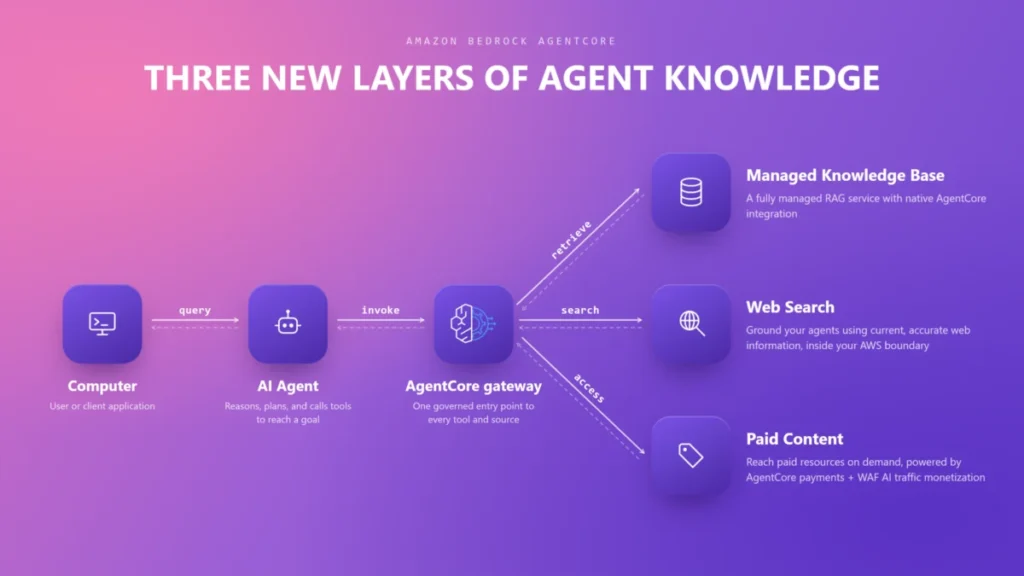
The enhancements to Bedrock AgentCore are designed to solve the "knowledge silo" problem. By allowing agents to interface directly with organizational, web, and paid knowledge bases, AWS is enabling businesses to build agents that are context-aware. These agents are no longer restricted to a static training set; they can dynamically pull from live corporate documentation, real-time web feeds, and proprietary data sources. Furthermore, the update includes enhanced diagnostic capabilities, allowing development teams to identify "failure points" in production environments—a critical step for companies moving AI out of the sandbox and into mission-critical workflows.
Amazon Quick: Autonomy in the Workflow
Perhaps the most consumer-facing announcement was the introduction of autonomous agents within Amazon Quick. These agents are designed to function in the background, mirroring the behavior of human specialists. Whether it is a finance agent automating order-to-cash processes or a sales agent monitoring CRM data, Slack, and email to proactively draft responses, these agents represent a fundamental shift in business automation. They are accompanied by a new, intelligent activity feed that uses machine learning to prioritize tasks, messages, and calendar events based on a user’s unique working style.
Chronology of the 2026 Summit Announcements
The AWS Summit in New York City served as a high-visibility launchpad for these technologies. Below is the timeline of the primary disclosures:
- June 17, 2026 (Morning): Swami Sivasubramanian kicks off the keynote, emphasizing that the future of AI is not in chat interfaces, but in "agentic workflows." He frames the transition from generative AI to agentic AI as the most significant technological leap of the decade.
- June 17, 2026 (Mid-Day): Technical deep-dives into Amazon Bedrock AgentCore are released, outlining the new "knowledge layers" that allow for continuous learning and governance at scale.
- June 17, 2026 (Afternoon): The demonstration of the Amazon Quick AI Assistant showcases the capability for autonomous agents to perform complex, multi-step tasks like drafting sales follow-ups based on fragmented communication across multiple platforms.
- June 18, 2026: AWS publishes supplementary announcements regarding updated infrastructure and support tools, rounding out the week’s technological rollout.
Supporting Data: Why "Agentic" Matters Now
The move toward agentic AI is not merely a marketing pivot; it is a response to clear data trends in enterprise software utilization. Internal AWS research, bolstered by industry benchmarks, highlights three key areas where traditional AI has failed to deliver:
- Context Retention: Traditional chatbots often "forget" the broader goals of a task. By integrating knowledge layers into AgentCore, AWS addresses the 40% of enterprise AI projects that stall due to a lack of domain-specific context.
- Productivity Gains: The autonomous agents in Amazon Quick are projected to save employees an average of 8–10 hours per week by automating repetitive tasks like email drafting and task prioritization.
- Governance at Scale: One of the primary barriers to AI adoption has been the inability to monitor agent behavior. The new controls introduced for Bedrock AgentCore allow administrators to set guardrails that automatically adjust as the agent’s capabilities expand, mitigating the risks of "hallucinations" or unauthorized actions.
Official Responses and Strategic Vision
In his address, Swami Sivasubramanian underscored the philosophy behind these changes. "We are moving from an era where humans search for information to an era where the information—and the agents that process it—comes to the human," Sivasubramanian stated. He noted that the goal of AWS is to provide the "scaffolding" upon which companies can build their own intelligent workforce.

AWS partners and early-access customers have echoed this sentiment. Feedback from the developer community suggests that the ability to "diagnose" an agent’s failure in production is the "missing link" that has prevented many enterprises from deploying AI in high-stakes financial or legal environments. By providing observability tools, AWS is effectively lowering the barrier to entry for high-stakes enterprise AI.
Implications: The Future of Enterprise Work
The rollout of these technologies has profound implications for the future of the global workforce and enterprise strategy.
The Rise of the "Background Worker"
With the launch of agents in Amazon Quick, the nature of "work" is evolving. The traditional desk job, defined by manual interaction with software interfaces (opening apps, typing data, sending emails), is being supplanted by a model where the human acts as the supervisor, and the AI acts as the executor. This is likely to lead to a demand for "AI Orchestrators"—professionals tasked with managing, tuning, and auditing the performance of digital agents.
Security and Governance Concerns
While the promise of efficiency is significant, the implications for security are equally large. As agents are granted access to sensitive data (CRM, Slack, email), the attack surface for organizations expands. AWS’s focus on "governing agents with controls that scale" is a direct acknowledgment of this. The success of these tools will depend heavily on whether the security features can keep pace with the agents’ expanding autonomy.
Competitive Positioning
This announcement cements AWS’s position in the AI infrastructure war. By focusing on the agentic layer, AWS is differentiating itself from competitors who remain focused primarily on foundational model training. By providing the tools for continuous learning, data integration, and cross-platform communication, AWS is positioning Bedrock and Quick not as mere tools, but as the new operating system for the intelligent enterprise.
Final Outlook
As we look toward the remainder of 2026, the success of these initiatives will be measured by their real-world application. The ability of Amazon Quick’s agents to truly understand the nuances of a user’s calendar or the specific tone of a sales email will be the litmus test for whether these systems are truly "intelligent" or simply highly sophisticated scripts.
For now, the message from the New York Summit is clear: The age of the chatbot is over. The age of the autonomous agent has arrived, and for the enterprise, it is time to start delegating.