The Silicon Frontier: AWS Unveils Graviton5-Powered EC2 M9g Instances to Power the Era of Agentic AI
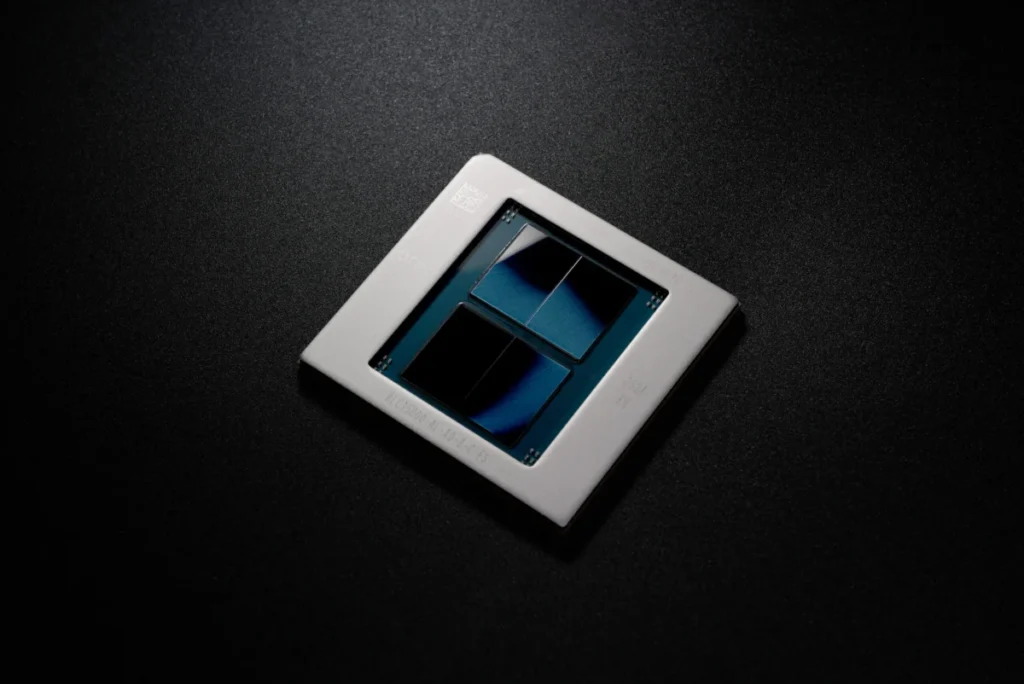
In the rapidly evolving landscape of cloud computing, the relentless pursuit of performance, efficiency, and security has reached a new milestone. Amazon Web Services (AWS) has officially announced the general availability of its M9g and M9gd instances, marking the commercial debut of the Graviton5 processor. This launch represents more than just a routine hardware refresh; it signifies a strategic pivot toward meeting the compute-intensive demands of modern "agentic" AI—where software no longer merely responds to queries but executes complex, multi-step actions.
The Evolution of Custom Silicon: A Chronology of AWS Graviton
To understand the magnitude of the Graviton5 launch, one must look at the eight-year arc of AWS’s investment in custom silicon. Since the inception of the Graviton project, AWS has sought to break free from the constraints of commodity hardware, tailoring its infrastructure to the specific needs of its global customer base.
- 2018 (The Genesis): AWS introduced the first-generation Graviton processor, signaling the company’s intent to optimize price-performance for scale-out workloads.
- 2019–2021 (The Maturation): Graviton2 and Graviton3 introduced significant architectural leaps, proving that Arm-based server chips could outperform traditional x86 alternatives in general-purpose computing.
- 2023 (Graviton4): This generation solidified Graviton as the industry standard for cloud-native performance, offering massive scalability for database and analytics clusters.
- 2025 (The Preview): At re:Invent 2025, AWS unveiled the M9g instances in preview, inviting enterprise customers to stress-test the new silicon against production workloads.
- 2026 (The General Availability): Today, the M9g and M9gd instances move into full production, accompanied by the introduction of the Nitro Isolation Engine, setting a new benchmark for cloud security.
Powering the Next Wave: Graviton5 Technical Specifications
Graviton5 is arguably the most ambitious chip in the history of AWS. Built for an era where compute is the primary bottleneck for innovation, the processor introduces architectural changes designed to handle massive data throughput and complex reasoning tasks.
The Architecture of Speed
At the heart of the M9g instance is a 192-core powerhouse. This massive core count is supplemented by a 5x increase in L3 cache compared to the previous generation. For developers and system architects, this translates to significantly reduced inter-core latency—up to 33% lower than the Graviton4. By integrating DDR5-8800 memory, AWS has enabled the fastest memory performance currently available in any public cloud environment.
Optimized for Agentic AI
As AI workloads shift toward "agentic" frameworks—systems that can evaluate results, use external tools, and orchestrate complex tasks—the demand for CPU-bound performance has skyrocketed. Graviton5 addresses this by minimizing the time agents spend waiting on CPU-bound operations. With its high memory bandwidth and core density, it is uniquely positioned to handle concurrent environments that are essential for large-scale AI deployment.
Proven Results: Industry Benchmarks
The transition to new silicon is rarely seamless, yet early adopters of the M9g instances have reported remarkable gains with minimal friction. The "zero-code-change" promise of the Graviton family remains a key selling point.
- ClickHouse: The analytics powerhouse observed a 36% performance increase compared to the M8g instances without modifying a single line of code.
- Honeycomb: Through an extensive six-month A/B test of production observability workloads, Honeycomb demonstrated a 36% improvement in throughput per core, highlighting the efficiency of the new architecture for data-intensive tasks.
- HubSpot: For database-heavy operations, specifically MySQL, HubSpot saw a dramatic 60% reduction in query duration, a testament to the optimized memory and storage bandwidth of the new M9g instances.
The Nitro Isolation Engine: A New Paradigm for Security
Security in the cloud has historically relied on a combination of hardware and software isolation. With the M9g launch, AWS has introduced the Nitro Isolation Engine, a technological advancement that elevates isolation to a mathematical certainty.
By leveraging formal verification—a rigorous mathematical technique used to prove that hardware and software behave exactly as intended—AWS has transformed the Nitro hypervisor into a "formally verified" cloud security component. This engine mediates all access to virtual machine memory, CPU registers, and I/O devices through a minimal set of APIs. For highly regulated industries, such as finance and healthcare, this provides a level of assurance that goes beyond standard software-based security, effectively "mathematically proving" the isolation of instances.
Implications for the Cloud Ecosystem
The general availability of M9g and M9gd instances is set to have a ripple effect across the cloud computing landscape.
Sustainability and Efficiency
Beyond raw performance, Graviton5 is the most energy-efficient processor AWS has ever produced. As corporations face increasing pressure to meet ESG (Environmental, Social, and Governance) targets, the ability to achieve higher compute density while reducing power consumption per core provides a dual benefit: cost savings and carbon footprint reduction.
The Rise of High-Speed Local Storage
The M9gd variant, which includes high-speed, low-latency local NVMe SSD storage, addresses a critical gap for applications requiring high-performance temporary storage. With up to 11.4 TB of NVMe storage and a 30% boost in IOPS compared to its predecessor, it is poised to become the default choice for gaming servers, batch processing, and media encoding workflows.
Empowering the Developer
AWS is not merely releasing hardware; it is providing a suite of tools to ensure a smooth transition. Resources such as the Graviton Savings Dashboard and the AI-powered AWS Transform service—which automates the migration of Java applications from x86 to Graviton—are designed to lower the barrier to entry. This ecosystem approach ensures that even small teams can leverage the cutting-edge performance of Graviton5 without needing deep expertise in Arm-based architectures.

Official Perspective and Future Outlook
The scale of this rollout is perhaps best exemplified by the partnership between AWS and Meta. As one of the largest customers for Graviton, Meta is currently deploying tens of millions of cores to support its agentic AI efforts. This massive-scale adoption underscores the industry’s belief that custom silicon is no longer a luxury but a fundamental requirement for maintaining competitive speed and efficiency.
"As AI shifts from answering questions to taking actions," AWS noted in its release, "the demand for CPU compute is growing rapidly. Graviton5 is built for this shift."
Conclusion: Setting the Standard for 2026 and Beyond
With over 350 instance types and 120,000 customers, the Graviton ecosystem has matured into a cornerstone of modern digital infrastructure. The M9g and M9gd instances represent the pinnacle of eight years of iterative improvement. By balancing raw compute power with advancements in memory bandwidth, cache capacity, and formally verified security, AWS has provided a blueprint for the next generation of cloud computing.
As organizations prepare for a future defined by agentic AI and massive data sets, the choice of infrastructure will increasingly become a differentiator. For those looking to optimize for cost, performance, and security, the transition to Graviton5 is not just an upgrade—it is a strategic necessity. Whether running microservices, managing large-scale databases, or training the next generation of AI agents, the M9g family provides the robust, efficient, and secure foundation required to lead in a data-driven world.
For developers, system administrators, and CTOs, the message is clear: the hardware foundation for the next decade of innovation has officially arrived, and it is built on the Graviton5.