Scaling eCommerce Success: The M4 Method for Facebook Ad Dominance
For many eCommerce brand owners, the Facebook Ads Manager has become a source of profound frustration. Marketing teams often find themselves trapped in a cycle of high click-through rates that fail to translate into meaningful revenue, or worse, watching budgets vanish into audiences that never convert.
However, according to digital marketing expert Sam Piliero, the problem isn’t the platform—it’s the strategy. In a comprehensive framework developed through years of high-level testing, Piliero has distilled the complex world of Meta advertising into a four-stage system known as the M4 Method. This methodology is currently responsible for scaling several modest businesses from under $30,000 in monthly ad spend to multi-million-dollar enterprises.
Main Facts: The Philosophy of Profitable Scaling
At the heart of the M4 Method is a departure from the "efficiency obsession" that plagues many marketing departments. Piliero argues that advertisers often fall into the trap of prioritizing Return on Ad Spend (ROAS) or Cost Per Acquisition (CPA) as their primary north stars. While these metrics are essential guardrails, they are not the end goal.
The true objective, Piliero contends, is contribution margin. A brand that achieves a 10x ROAS but spends so little that it fails to capture market share is effectively leaving money on the table. Conversely, a 2.2 ROAS might seem modest, but if it allows a business to aggressively acquire customers and leverage long-term lifetime value (LTV), it builds a far more resilient and scalable company.
The M4 Method operates on the principle that there is a "delicate sweet spot" between two extremes: the over-engineered account with dozens of fragmented campaigns and the "set it and forget it" approach that relies entirely on algorithmic automation. Finding this balance requires a disciplined, four-stage architectural approach.
Chronology: The Evolution of the M4 Framework
The M4 Method is designed to be implemented as a sequential progression, where each stage builds upon the stability of the previous one.

Stage 1: Account Structure
Piliero compares account structure to the foundation of a house. Without a logical organization, even the most compelling creative will struggle to perform. The structure relies on:
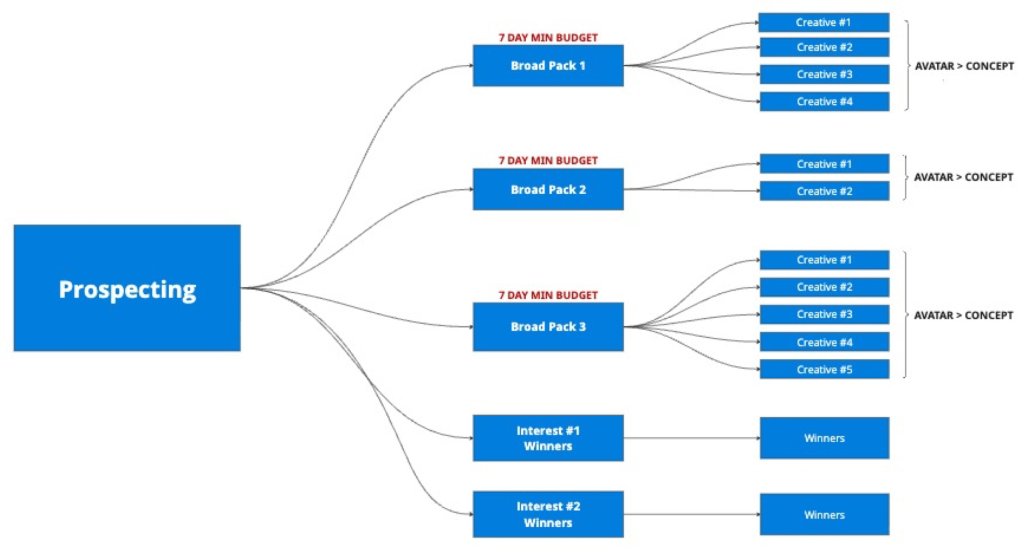
- Prospecting Campaigns: A single campaign utilizing Campaign Budget Optimization (CBO) housing various "packs" of creative.
- Retention Campaigns: Dedicated spending on existing customers to ensure data clarity.
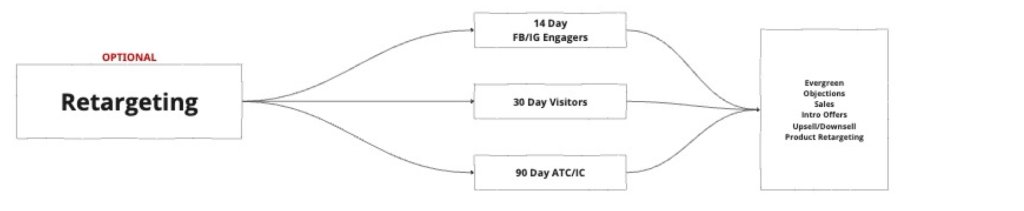
- Optional Strategic Campaigns: Retargeting for "warm" leads and scaling campaigns that focus exclusively on top-tier performers.
Stage 2: Creative Optimization
Once the house is built, the creative becomes the engine. Post-Andromeda update, Meta’s algorithm uses ad content to determine delivery. This has rendered generic, broad-appeal creative obsolete. The new gold standard is the "problem-solution" ad, which identifies a specific customer avatar and addresses their unique pain points directly.
Stage 3: Deep Dive Analysis
This stage is about identifying hidden patterns. By analyzing 90 to 180 days of non-promotional data, advertisers can pinpoint performance anomalies—such as higher conversion rates on specific days of the week—and adjust their bidding strategies accordingly.
Stage 4: Strategic Scale
Scaling is the final act. It should only occur when the first three stages are functioning correctly. Whether through vertical increases in budget, horizontal scaling during promotional events, or the "Twin Engine" approach of injecting creative iterations into existing campaigns, the goal is to maintain stability while increasing volume.
Supporting Data: The Case for the M4 Method
The efficacy of this framework is best illustrated by the performance of current clients under "The Moonlighters" umbrella. Five specific brands, which were operating at a $30,000 monthly ad spend and $100,000 monthly revenue threshold just one year ago, have successfully crossed the $50 million annual revenue mark.
While Piliero is quick to note that these results are not "typical," they serve as a benchmark for what is possible when a brand commits to a rigorous testing cycle. Key data points identified in the M4 process include:

- The 10% Rule: A "hit" is defined as an ad that captures at least 10% of total account spend while maintaining a ROAS above the target.
- The 20% Lift: Deep-dive analysis of historical performance patterns (day of the week, geography, placement) consistently contributes to a 20% improvement in overall ROAS or a corresponding reduction in CPA.
- Native Content: Micro-influencers (1,000 to 20,000 followers) who produce semi-professional, native-feeling content currently provide the highest ROI for top-of-funnel prospecting.
Official Perspective: The "King Goal" Strategy
When asked how to maintain focus amidst the noise of Facebook’s rapidly changing interface, Piliero emphasizes the "King Goal." During his tenure at BarkBox, the company adopted a singular mantra: "CAC is King."
By identifying one North Star metric—the one number that truly dictates business health—marketers can ignore daily fluctuations in CPMs or CPCs. If the King Goal is being met, the strategy is working. If the King Goal is ignored in favor of "proxy metrics," the business loses its sense of direction.
For businesses with supply chain constraints, the King Goal shifts. If a brand cannot fulfill increased demand, the strategy pivots from "growth at any cost" to "efficiency per order." In these cases, the M4 Method is used to maximize the value of every single customer rather than the volume of total acquisition.
Implications: The Future of Media Buying
The implications of the M4 Method are profound for the eCommerce sector. It signals a move away from the "hacker" mentality of the early 2010s—where advertisers looked for loopholes in platform targeting—toward a more mature, brand-centric approach.
The Creative-First Mandate
The most significant implication is the shift of labor. Media buyers are no longer just spreadsheet analysts; they must now be part creative director. Because the algorithm reads the content to determine the audience, the "copy and design" process is now the primary lever for targeting. If your ads aren’t performing, the solution is rarely a change in the technical settings; it is almost always a change in the narrative.
The Algorithm as a Partner
The M4 Method assumes that the Meta algorithm is a sophisticated partner, not an adversary. By using "packs" of creative and allowing the CBO to distribute budget, advertisers are essentially feeding the algorithm the right data to help it learn. The role of the human is to provide the "input" (the creative) and the "constraints" (the budget rules and structure) while letting the machine optimize the delivery.

Sustainability and Compounding
Perhaps the most critical takeaway is the compounding nature of the M4 Method. By focusing on lifetime value and building a library of "hit" ads that are iterated upon rather than discarded, businesses create an "evergreen" engine. Instead of starting from scratch every quarter, successful brands build a repository of winning creative concepts that become more effective over time as the algorithm learns the brand’s specific customer base.
Final Thoughts for Marketers
In an era where AI and machine learning dominate the advertising landscape, the human element—deep, empathetic understanding of the customer’s pain points—has never been more valuable. The M4 Method provides the structure, but the brand’s ability to tell a compelling story remains the catalyst for growth. For those willing to move past the obsession with vanity metrics and commit to the rigors of testing, the path to massive scaling is clearer than ever.