Bridging the AI Capability Gap: A Strategic Framework for Advanced Workforce Upskilling
In the rapidly evolving landscape of corporate technology, a significant paradox has emerged: while enterprises are investing millions into large-scale artificial intelligence (AI) infrastructure, the vast majority of their workforces remain stuck at a rudimentary level of tool utilization. This "capability gap" threatens to turn high-cost AI initiatives into expensive shelfware.
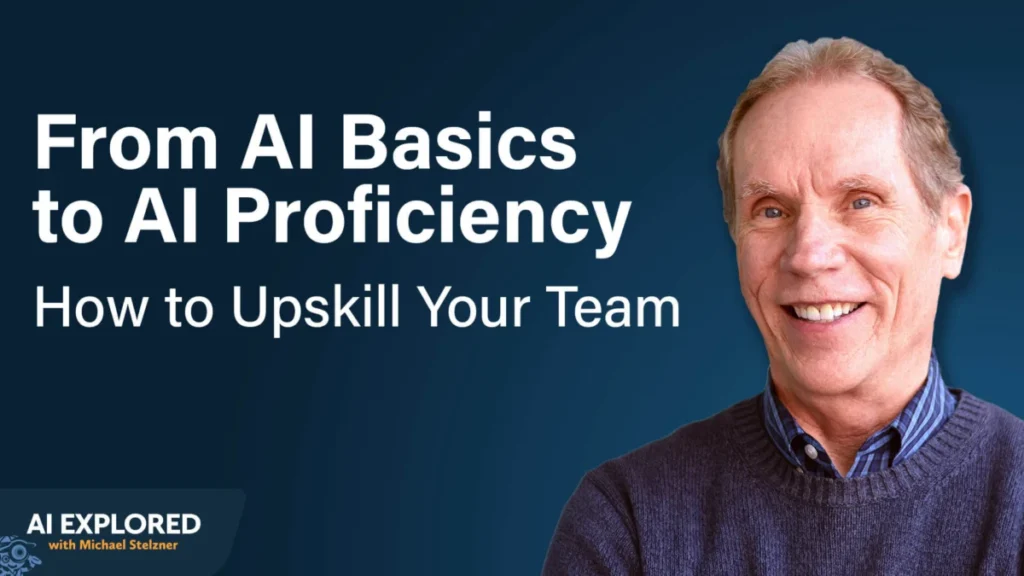
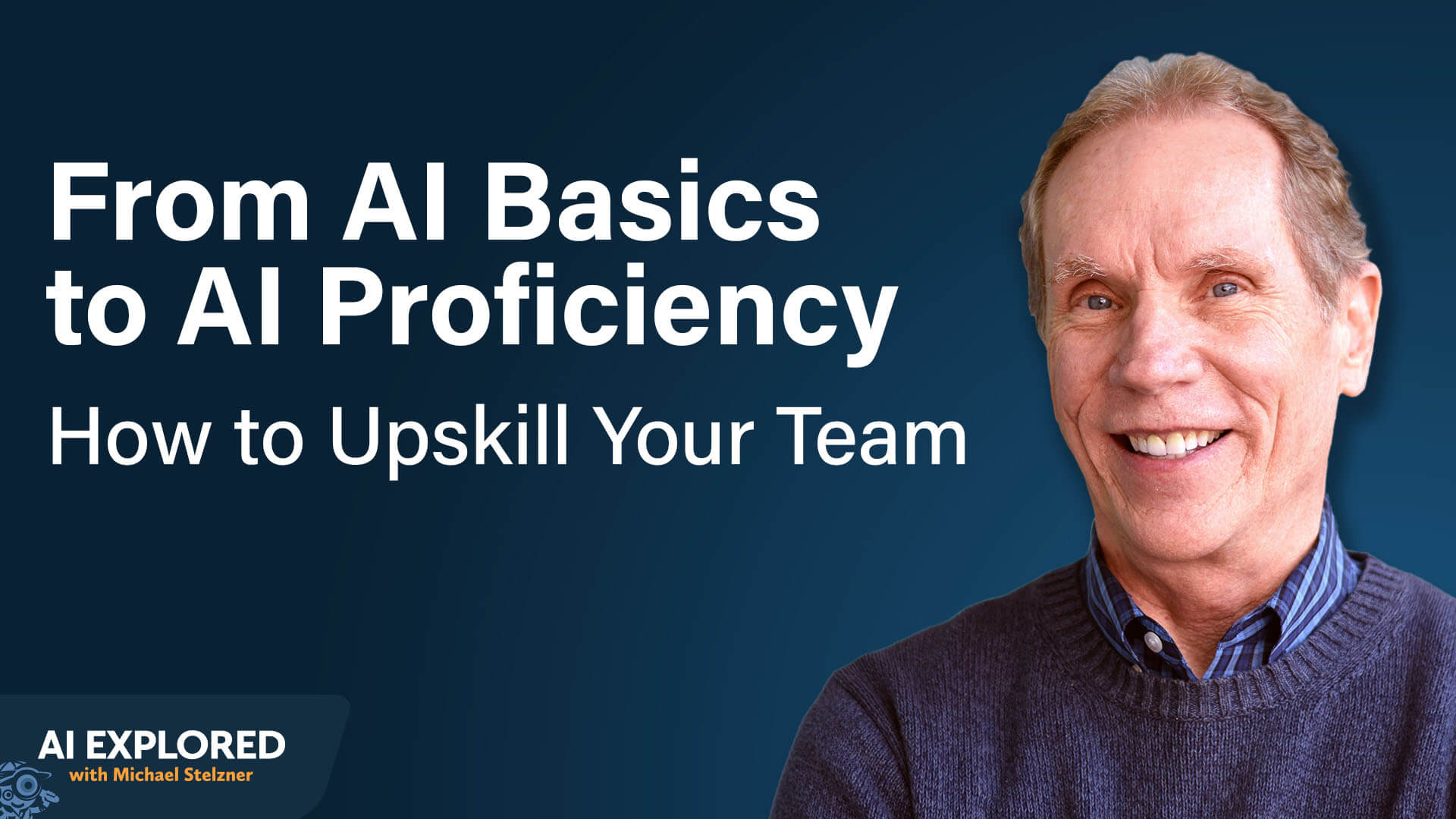
According to John Munsell, CEO of BoodleAI and a leading voice in organizational AI transformation, the traditional model of top-down AI deployment is fundamentally flawed. In a recent strategic deep dive co-created with Michael Stelzner, Munsell argues that the path to true digital transformation lies not in single, monolithic applications built by outside vendors, but in the systematic upscaling of individual employees from basic users to strategic creators.
The Main Facts: The Failure of the "Single Large Bet"
Most modern corporations are currently making a high-stakes gamble. They commission multi-million-dollar AI applications from external consultants, hoping these tools will revolutionize productivity. However, these initiatives frequently collapse because the internal workforce lacks the "AI literacy" to maintain or evolve the system once the vendors depart.
Munsell identifies a critical mismatch in capability levels. If an organization’s collective AI knowledge sits at a "level three" (basic prompting and chat), but the new initiative requires "level eight" capability (managing agents and data pipelines) to operate, the project is destined for obsolescence.
The alternative is a distributed model of innovation. By training 100 or 200 employees to build relatively simple, personalized tools within platforms like ChatGPT, Claude, or Gemini, the cumulative impact often outpaces a single custom application in both speed and cost-efficiency. This approach shifts the burden of innovation from a central IT department to the people who understand the daily friction points of their specific roles.
Chronology of Transformation: The Four-Step Implementation Process
To move a workforce from AI resistance to AI curiosity, Munsell outlines a structured chronological framework that organizations must follow to ensure training translates into measurable ROI.
Step 1: Establishing Two-Track Governance
Before a single training module is watched, an organization must establish a monitoring system. This system tracks two parallel metrics:
- Skill Progression: Benchmarking how long tasks take before and after training to provide empirical evidence of productivity gains.
- Security Scaling: As employees move from writing emails (low risk) to connecting AI agents to external databases (high risk), oversight must scale accordingly.
Munsell suggests using secure, compliant environments like BoodleBox or NebulaONE—platforms that provide access to multiple frontier models (GPT-4, Claude 3.5, etc.) within a HIPAA/FERPA-compliant wrapper—to mitigate data exposure risks during the learning phase.
Step 2: The Hybrid Training Model
The "chronology of failure" in corporate training usually begins with self-guided modules. Munsell notes that most employees, overwhelmed by their primary job duties, rarely progress past the first few videos.
To combat this, the framework utilizes a hybrid approach: recorded modules for flexibility, supplemented by live "office hours" twice a week. This maintains human momentum and provides a safety net for employees who encounter technical or conceptual hurdles.
Step 3: Diagnostic Assessments
Before training begins, employees undergo two distinct evaluations. The first is a 20-question skill assessment designed to create a "Heat Map" of the organization’s current capabilities. This includes technical questions about knowledge bases and prompt structures, as well as open-ended questions requiring the submission of actual sample prompts.
The second is a role-type assessment (based on the PAEI model), which identifies whether an employee is a Producer (Doer), Administrator, Entrepreneur (Innovator), or Integrator. This allows trainers to tailor their support, as "Administrators" may struggle with creative ideation, while "Innovators" may need help grounding their ideas in practical constraints.
Step 4: The "Perfect Day" Exercise and Tool Building
The final stage of the process involves identifying a specific problem to solve. Instead of asking what employees want to build, Munsell asks: "What do you do every week that is repetitive, slow, or mentally draining?"
Employees then engage in the "Perfect Day Exercise," imagining their ideal workday and identifying tasks they would confidently hand off to a digital assistant. This ensures that by the end of the training, every participant has built at least one tool, workflow, or prompt system that saves them a minimum of three hours per week.
Supporting Data: The 10 Levels of AI Mastery
To quantify progress, Munsell’s framework organizes AI capability into ten levels, grouped into four stages of evolution. Currently, John notes that 98% of employees in the organizations he trains start at level three or below.
1. Literacy (Levels 1–3)
Employees understand the basic parameters of AI. They can ask clear questions, refine outputs, and—most importantly—critically evaluate the reliability of the information provided. They do not "blindly accept" AI hallucinations.
2. Fluency (Levels 4–6)
At this stage, real business impact emerges. Employees use AI daily and begin building simple, repeatable tools like custom GPTs or structured prompt libraries. They are no longer just chatting with AI; they are configuring it to perform specific roles.
3. Mastery (Levels 7–9)
Users at this level build complex, repeatable workflows and begin working with AI agents. They connect disparate tools and use API calls to solve multifaceted problems. This stage requires significant governance, as the AI is often interacting with external data sources.
4. Stewardship (Level 10)
A "Steward" manages both human teams and AI systems. They are responsible for the ethical and organizational oversight of AI deployment. Munsell notes that level ten is currently rare, as corporate security practices have not yet caught up to the potential of autonomous AI agents.
Official Responses and Expert Insights: Overcoming Resistance
The shift John Munsell describes is fundamentally psychological. "The goal is to move from AI resistance to AI curiosity," he explains. When leadership hands down a tool, employees often view it as a threat to their job security or an added burden. However, when an employee builds a tool that solves their own "friction points," they feel a sense of ownership and empowerment.
Munsell also emphasizes the importance of an AI Council to oversee this transition. He warns against councils composed of only one personality type.

- A council of Administrators will create overly restrictive policies that stifle innovation.
- A council of Innovators will move too fast, potentially compromising data security.
- A balanced council—featuring all four PAEI types—ensures that AI adoption is both aggressive and safe.
Case Studies: Tangible ROI of Advanced Training
The efficacy of this bottom-up approach is best illustrated through three specific examples from Munsell’s training programs:
- The Patent Analyzer: A professional in the chemical industry who typically spent $30,000 annually on legal fees for patent filings built a custom analyzer. The tool cross-referenced his drafts against existing patents to identify conflicts before they reached an attorney. This reduced his legal fees by 90% and allowed him to cancel a $15,000 software subscription.
- The Real Estate Estimator: An industry professional built a home construction cost estimator that delivered results within 3% accuracy compared to a $20,000-per-year specialized software. The tool was born not from a corporate mandate, but from the employee’s desire to solve a recurring personal workflow bottleneck.
- The RFP Revolution: A CEO of an office furniture company used the training to tackle 350-page Requests for Proposals (RFPs). Previously, a "go/no-go" decision took six hours, and the response took two people three weeks to write. By building a custom tool, the CEO reduced the initial assessment to 20 minutes and the full response to two hours. This allowed the company to scale from bidding on three projects per year to potentially five projects per month.
Implications: The Future of the "Agentic" Workforce
The long-term implication of Munsell’s framework is a shift in the very nature of corporate employment. As employees reach levels five and six of mastery, they become "better clients" for any outside vendors the company might eventually hire. They understand what data is needed, where the edge cases are, and how the model should be structured.
Furthermore, this decentralized approach reduces "vendor dependence." Instead of waiting for a software provider to release a new feature, a fluent workforce can build their own solutions in real-time.
As AI moves toward an "agentic" future—where AI doesn’t just write text but takes actions across different software platforms—the need for a highly trained, literate workforce becomes a matter of survival. Organizations that fail to upscale their people will find themselves with powerful technology and no one capable of steering it, while those that embrace advanced training will foster an environment of "inside-out" innovation where the next great efficiency doesn’t come from the boardroom, but from the desk of the person doing the work.