The "Undo" Button for Kubernetes: AWS Transforms EKS Cluster Management with New Rollback Capabilities
For years, the Kubernetes community has operated under a widely accepted, albeit daunting, reality: a control plane upgrade is a "one-way door." In the open-source Kubernetes ecosystem, there has never been a native, reliable mechanism to reverse a version upgrade. Once a cluster was migrated to a newer minor version, the path forward was the only path. This constraint has forced enterprise IT teams to adopt elaborate, time-consuming safety nets—prolonged bake periods, complex staging environments, and months-long testing cycles—all to mitigate the catastrophic risk of a failed upgrade.
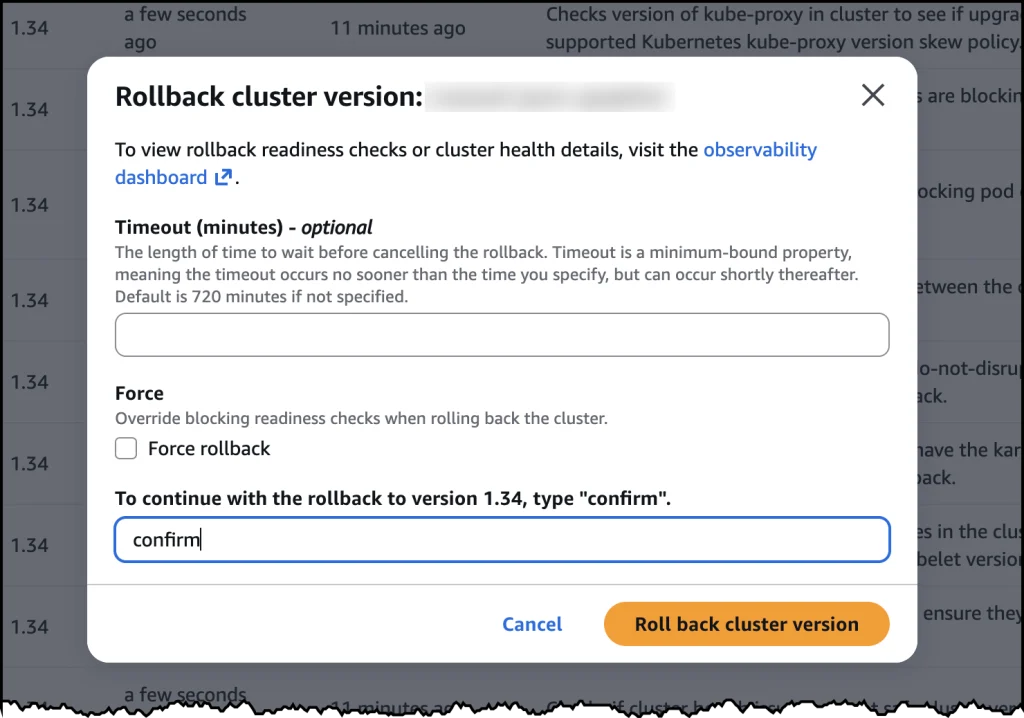
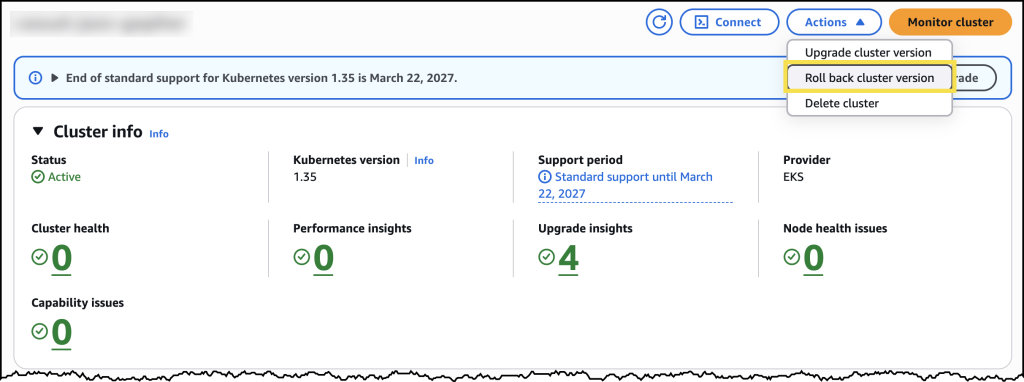
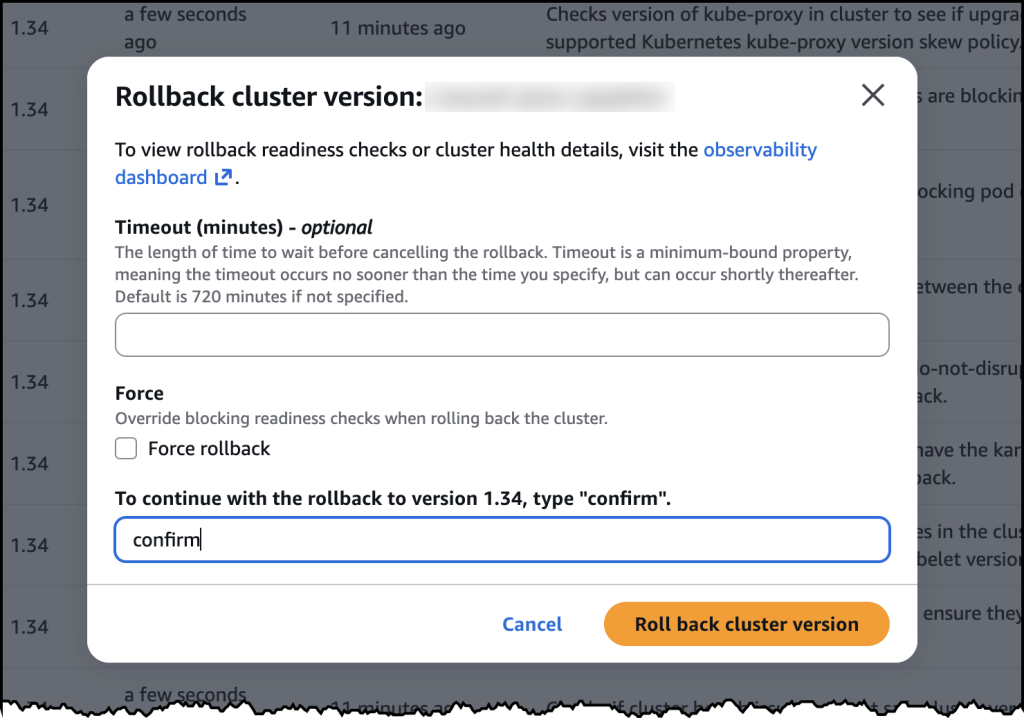
Today, Amazon Web Services (AWS) is fundamentally shifting that paradigm. The company has announced the general availability of native version rollbacks for Amazon Elastic Kubernetes Service (Amazon EKS). This feature provides administrators with a safety net, allowing them to revert a cluster to its previous, fully validated minor version within a seven-day window. This development is being hailed as the "undo button" that the Kubernetes operations community has been demanding since the platform’s inception.
Main Facts: A Paradigm Shift in Cluster Lifecycle Management
The introduction of EKS version rollbacks addresses the "fear of the upgrade" that has long plagued platform engineers. By allowing a cluster to return to a previously stable, production-validated version, AWS is lowering the barrier to entry for maintaining modern, secure, and patched Kubernetes environments.
Key Technical Pillars:
- True Reversion, Not Emulation: Unlike community-driven efforts that rely on version emulation—which can leave a cluster in a "transitional" state—the EKS rollback process restores the cluster to the exact previous minor version that was running in production.
- The Seven-Day Window: Administrators have a one-week period post-upgrade to trigger a rollback. This timeframe is designed to allow for comprehensive post-deployment validation, including workload stability monitoring and performance benchmarking.
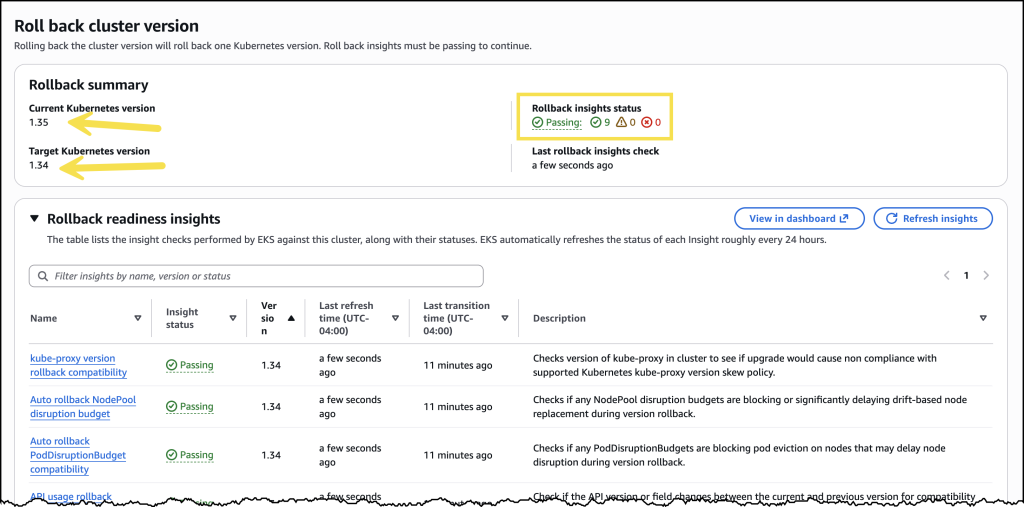
- Safety-First Design: The process leverages EKS "cluster insights" to evaluate rollback readiness. Before a rollback begins, AWS automatically flags potential compatibility issues, such as node version mismatches or add-on dependency conflicts.
- Cost-Neutral Implementation: The feature is available immediately at no additional cost to EKS users in all commercial AWS regions. Standard compute and EKS management fees remain unchanged.
The Chronology: How We Got Here
The journey toward this release is a story of community evolution and architectural maturation.
The Early Days (The "One-Way" Era):
When Kubernetes first gained traction, the project’s velocity was high, but its maturity regarding lifecycle management was low. Because the control plane state is complex, the community prioritized forward-moving upgrades to keep the ecosystem from fragmenting. Organizations were forced to accept the risk that an upgrade might break existing APIs or custom controller logic.
The Middle Years (Compensating Mechanisms):
As Kubernetes moved into the enterprise, organizations began building "compensating mechanisms." Large-scale users implemented "blue-green" cluster strategies, where they would stand up an entirely new cluster and migrate workloads, rather than upgrading in place. While effective, this was prohibitively expensive and logistically nightmarish for teams managing hundreds of clusters across regulated industries.

The Present (KEP-4330 and EKS Evolution):
The Kubernetes community recently introduced KEP-4330, which proposed using emulated versions to assist in the upgrade process. While this represents progress, it is an architectural bandage compared to the full-stack solution AWS has delivered today. AWS has spent the last year refining the control plane snapshotting and restoration logic required to make a clean, non-emulated rollback possible, culminating in this week’s release.
Supporting Data: Why This Matters for Modern Infrastructure
The current state of Kubernetes adoption is characterized by "version stagnation." Many organizations are running clusters that are several minor versions behind the latest release. According to industry surveys, the primary reason for this technical debt is not a lack of interest in new features, but a lack of confidence in the upgrade process.
Impact Metrics:
- Upgrade Velocity: By removing the "one-way door" constraint, AWS expects a significant increase in the frequency of minor version upgrades.
- Security Posture: With easier rollbacks, security teams can push patches with greater confidence, knowing that a fallback plan is baked into the platform rather than dependent on complex, manual manual disaster recovery scripts.
- Operational Overhead: For teams managing large fleets (100+ clusters), the time saved on manual "pre-flight" testing could represent thousands of engineering hours annually.
EKS Auto Mode: Advanced Rollback Capabilities
For users of EKS Auto Mode—AWS’s fully managed infrastructure offering—the rollback feature extends deeper into the stack. Because Auto Mode manages compute, networking, and storage at the infrastructure level, a version rollback must involve a coordinated reversion of both the control plane and the managed node groups.
The Role of the Cancel API
A critical nuance in EKS Auto Mode is the interaction between version rollbacks and Pod Disruption Budgets (PDBs). Because AWS prioritizes workload availability, it will never unilaterally terminate pods to speed up a rollback if it violates an existing PDB.
To address this, AWS has introduced a dedicated Cancel API. If an administrator determines that the automated node-reversion process is moving too slowly due to PDB constraints, they can use this API to halt the rollback. This gives the operator granular control, allowing them to adjust PDBs or reconfigure node capacity before resuming the process, ensuring that the rollback itself does not cause the very downtime it was intended to prevent.
Implications for the Future of Kubernetes
The release of EKS version rollbacks has profound implications for the future of the Kubernetes ecosystem.
1. Standardization of "Safe" Upgrades
By providing this tool, AWS is essentially setting a new industry standard. Competitors and other cloud-managed Kubernetes providers will likely face increased pressure to provide similar native rollback capabilities. This creates a "rising tide" effect for the entire Kubernetes community, where operational safety is no longer considered an optional add-on but a core requirement of a cloud-managed service.
2. Easing Regulatory Compliance
For highly regulated industries like finance, healthcare, and defense, the ability to document and execute a "rollback" is often a compliance requirement. Previously, demonstrating that a system could be returned to a "known good state" during an upgrade required extensive manual documentation of disaster recovery procedures. Now, the rollback capability serves as a standardized, audit-ready operational procedure.
3. Shift in Operational Focus
With the "undo button" in place, the focus of platform engineering teams can shift from risk avoidance to risk management. Instead of spending weeks verifying that an upgrade won’t fail, teams can focus on canary deployments, observability, and the actual benefits of new Kubernetes versions. The mental tax of the upgrade cycle is significantly reduced, potentially leading to a more rapid adoption of the latest Kubernetes innovations, such as improved resource efficiency, new API features, and enhanced storage classes.
Final Thoughts: A New Standard of Service
The introduction of version rollbacks for Amazon EKS represents a maturation of the cloud-native landscape. By addressing the fundamental anxiety surrounding cluster upgrades, AWS is not only simplifying the lives of Kubernetes administrators but is also providing a robust framework that encourages teams to stay current with the latest versions.
In the words of the EKS team, "Think of it as an undo button for Kubernetes." It is a simple concept, but one that solves a notoriously complex problem. As organizations continue to migrate mission-critical workloads to the cloud, tools that provide safety, transparency, and control—like this new rollback capability—will be the defining factor in determining which cloud platforms truly support the enterprise journey.
For teams ready to begin, the feature is available immediately. Whether you are running a single development cluster or a global fleet of production environments, the ability to revert a version upgrade is now a standard, integrated feature of the Amazon EKS console and API, signaling a new era of confidence in cloud-native operations.