Beyond the Pitch: Strategic Lessons from the FIFA World Cup 2026 for the Modern Affiliate Marketer
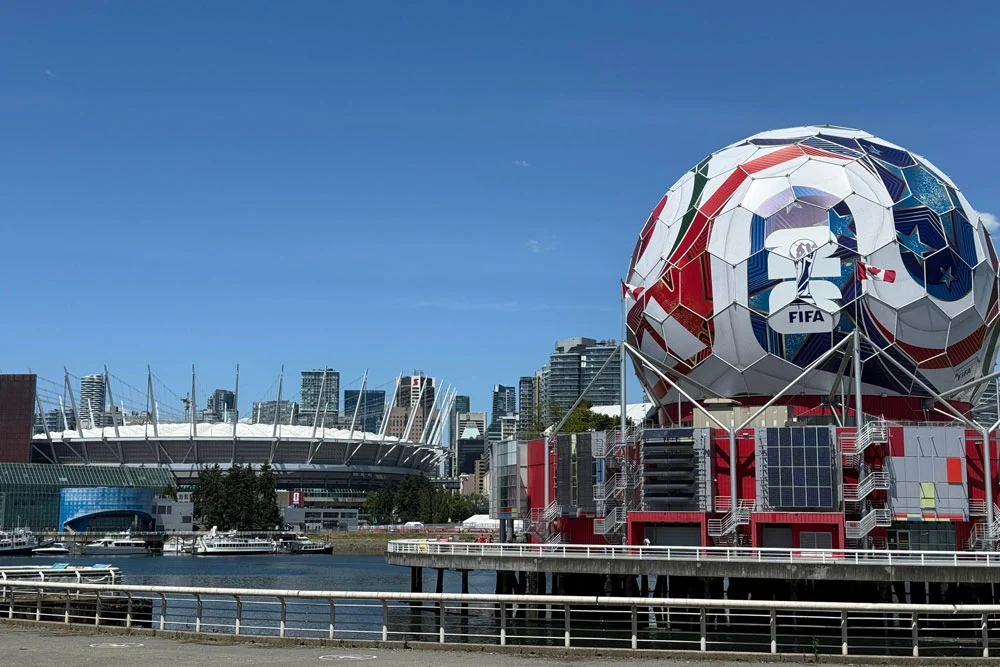
The FIFA World Cup 2026 is currently in full swing, captivating billions of spectators across the globe. As the tournament unfolds—marked by tactical masterclasses, heartbreaking upsets, and the emergence of new footballing superpowers—the echoes of the stadium resonate far beyond the grass. For those of us immersed in the digital economy, the World Cup serves as a high-stakes mirror for the affiliate marketing industry.
Whether it is the necessity of cohesive team dynamics, the persistent threat of the underdog, or the peril of complacency, the parallels are striking. Having navigated the affiliate marketing landscape for over twenty-five years, I have come to realize that the difference between a championship-winning program and one that fails to qualify is often found in the same principles that define the elite athletes on the field.
1. The Architecture of Success: Why Teamwork Trumps Talent
In the modern era of sports, the "hero narrative"—the idea that a single superstar can carry a team to a trophy—is increasingly a relic of the past. Even in the 2026 World Cup, we have witnessed legends like Luka Modrić and Cristiano Ronaldo struggle when their surrounding structures failed to support their individual brilliance. Croatia’s inability to bypass Portugal, and the swift exits of high-profile teams relying on singular stars, prove that soccer is fundamentally a collective endeavor.
The Agency Perspective
In the affiliate marketing world, the same rule applies. An affiliate program is only as robust as the ecosystem of partners driving its growth. After more than two decades of running a premier affiliate management agency, the most consistent indicator of success is not the presence of one "super-affiliate," but the strength of the collective team.
To build a sustainable revenue stream, managers must move away from the temptation of relying on a single top-performing affiliate. A diversified portfolio—comprising content creators, loyalty programs, influencers, and niche experts—creates a resilient foundation. Just as a soccer team requires a balance of defensive stability and offensive creativity, an affiliate program requires a mix of channel diversity and partner types to weather the volatility of the digital market.
2. The Underdog Paradox: Respecting the Disruptor
The ancient wisdom often attributed to Sun Tzu holds true: "There is no greater danger than underestimating your opponent." The 2026 World Cup has been a masterclass in this philosophy. The Group Stage delivered a shock when the debutant Curaçao held Ecuador to a 0-0 draw, and the Round of 16 saw Egypt command a 2-0 lead over defending champions Argentina.
Case Study: The Nectar Sleep Trajectory
In affiliate marketing, the "underdog" is the newcomer who enters a saturated market and fundamentally alters the competitive landscape. When AM Navigator launched the affiliate program for Nectar Sleep in 2017, the mattress-in-a-box sector was already a "Red Ocean," dominated by titans like Casper, Saatva, and Purple.
Traditional market logic dictated that a new entrant would spend years playing catch-up. However, by focusing on strategic partner recruitment and aggressive, data-driven optimization, Nectar Sleep’s affiliate program defied expectations. Within just one year and five days, it ascended to the number one spot on the ShareASale network, outperforming established giants like Wayfair, Reebok, and the NFL.
This serves as a vital reminder to industry leaders: do not dismiss the smaller players. Conversely, if you are a "newcomer," recognize that your status as an underdog is not a terminal sentence. With the right strategy, disruption is not only possible—it is inevitable.
3. The Peril of Complacency: Never Rest on Your Laurels
Perhaps the most sobering lesson of the 2026 World Cup is the downfall of the giants. Italy, a four-time world champion, failed to qualify entirely. The Netherlands were dismissed by Morocco in the Round of 32, and Brazil fell to a resurgent Norway—a team that had not seen a World Cup appearance in nearly thirty years—in the Round of 16.
These results illustrate a simple, brutal fact: historical prestige offers no protection against current failure.
The Dynamic Nature of Affiliate Marketing
Affiliate marketing is not a static game; it is a dynamic, evolving environment. Tactics that yielded high conversion rates five years ago may be obsolete today. The rise of AI-driven search, shifts in consumer privacy regulations, and the constant evolution of social media algorithms mean that "resting on your laurels" is a precursor to irrelevance.
Continuous education is the only defense against the inevitable decay of past strategies. Whether it is keeping pace with new tracking technologies or attending industry conferences like the Affiliate Summit, the commitment to lifelong learning is what separates the perennial contenders from those who fade into obscurity.
4. Chronology of Change: Adapting to the Landscape
To understand the current state of affiliate marketing, one must look at the timeline of its evolution:
- The Early Days (1990s–2000s): Focus on basic tracking and volume-based commissions.
- The Growth Phase (2010s): Rise of mobile, influencer marketing, and multi-channel attribution.
- The Modern Era (2020s–Present): Shift toward quality-over-quantity, data-driven partner management, and the integration of automation.
Each of these phases required a complete overhaul of "best practices." Much like how the tactical approach to soccer has evolved from the rigid systems of the 20th century to the fluid, high-pressing games of today, affiliate marketing has moved toward a more sophisticated, nuanced model.
5. Supporting Data: The Value of Diversification
Data from recent industry reports suggests that programs relying on a single channel (e.g., exclusively coupons or cashback) see a 40% higher volatility in year-over-year revenue compared to programs that diversify their affiliate base.
- Diversified Programs: Show a 15–20% steady growth rate despite market downturns.
- Monocultural Programs: Often experience "cliff-edge" drops when algorithm changes or partner attrition occur.
By distributing resources across multiple touchpoints, brands protect themselves against the "Italy syndrome"—the sudden, catastrophic failure of a previously dominant strategy.
6. Official Insights: Industry Perspectives
Industry experts frequently highlight that the most successful programs in 2026 are those that prioritize partner relationships over transaction volume.
- Relationship Management: Modern affiliate management is moving away from a "set it and forget it" model toward active, human-centric partnership development.
- Transparency: As regulations surrounding affiliate disclosures and data privacy tighten, transparency has become a competitive advantage, not just a legal requirement.
"The programs that win are the ones that treat their affiliates as true business partners rather than just line items in a budget," says a spokesperson from a leading industry consultancy. This sentiment echoes the team-first mentality required on the pitch in a World Cup final.
7. Implications for Future Growth
As the 2026 World Cup nears its conclusion, the broader implications for the affiliate marketing community are clear:
- Agility is the New Asset: The ability to pivot your strategy in real-time is the defining characteristic of the modern market leader.
- Culture Matters: Building an internal culture that embraces trial and error is necessary to compete with the "underdogs" of the world.
- Engagement is Constant: Success in the digital space, much like in a 90-minute soccer match, requires sustained focus and high-intensity effort.
The tournament will eventually end, and a new champion will be crowned. But the lessons of the game remain. If you are preparing for the upcoming Affiliate Summit in New York, or any industry gathering this year, take a moment to reflect on your current program. Are you playing like the giants of the past, waiting for the inevitable defeat, or are you building a team that is ready to challenge the status quo?
If you want to discuss how to sharpen your strategy, or if you simply want to compare notes on the tournament’s best plays, reach out to our team. We are always looking to connect with those who understand that in both sports and business, the goal is always the same: keep moving forward.