The Kitchen Revolution: How Cumin Co. is Disrupting India’s $5.7 Billion Cookware Market
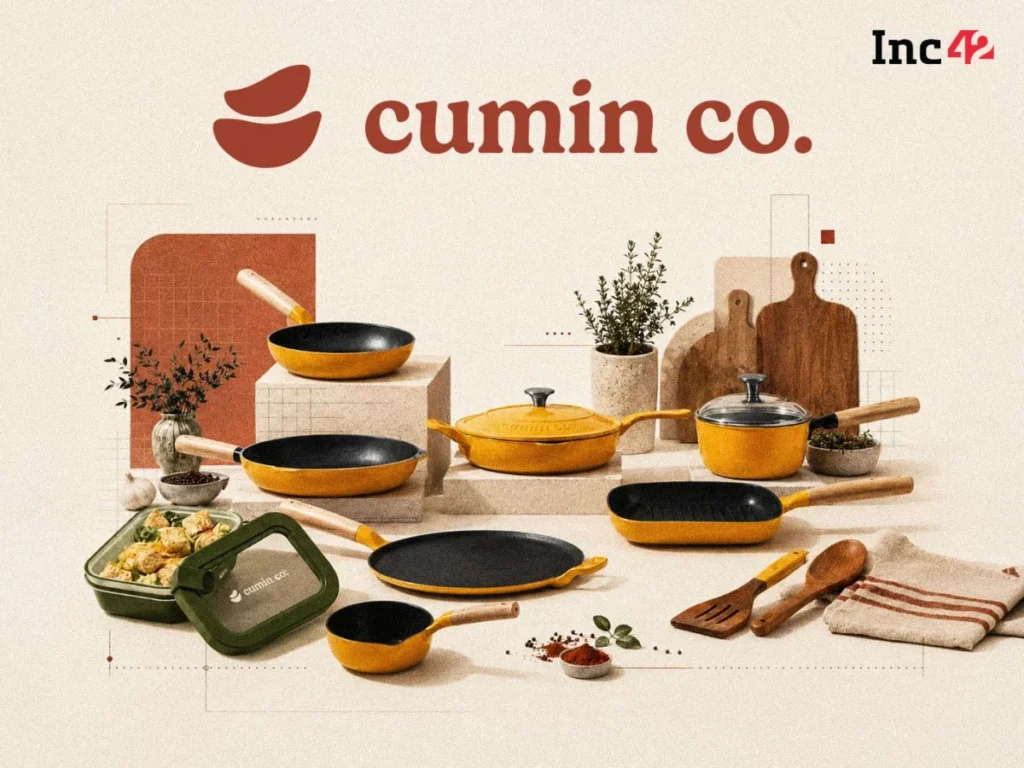
In the heart of the modern Indian home, the kitchen serves as the sanctuary of health and tradition. Yet, for years, millions of families have unwittingly invited a silent hazard into their cooking routines: microscopic chemical debris leaching from degraded non-stick coatings. It was this jarring realization that prompted corporate professionals Niharika Joshi and Udit Lekhi to pivot from their successful careers in 2025 to launch Cumin Co.—a premium, health-conscious cookware brand that is fundamentally rewriting the rules of the Indian culinary landscape.
What began as a domestic discovery has evolved into a high-growth enterprise. Today, backed by a $6.5 million funding war chest from marquee investors such as Fireside Ventures, Huddle Ventures, and Alteria Capital, Cumin Co. is rapidly scaling its presence across India. By replacing toxic, short-lived synthetic coatings with proprietary, patent-backed enamel technology, the brand is successfully challenging the dominance of legacy cookware giants and setting a new benchmark for material safety.
The Catalyst: A Moment of Unsettling Realization
The genesis of Cumin Co. was not born in a boardroom, but at a stovetop. For founders Niharika Joshi and Udit Lekhi, life was a series of well-executed corporate milestones. However, the veneer of their comfortable lifestyle was pierced during a routine evening meal preparation.
"It was a regular day, and we were preparing a meal," Joshi recalls. "What we saw was quite disturbing: tiny flecks from our premium cookware were about to be served along with the food."
The discovery triggered a deep dive into the science of materials. The founders uncovered a staggering reality: conventional non-stick cookware, which relies on synthetic polytetrafluoroethylene (PTFE) coatings, is often ill-suited for the thermal intensity of Indian cuisine. Research indicates that when these coatings are compromised, they can release up to 2.3 million microscopic and nanoplastic particles into food in just 30 seconds of high-heat cooking. For a demographic that frequently engages in tadka (oil tempering), deep frying, and high-heat spice roasting, these thermal limits are regularly breached, turning everyday cooking into a potential health liability.
Chronology of a Startup: From Concept to Market Leader
The journey of Cumin Co. is defined by a rigorous, research-led development phase followed by rapid market penetration:
- 2025 (Foundation): Joshi and Lekhi incorporate Cumin Co., identifying a massive whitespace in the $5.7 billion Indian legacy cookware market. The focus is set on creating "clean" vessels designed for Indian culinary habits.
- Early R&D Phase: The founders focus on material science, pivoting away from mass-market coatings to develop "Enviromax," a proprietary enamel coating technology.
- Patent Acquisition: The brand secures three patents for its enamel technology, ensuring that its products provide the heat retention of cast iron without the cumbersome maintenance of traditional seasoning.
- Market Entry & Traction: The brand launches its direct-to-consumer (D2C) platform, leveraging social media and creator networks. It rapidly crosses the 30,000-household milestone.
- Capital Infusion: Cumin Co. successfully closes seed and Pre-Series A rounds totaling $6.5 million, attracting heavyweights like Fireside Ventures and Huddle Ventures.
- 2027 Projections: With an established footprint and high retention rates, the startup is currently on an aggressive sprint to reach an Annual Recurring Revenue (ARR) of ₹100 Cr by the end of FY27.
Supporting Data: The Case for Material Innovation
Cumin Co.’s success is not merely a result of effective marketing; it is anchored in hard data and consumer behavior shifts. In a category traditionally defined by frequent replacement cycles due to peeling coatings, Cumin Co. has managed to defy the norm.
Retention Metrics
Despite the durable nature of its products—which naturally results in longer replacement cycles—the startup boasts a consistent 25% to 30% repeat purchase rate. This indicates high customer satisfaction and brand loyalty, driven by the shift from disposable kitchenware to long-term, intentional investments.
The "Enviromax" Advantage
The brand’s proprietary Enviromax technology addresses three specific pain points:

- Thermal Stability: Designed to withstand high-heat Indian cooking methods that cause synthetic coatings to fail.
- Chemical Inertness: Unlike raw cast iron, the enamel coating is non-reactive to acidic ingredients like tomatoes or tamarind, making it versatile for diverse regional Indian cuisines.
- Low Maintenance: It offers the performance of premium cast iron without the need for constant oiling and seasoning, appealing to the modern, time-constrained professional.
Official Responses and Strategic Vision
In conversations regarding the brand’s trajectory, the founders emphasize a departure from fear-based marketing. Instead, the strategy is built on consumer education. "The ambition is clear: to build the category-defining kitchen brand for modern Indian homes," says Joshi. "Every new product we launch is designed to strengthen both customer lifetime value and long-term brand equity."
The startup’s leadership acknowledges that entering the manufacturing space was a steep learning curve. Unlike software, where a "patch" can be deployed in hours, industrial manufacturing requires weeks of kiln testing and machinery recalibration. However, the founders have remained steadfast in their commitment to durability, choosing to optimize for long-term product integrity rather than the "low-cost, high-turnover" model common in the industry.
This strategic choice has paid dividends. While initially targeting Tier-I urban centers, Cumin Co. is now witnessing a surge in demand across Tier-II and Tier-III cities, driven by an increasing awareness of health and a growing digital appetite for premium, reliable household goods.
Implications: The Future of the Indian Kitchen
The rise of Cumin Co. signals a broader macro-trend in the Indian consumer space: the "Premiumization of the Essential." Indian consumers are increasingly moving away from mass-produced, disposable goods toward products that offer tangible health benefits and long-term utility.
Beyond Cookware
The company’s roadmap suggests that cookware is merely the entry point. By establishing trust through material innovation, Cumin Co. is positioning itself to become a comprehensive "kitchen ecosystem" brand. The goal is to move from being an isolated purchase to becoming an anchor in the modern Indian kitchen.
The Challenge to Legacy Giants
Legacy cookware giants, which have relied on standardized, low-cost manufacturing for decades, now face an existential threat. If a brand can successfully prove that "healthy" and "durable" are not niche, but rather the new standard for the mass-affluent Indian household, the market share of traditional players may shrink significantly.
A Sustainability Shift
By championing products that are built to last, Cumin Co. is also tapping into the global movement toward sustainability. In a country where the sheer volume of discarded, peeling non-stick pans contributes to significant household waste, a move toward enamel-based, high-durability products has positive environmental implications.
Whether Cumin Co. can maintain its momentum as it scales remains the central question for market observers. However, with $6.5 million in capital, a proven repeat-purchase model, and a clear focus on the unique demands of the Indian palate, the company is well-positioned to turn its vision into a permanent fixture of the Indian culinary landscape. As the brand continues to scale, it is not just selling pans—it is selling a new philosophy of living, one meal at a time.