The Signal in the Noise: Why Marketing Leaders Are Abandoning Content Overload for Curated Intelligence
In the contemporary digital landscape, marketing leaders are facing a paradoxical crisis: they are drowning in information yet starving for insight. Every day, the typical CMO’s inbox and social media feeds are bombarded with a deluge of industry reports, “must-read” think pieces, and ephemeral case studies. The result is not an informed workforce, but a fatigued one.
As the volume of content continues to scale exponentially, the value of raw data is plummeting. According to a strategic pivot recently executed by the team at Convince & Convert (C&C), the challenge for today’s marketing executives is no longer access to information—it is the need for sophisticated, high-fidelity filters.
The Paradigm Shift: From Content Consumption to Curated Debriefs
For years, the standard playbook for brand newsletters was a utilitarian, link-heavy aggregation of recent blog posts and company updates. While this served a purpose in the early days of content marketing, the landscape has matured. Today, audiences are increasingly discerning; they possess neither the time nor the patience to act as their own editors.
The core realization at Convince & Convert is that marketing leaders don’t need more content—they need “cognitive leverage.” They are seeking resources that do the heavy lifting for them, distilling the chaos of industry trends into actionable, strategic narratives. This realization has triggered a massive evolution in how industry authorities are approaching email marketing, shifting from the outdated “list-of-links” model toward a more sophisticated, "debrief-style" format.
Data-Driven Decisions: Why Newsletters Still Reign Supreme
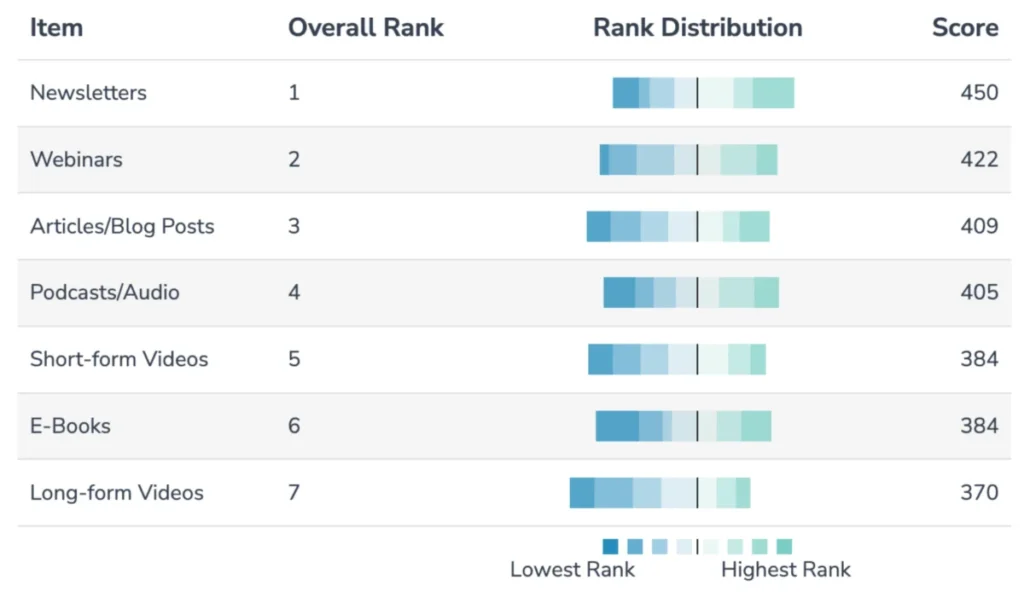
Despite the rise of short-form video, high-production webinars, and algorithmic social feeds, proprietary research from Convince & Convert confirms that the humble newsletter remains the preferred channel for marketing decision-makers.
In a recent annual survey conducted by C&C, marketing leaders were asked to rank seven different content formats based on their utility for learning about industry trends. The results were decisive: newsletters were nearly twice as likely to be ranked as the primary source of intelligence compared to any other medium.
This preference underscores a fundamental truth about executive consumption habits. When a professional opens an email, they are looking for a return on their time. They want to know not just what happened in the industry, but what it means and why it matters. The newsletter is no longer a marketing vehicle; it is an executive briefing tool.

Chronology of an Evolution: The Rebranding of "ON" to "The Trendline"
The transition of Convince & Convert’s legacy newsletter, ON, into the newly launched The Trendline serves as a case study for brands looking to revitalize their engagement strategies.
Historically, the ON newsletter followed a traditional structure, organizing content based on the medium of origin (e.g., a section for the blog, a section for the podcast, a section for research). While effective for a time, the team recognized that this forced the reader to do too much work to extract value.
The shift toward The Trendline occurred in several distinct phases:
- Audience Auditing: The team analyzed reader behavior, recognizing that clicks were declining because the content lacked a cohesive, narrative through-line.
- Strategy Realignment: The editorial team shifted their mandate. Instead of prioritizing the promotion of internal content, they focused on prioritizing the strategic needs of their audience.
- Format Reconstruction: The team moved toward a "debrief" format, where the most important insights are delivered entirely within the email body.
- Launch and Optimization: The rebranding to The Trendline was finalized to provide a more memorable, shareable identity that reflects the analytical nature of the content.
Breaking Down the New Architecture of "The Trendline"
The structural changes implemented in The Trendline offer a blueprint for how brands can provide more value upfront. By prioritizing "internal consumption"—the ability for a reader to gain a full understanding of a topic without needing to click through to a secondary landing page—the newsletter has successfully lowered the friction for its audience.
The format is now governed by strict editorial guidelines designed to maintain brevity and density:
- The Strategic Lens: Each story is filtered through a "So What?" test. Why does this matter to a marketer, and what specific questions should they be asking their teams?
- The Debrief Structure: Instead of headlines and links, each section provides a compact summary that can stand alone.
- Interactive Engagement: The introduction of "Sound Off," an end-of-email poll, allows for real-time audience pulse-checks, providing the editors with qualitative data that far exceeds the accuracy of traditional "open" or "click-through" metrics.
Official Perspective: The "Filter" Philosophy
The leadership team behind this transition argues that the move is not merely an aesthetic refresh, but a response to a fundamental change in the "Attention Economy."
"Marketing leaders don’t have time for constant deep dives," explains the editorial team. "We want to be entertained, inspired, and feel smarter." By providing value upfront, they are attempting to rebuild the trust that has been eroded by years of spammy, low-value email marketing.

The philosophy is simple: when you treat your audience’s time as a scarce commodity, they are more likely to grant you their long-term loyalty. This is the difference between a newsletter that is "archived" and a newsletter that is "anticipated."
Implications for the Broader Marketing Landscape
The shift seen at Convince & Convert carries significant implications for brands across all sectors. As trust becomes the hardest currency to earn, companies must re-evaluate their own email marketing strategies with three key principles in mind:
1. The Death of the "Link Farm"
The era of sending subscribers a list of five disparate links is ending. Modern audiences demand synthesis. If you are not providing the analysis, you are simply adding to the noise. Your goal should be to provide a "shortcut" to wisdom, not a gateway to more browsing.
2. Audience-Centricity Over Brand-Centricity
Many newsletters fail because they are designed to serve the company’s internal KPIs—such as page views or session duration. The Trendline illustrates that by serving the reader’s need for clarity first, the business outcomes (trust, authority, and engagement) follow naturally.
3. The Power of "Owned" Channels
In an age where social media algorithms are increasingly opaque and unpredictable, the newsletter remains one of the few channels where a brand can build a direct, unmediated relationship with its audience. This makes the newsletter not just a marketing channel, but a strategic asset for the company’s long-term survival.
Conclusion: Lessons for the Future
The move to The Trendline is a testament to the fact that content strategy must be an iterative, responsive process. By listening to their audience and acknowledging that the "more is better" approach to content is officially dead, Convince & Convert has set a high bar for what a professional newsletter should look like in 2025 and beyond.
For marketing leaders and brand managers, the lesson is clear: if you want to be heard in a crowded inbox, stop broadcasting and start curating. Deliver value that is immediate, insightful, and, above all, respectful of the reader’s time. The brands that win will be the ones that function as effective filters for the industry, helping their audiences make sense of a world that is moving faster than ever.