The Electric Gamble: Can Green SM Succeed Where BluSmart Stumbled?
The Indian electric vehicle (EV) ride-hailing landscape is notoriously unforgiving. Following the high-profile turbulence that effectively sidelined BluSmart last year, a significant vacuum emerged in the premium, all-electric transport segment. Into this void has stepped Green SM, the Vietnamese mobility powerhouse, which launched its operations in the Delhi NCR region just last month. Backed by the manufacturing might of VinFast, Green SM arrives with a distinct business model—but analysts and industry observers are already questioning whether the newcomer can navigate the structural bottlenecks that ultimately crippled its predecessor.
The Integrated Giant: A Shift in the Mobility Paradigm
Unlike the asset-light aggregator models popularized by industry titans like Uber and Rapido, Green SM has adopted a "full-stack" approach. This strategy involves complete ownership of the ecosystem: the company owns the vehicles, employs its drivers directly as formal staff, and maintains rigorous control over every touchpoint, from passenger authentication and safety protocols to the granular details of driver onboarding.
On the surface, this vertical integration promises a superior, consistent customer experience—a key differentiator in a market often plagued by ride cancellations and variable vehicle conditions. However, this level of control comes at a steep price. By internalizing the entire service chain, Green SM is burdened with heavy capital expenditure (CAPEX). Every vehicle represents a direct asset on the balance sheet, and every driver represents a fixed monthly payroll expense. In an industry where margins are razor-thin, the operational burn rate is significantly higher than that of a traditional marketplace aggregator.
A Strategic Extension: The VinFast Synergy
The arrival of Green SM is not merely a play for the ride-hailing market; it is a strategic demand engine for its parent automaker, VinFast. Since VinFast’s entry into the Indian market last August, the company has sought to establish both a physical footprint and brand authority.

Green SM serves as a massive laboratory for VinFast. By absorbing thousands of vehicles into its fleet, the company secures high-volume sales for the automaker while simultaneously providing the manufacturer with invaluable real-world performance data. This "testing-ground" model allows VinFast to refine its battery technology and vehicle durability under the grueling conditions of Indian urban traffic, all while building a brand narrative around sustainability and reliability.
Friction on the Road: The Driver Experience Crisis
Despite the sleek branding and the appeal of cleaner, spacious vehicles, the reality on the ground for Green SM’s workforce is telling a different story. The platform has instituted a rigid operational structure, requiring drivers to commit to eight to ten-hour shifts with a minimum quota of four trips daily.
For many drivers, this structure has become a point of contention. Reports from the field suggest that the promised weekly payouts of ₹8,000 are frequently inconsistent. This financial volatility is particularly damaging in a sector where driver retention is the most critical metric for long-term viability.
Industry analysts point to a fundamental math problem: to reach break-even points, each vehicle must complete at least eight trips per day, with an average ticket size of ₹400. Currently, the local infrastructure is simply not robust enough to support this level of volume. If the driver cannot hit these targets, the entire unit-economic model of the fleet begins to collapse.

The Infrastructure Bottleneck
Perhaps the most significant headwind facing Green SM is the scarcity of charging infrastructure. The company’s heavy reliance on proprietary charging hubs has created a "geographical prison" for its drivers. Because these hubs are limited in number, drivers are forced to stay within specific, narrow operational zones, significantly limiting the geographic reach of the service.
Furthermore, drivers have flagged that the current battery technology—at least in its present configuration—only offers a real-world backup of approximately six hours. This limitation acts as a hard ceiling on vehicle utilization. If a car must spend a significant portion of its shift charging, the daily revenue potential per asset drops, making it nearly impossible to achieve the high utilization rates required to cover the high CAPEX of the vehicle and the fixed costs of the driver payroll.
Chronology: The Evolution of the Indian EV Ride-Hailing Space
- 2020-2022: The rise of electric mobility startups, led by BluSmart, captures investor interest as India pushes for green transit.
- August 2025: VinFast officially enters the Indian market, signaling a long-term commitment to the region.
- June 2026: Green SM launches in Delhi NCR, promising a "premium, sustainable" alternative to traditional cab services.
- July 2026: Early operational reports indicate friction between driver compensation models and actual market utilization.
- Current State: The company is currently in its "launch buzz" phase, with stakeholders waiting to see if it can transition to a sustainable, scale-able operational model before the initial capital is exhausted.
Market Data: Why Infrastructure Matters
The challenge for Green SM is supported by recent market analysis. According to recent industry reports, the cost of scaling an EV fleet in India is exponentially higher than that of Internal Combustion Engine (ICE) fleets due to the "Charging-Wait Time" ratio. For every 100 kilometers traveled, an EV in the current Delhi NCR ecosystem requires approximately 45 minutes of downtime for charging. When factored across a fleet of thousands, this translates into a massive loss of potential "billable hours."
Implications for the Future of Mobility
Can Green SM survive the "post-launch" phase where others have failed? The outcome will likely hinge on three factors:

- Infrastructure Scaling: Whether the company can rapidly deploy charging hubs to decouple driver earnings from proximity to the home base.
- Driver Incentivization: Balancing the need for strict service standards with a compensation model that actually incentivizes retention in a competitive labor market.
- Manufacturer Flexibility: Whether VinFast can provide the necessary technical support to extend battery life or improve charging speeds to increase the per-vehicle utilization rate.
If Green SM can resolve these friction points, it could set a new standard for mobility in India. However, if the current operational strains persist, the company risks repeating the exact cycle of high-burn, low-sustainability that has defined the failure of its predecessors.
Beyond the Cab: The Broader Ecosystem
While Green SM navigates these challenges, the broader startup ecosystem in India continues to evolve at a rapid clip.
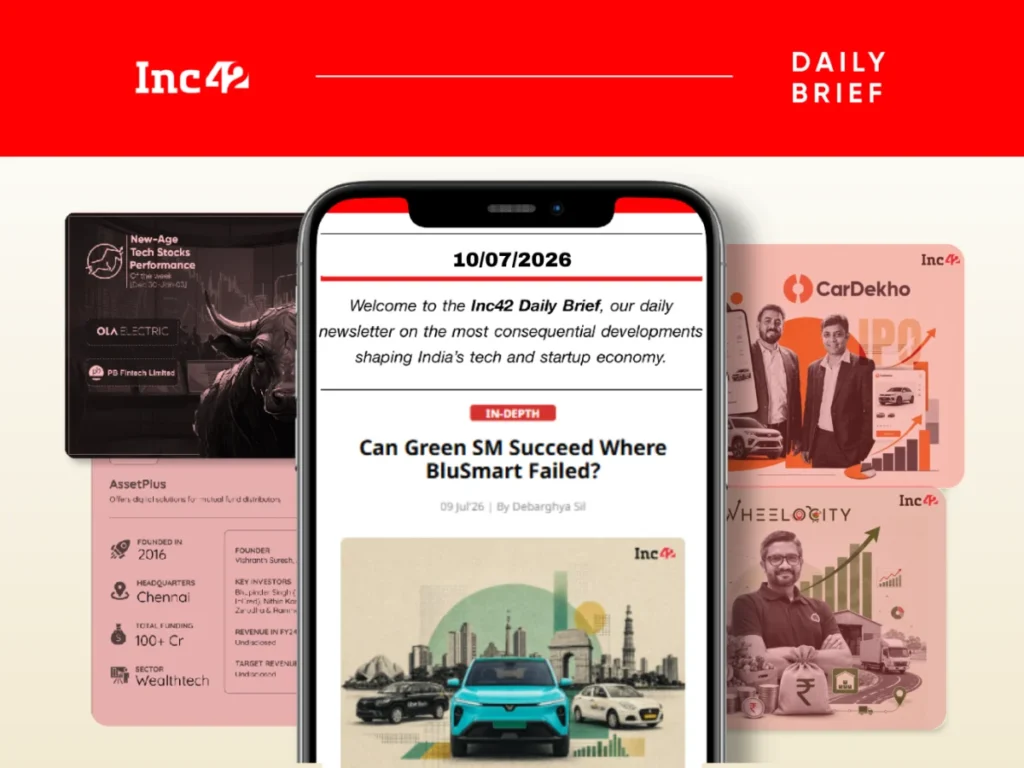
- CarDekho’s IPO Path: The automotive platform is gearing up for a major ₹3,500 Cr IPO this quarter, signaling continued investor confidence in the broader auto-tech space despite the volatility in specific ride-hailing segments.
- Pehle Jaisa and Agricultural Innovation: In the startup spotlight, Pehle Jaisa is demonstrating how decentralization can solve supply chain issues in the agricultural sector. By producing soil conditioners and bio-stimulants locally, the startup is tackling the inefficiencies of chemical-heavy, centralized fertilizer production. With a revenue target of ₹100 Cr, the startup proves that the "local-first" model is finding traction in sectors far removed from urban transit.
- The Gurugram Phenomenon: The "Infographic of the Day" highlights that Gurugram has firmly established itself as India’s listed startup capital. With a combined market capitalization of over $63 billion across 15 public tech companies, the region’s dominance over traditional hubs like Bengaluru is a testament to the shifting geography of Indian capital.
Conclusion
The entry of Green SM is a litmus test for the viability of the "full-stack" EV model in India. While the ambition is clear and the manufacturing backing is substantial, the company faces a cold, hard reality: the market is not yet optimized for the efficiency levels they require.
As the initial excitement settles, the company must pivot from a brand-building exercise to an infrastructure-heavy execution phase. Whether they succeed will depend not on their ability to launch new cars, but on their ability to solve the daily, granular problems of their drivers and the infrastructure that supports them. For now, the eyes of the Indian venture capital and mobility sectors remain fixed on the NCR roads, waiting to see if this Vietnamese giant can endure the heat of the Indian market.