The Great Pivot: Indian Startups Chart a Course for Sustainable Growth in FY26
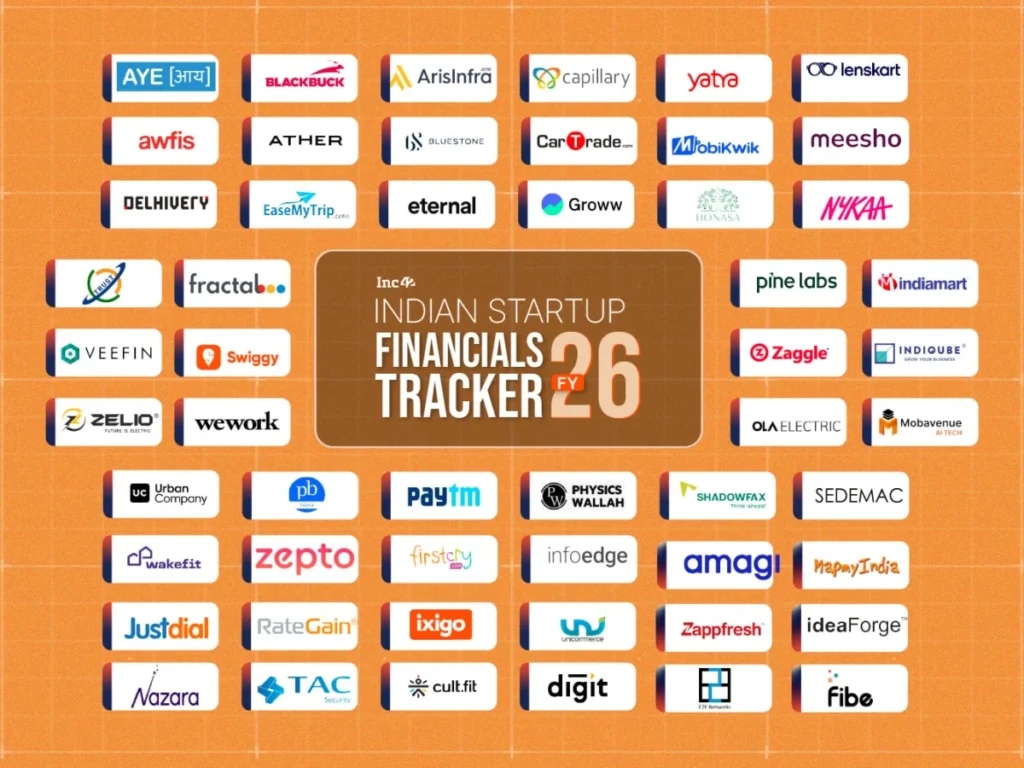
The Indian startup ecosystem has reached a pivotal inflection point in FY26. After years of navigating a "funding winter" defined by macroeconomic headwinds and geopolitical volatility, the narrative has decisively shifted from "growth at all costs" to "sustainable profitability." As the ecosystem matures, the focus is now squarely on the bottom line, with a significant number of new-age tech companies demonstrating the ability to balance aggressive expansion with fiscal discipline.
Data from the latest financial disclosures reveals a resilient sector. In FY26, 22 new-age tech companies made their public market debut, a significant increase from 13 in FY25. This uptick in IPO activity signals a return of investor confidence, provided the underlying business models are robust and unit economics are sound.
The Financial Landscape: A Tale of Two Realities
The financial health of the 54 startups tracked in the FY26 Financial Tracker reveals a nuanced picture. Of the 54 companies, 40—or approximately 74%—reported profits for the fiscal year. Collectively, these profitable entities generated a net profit of ₹10,765.1 Cr. However, the remaining 14 startups posted a cumulative loss of ₹14,730.3 Cr, highlighting that for a segment of the ecosystem, the path to sustainability remains a work in progress.
Despite these variations, the overall scale of the industry is expanding rapidly. The 54 tracked companies collectively generated ₹2.44 Lakh Cr in operating revenue in FY26, representing a robust 48.7% growth compared to the ₹1.64 Lakh Cr reported in FY25. This surge suggests that even as companies rationalize costs, they have successfully captured market share and expanded their customer bases.
Sectoral Performance: Winners and Emerging Challenges
The data highlights distinct trends across sectors, particularly in Fintech, SaaS, and E-commerce.
Fintech and SaaS: The Path to Profitability
Fintech players, once the poster children for cash-burning customer acquisition, are increasingly turning the corner. Paytm, for instance, recorded its first full year of profitability in FY26, posting a net profit of ₹552 Cr against a loss of ₹663 Cr in FY25. Similarly, Fibe more than doubled its profit to ₹257.4 Cr, while Zaggle saw its net profit surge by over 51% to cross the ₹100 Cr mark.
In the SaaS domain, Capillary Technologies and Amagi Media Labs stand out. Capillary’s net profit skyrocketed by 271% to ₹52.4 Cr, while Amagi successfully pivoted to profitability, posting ₹71.7 Cr in net profit after a loss in the previous year. These performances underscore the scalability of Indian SaaS models when paired with disciplined expense management.
E-commerce and Quick Commerce: The Battle for Scale
The e-commerce and quick commerce segments continue to be capital-intensive. Zepto, while doubling its revenue to ₹22,623.6 Cr, saw its losses widen to ₹5,905 Cr as it invested heavily in infrastructure and market expansion. Swiggy also reported a widened loss of ₹4,154 Cr, driven by the massive expansion of its quick commerce arm, Instamart. While these figures appear daunting, they reflect the industry’s current "land grab" phase, where companies are betting that current investment in density and speed will yield long-term monopolistic advantages.
Consumer Internet and Logistics
The logistics sector showcased mixed results. Delhivery saw its profit contract slightly to ₹152.5 Cr despite a 17.6% revenue jump. Conversely, BlackBuck successfully turned the corner, moving from a loss of ₹8.6 Cr in FY25 to a profit of ₹163.7 Cr in FY26. Shadowfax also demonstrated exponential growth, with its profit soaring to ₹115.2 Cr, a massive 1,758% increase year-on-year.
Chronological Shift in Funding Realities
The transition to profitability has not been accidental. Over the last 24 months, Indian startups have systematically moved away from bloated marketing budgets and unsustainable discounts.
- FY24 (The Adjustment Phase): Startups began trimming workforce sizes and rationalizing operational costs as global interest rates rose and private funding slowed.
- FY25 (The Consolidation Phase): Focus shifted toward improving unit economics, streamlining product lines, and exiting non-core business segments.
- FY26 (The Execution Phase): The data for FY26 confirms that the "cost rationalization" phase has largely concluded. Companies are now demonstrating that their core business engines are capable of generating cash flow, provided they maintain current operational efficiencies.
Deep Dive: Key Performers and Their Strategies
Honasa (Mamaearth)
The beauty giant has been a standout performer, with profits surging 175% to cross the ₹200 Cr mark. Their strategy of leveraging a "house of brands" approach—incorporating labels like The Derma Co. and Aqualogica—has proven to be a masterclass in diversifying revenue streams while maintaining tight control over total expenses, which actually declined by 2% during the year.
Lenskart
Lenskart’s journey to a ₹500 Cr profit is a testament to the power of omnichannel retail. By combining a massive digital presence with aggressive offline expansion and a focus on premiumization, Lenskart has managed to achieve strong operating leverage. Their ability to grow revenue by 33% while maintaining profit margins shows that their business model has successfully moved beyond the initial scaling stage.
Ather Energy
In the electric vehicle (EV) space, Ather Energy continues to narrow its losses, which fell by 36% to ₹517.2 Cr. The company faced external headwinds—including supply chain disruptions—but managed to grow revenue by nearly 63%. Their progress indicates that as the EV infrastructure in India stabilizes, the path to profitability for domestic OEMs is becoming clearer.
Implications for the Future: What Lies Ahead?
The financial data for FY26 points to three critical implications for the Indian startup ecosystem:
- The IPO Pipeline is Open: The increase in public market debuts suggests that the "exit" window for venture capital and private equity investors is active. Companies that have demonstrated consistent profitability are finding a receptive audience on the BSE and NSE.
- Operational Efficiency as a Moat: Companies like CarTrade, which saw profit zoom 68% while expenses rose by only 5.6%, have proven that operational efficiency is a competitive advantage. Future funding will likely prioritize these "efficient" companies over those that rely on high cash burn to drive growth.
- The Rise of "Sustainable Scale": The era of "growth at any cost" is firmly behind us. The market is now rewarding companies that can demonstrate "sustainable scale"—the ability to double or triple revenue while simultaneously improving EBITDA margins.
Conclusion
The FY26 financials tell the story of a resilient, maturing ecosystem. While the losses in quick commerce and certain consumer tech segments remain high, they are often a conscious choice to secure long-term market dominance. Conversely, the widespread profitability across the SaaS, Fintech, and B2B commerce sectors proves that Indian startups have learned to build businesses that are not only capable of disrupting markets but also of generating long-term shareholder value.
As we look toward FY27, the focus will likely remain on maintaining this delicate balance between growth and profitability. The startups that succeed will be those that continue to innovate in their product offerings while remaining disciplined with their capital. The "Great Pivot" is well underway, and for the Indian startup ecosystem, the future is looking increasingly sustainable.
Editor’s Note: This analysis is based on the Inc42 FY26 Financial Tracker. The data provided is for informational purposes and is not a ranking. The list of companies is presented alphabetically and will be updated periodically as more disclosures become available.