Beyond the Retail Horizon: Why Building Your Own Marketplace is the New Frontier for E-Commerce Success
In the rapidly evolving landscape of digital commerce, the traditional retail model is undergoing a profound transformation. For years, businesses have focused on refining their direct-to-consumer websites, competing for visibility in an increasingly saturated market. However, a new paradigm is shifting the focus from individual retail storefronts to the ecosystem-driven approach of the marketplace. Today, the most successful retailers are no longer just selling products; they are creating environments where commerce thrives through collaboration.
For many retailers, the concept of building a marketplace—a platform where multiple third-party vendors can list their products—once seemed like a feat reserved for industry giants like Amazon or eBay. Yet, advancements in technology have democratized this process, turning what was once a technical mountain into a strategic golden opportunity.
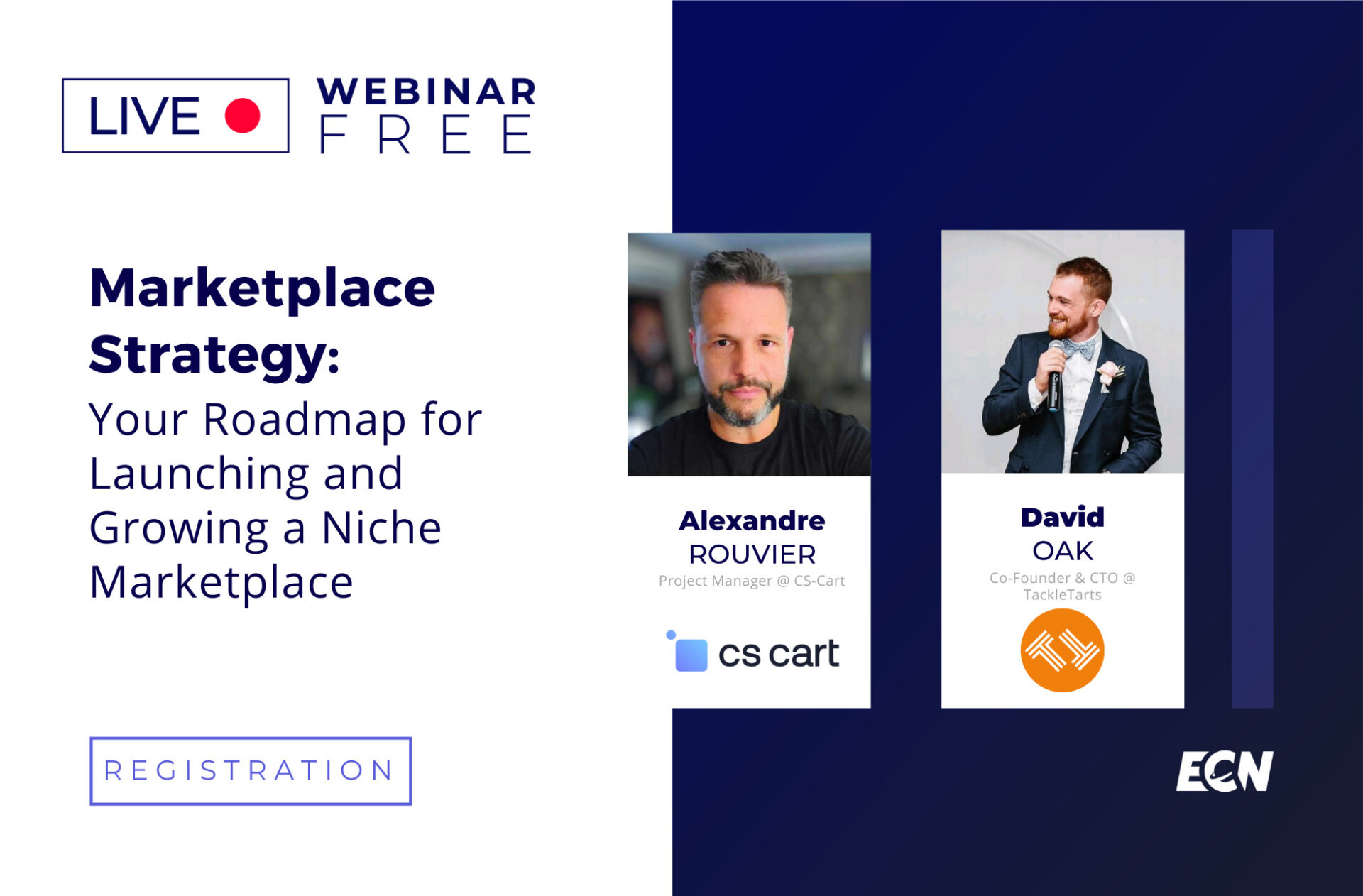
To explore this transition, E-Commerce Nation recently hosted an insightful webinar featuring industry experts from CS-Cart and TackleTarts. This session serves as a masterclass for retailers looking to leverage the marketplace model to scale their operations and redefine their market presence.
The Shift: Why Marketplaces are the Future of Retail
The core value proposition of a marketplace lies in its ability to solve the "choice and scale" dilemma. A standard e-commerce store is limited by its inventory, logistics, and human resources. A marketplace, conversely, is limited only by its reach. By allowing third-party vendors to join a platform, a retailer can exponentially increase their product variety, optimize logistics, and attract a broader customer base without the overhead of managing new inventory.
Key Drivers of the Marketplace Model:
- Expanded Product Range: Without the cost of purchasing inventory, retailers can offer a wider breadth of products, catering to niche interests and broader market demands simultaneously.
- Operational Efficiency: By inviting specialized vendors, the platform owner reduces the risks associated with product sourcing and warehousing.
- Community Building: Marketplaces foster an ecosystem where consumers can find comprehensive solutions to their needs, increasing time-on-site and customer retention.
- Competitive Differentiation: Creating a specialized or "niche" marketplace allows businesses to stand out from the "everything stores" by providing curated, high-quality selections.
Chronology of the Marketplace Evolution
The trajectory of e-commerce has moved from simple, transactional websites to complex, collaborative platforms.
- Phase 1: The Digital Storefront (Early 2000s): The initial shift from brick-and-mortar to online was defined by the transition of inventory to a digital catalog. The primary focus was on basic security and payment processing.
- Phase 2: The Optimization Era (2010–2018): Retailers focused heavily on SEO, UX design, and social media marketing. The goal was to dominate specific search terms and optimize the funnel.
- Phase 3: The Marketplace Paradigm (2019–Present): With the rise of modular software-as-a-service (SaaS) and specialized multi-vendor platforms like CS-Cart, the barrier to entry for launching a marketplace has collapsed. Retailers are now viewing themselves as curators rather than just vendors.
The recent collaborative effort between CS-Cart and TackleTarts highlights this current phase, illustrating how businesses are moving beyond the siloed retail approach to a "network effect" strategy.
Supporting Data: The Case for Marketplace Expansion
Data from industry analysts suggests that marketplace sales currently account for over 60% of all online retail spending globally. This is not merely a trend; it is a fundamental shift in consumer behavior. Consumers prefer the "one-stop-shop" experience that a marketplace provides.
Retailers who have transitioned to the marketplace model report several key performance indicators (KPIs) improvements:
- Customer Acquisition Cost (CAC): Lowered by up to 25% due to the increased organic traffic generated by diverse product listings.
- Average Order Value (AOV): Increased as consumers bundle items from different vendors within a single transaction.
- Customer Lifetime Value (CLV): Enhanced by the repeat visit frequency inherent in a platform that offers a constant flow of new products from various sellers.
Official Insights: The CS-Cart and TackleTarts Exchange
During the exclusive presentation, experts from CS-Cart shared granular details on how to architect a marketplace that is not only functional but also scalable and user-friendly.
Understanding the Technical Foundation
A common misconception is that building a marketplace requires millions in development capital. The reality, as explained by the CS-Cart team, is that modern, pre-built marketplace software allows retailers to launch with minimal technical debt. The emphasis is on:
- Vendor Management Systems: Tools that allow vendors to self-manage their storefronts, upload products, and track their individual sales performance.
- Automated Payouts: Sophisticated payment gateways that split commissions automatically, reducing the administrative burden on the platform owner.
- Multi-Vendor SEO: Ensuring that each vendor’s products are indexed correctly, contributing to the overall authority of the main domain.
The TackleTarts Strategy
TackleTarts, a specialized retailer, shared their journey of evolving into a marketplace. Their success highlights the importance of niche focus. Rather than trying to compete with generalist marketplaces, they focused on their core audience, ensuring that every vendor added to their platform aligned with their quality standards and customer expectations.
"The key is not just adding more sellers," noted a representative during the webinar. "The key is adding the right sellers who provide a qualitative offering that complements your existing catalog."
Strategic Implications: Developing Your Own Marketplace
For retailers considering this shift, the implications are vast. Transitioning to a marketplace is not just a technical change; it is a business model pivot.
1. Curating Quality over Quantity
The biggest risk for a new marketplace is the dilution of brand value. Retailers must implement strict vetting processes for vendors. A marketplace is only as good as the sellers on it; therefore, maintaining high standards for communication, shipping speed, and product quality is paramount.
2. Navigating Technology Choices
The choice of platform determines the long-term flexibility of the business. Retailers need a solution that supports:
- Scalability: The ability to handle thousands of concurrent users and millions of products.
- Customization: The flexibility to adapt the user interface to match the brand identity.
- Integration: Seamless connectivity with third-party logistics (3PL) providers, CRM systems, and marketing automation tools.
3. Fostering Collaboration
A marketplace is a partnership. The platform owner must act as a facilitator, providing the tools and marketing support to help vendors succeed. When the vendors win, the marketplace wins. This requires a shift in mindset from "controlling the transaction" to "enabling the transaction."
Conclusion: Taking the Next Step
The transition to a marketplace model is a significant undertaking, but for retailers looking to survive and thrive in the modern digital economy, it is an essential evolution. By pooling resources, expanding product ranges, and creating a community-centric shopping experience, retailers can achieve a level of scale that was previously impossible.
As emphasized in the E-Commerce Nation session, the technology is now accessible. The barriers are no longer technical; they are strategic. For those ready to embark on this journey, the first step is understanding the architecture of a successful platform and aligning it with a clear, customer-focused vision.
How to Get Started
If you are interested in transforming your retail business, we invite you to review the full details from the CS-Cart and TackleTarts presentation. By analyzing the case studies and technical strategies discussed, you can gain the insight necessary to begin your own marketplace journey.
Key takeaways to keep in mind:
- Start by identifying a specific niche where you can provide unique value.
- Prioritize vendor onboarding tools that simplify the experience for your partners.
- Invest in robust, scalable technology that grows with your transaction volume.
- Continuously monitor quality metrics to protect your brand reputation.
The future of e-commerce is collaborative. By building your own marketplace, you aren’t just selling products; you are building a platform that defines the future of your industry. Register for the full replay of the event to gain deeper access to the strategies that are shaping the next generation of online retail.
For those looking for further reading on the technical implementation of these strategies, visit the E-Commerce Nation resource hub for ongoing updates and case studies on the digital retail landscape.