The Age of Compound Intelligence: A Deep Dive into AWS Summit New York 2026
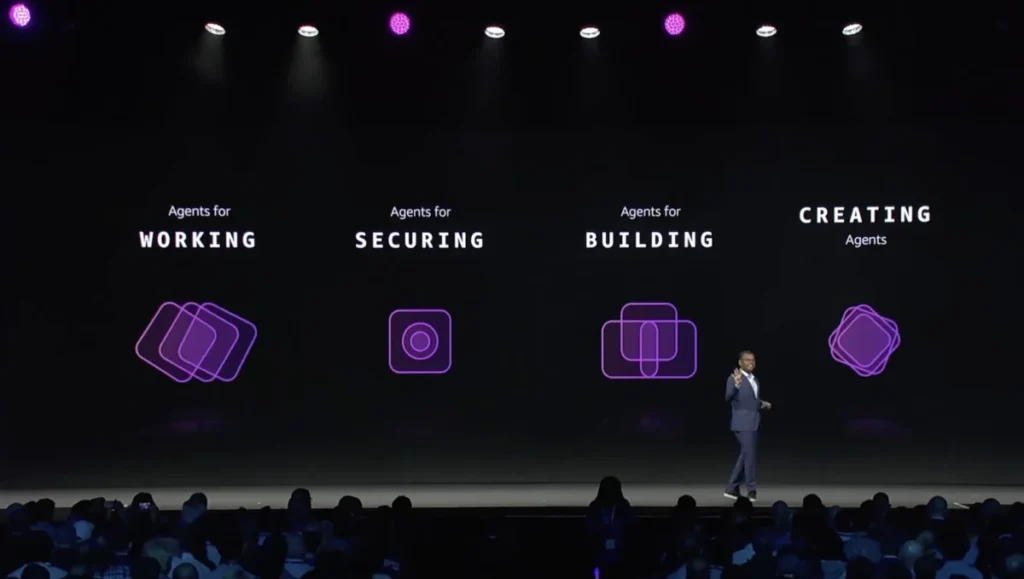
The cloud computing landscape witnessed a significant strategic pivot last week as thousands of developers, architects, and enterprise leaders converged at the Javits Center for the AWS Summit New York City. While the event served as a celebration of the broader AWS ecosystem, the central narrative was undeniably defined by a singular, ambitious vision: the evolution of "Agentic AI."
Dr. Swami Sivasubramanian, Vice President of Agentic AI at AWS, took center stage to outline a future where artificial intelligence does not merely answer questions but acts as a persistent, compounding force for productivity. This article explores the implications of these announcements, the strategic direction of AWS, and what this means for the future of enterprise software.
Main Facts: The Thesis of Compounding Value
At the heart of the AWS Summit keynote was Dr. Sivasubramanian’s core thesis: Agents that compound value over time.
In traditional AI implementations, models are often treated as transactional—a user provides a prompt, and the AI provides an output. However, AWS is pushing for a paradigm shift toward "Agentic AI." These are systems designed to operate autonomously, hold long-term context, execute complex multi-step workflows, and continuously improve based on previous interactions.
The key takeaways from the summit include:
- Agentic Orchestration: AWS is prioritizing tools that allow agents to interface with existing enterprise data silos, enabling them to execute tasks across disparate cloud services.
- Continuous Learning Loops: The focus is on systems that retain "memory" of organizational preferences and past outcomes, effectively compounding efficiency gains as the agent becomes more specialized to the company’s unique workflows.
- Developer Empowerment: A suite of new APIs and infrastructure tools was unveiled to lower the barrier to entry for building, deploying, and monitoring these sophisticated agentic systems.
Chronology: A Week of Accelerated Innovation
The atmosphere at the Summit was one of rapid iteration. The week kicked off with a high-energy keynote that set the tone for a series of technical deep dives and hands-on workshops.
Monday: The Visionary Launch
The week began with the official keynote address. Dr. Sivasubramanian illustrated the "Agentic AI" stack, moving beyond simple Large Language Models (LLMs) toward systems capable of reasoning and task execution. The focus was on moving from "Chatbot" to "Colleague."
Tuesday: Technical Deep Dives
Following the keynote, attendees participated in specialized tracks focused on how to integrate these new agentic frameworks into existing AWS pipelines. Developers were shown how to move from prototype to production using the latest enhancements in AWS’s model hosting and data integration tools.
Wednesday–Friday: Ecosystem Integration
The latter half of the week focused on the partner ecosystem. AWS highlighted how third-party software providers are leveraging the new AWS agentic stack to build industry-specific solutions, ranging from automated supply chain management to autonomous software debugging.
Supporting Data: Infrastructure and Efficiency
While the "Agentic" buzzword dominated the conversation, the practical engineering updates were rooted in the perennial AWS mandate: Performance and Cost.
Operational Efficiency
AWS continues to refine its underlying infrastructure to support the massive compute requirements of agentic workflows. By optimizing inference latency and increasing the throughput of their proprietary silicon (AWS Trainium and Inferentia), AWS is making it economically viable to run persistent agents at scale.
Price Reductions
In a move that caught the attention of cost-conscious CTOs, AWS announced a series of price reductions across its storage and compute tiers. These adjustments are designed to alleviate the "AI Tax"—the increased cost of running complex, multi-model agentic chains. By lowering the barrier to entry, AWS is effectively ensuring that their platform remains the primary destination for developers building the next generation of AI-native startups.
Official Responses: The Strategic Vision
In his remarks, Dr. Sivasubramanian emphasized that the industry is currently in the "early innings" of AI deployment. "We are moving from a world where AI is a tool you use, to a world where AI is a partner you work with," he stated.
AWS leadership is framing this transition not as a threat to human expertise, but as a mechanism for "leveraging human intent." By handling the "drudgery" of multi-step workflows—such as data reconciliation, compliance checks, and cross-platform syncing—agents allow human developers to focus on higher-order architectural decisions.
The sentiment from the executive team is clear: AWS aims to be the "infrastructure of intelligence." Whether a customer is building a simple RAG (Retrieval-Augmented Generation) application or a complex, autonomous agent network, the goal is for AWS to provide the most secure, scalable, and cost-effective foundation.
Implications: What Does This Mean for the Industry?
The shift toward agentic systems carries profound implications for both software development and organizational structure.
1. The Death of the "Static" Application
We are moving away from applications that are defined solely by their UI. Instead, the "application" of the future will be a collection of services orchestrated by agents. This requires a rethink of security, data governance, and logging. Developers will need to become "Agent Orchestrators," ensuring that agents have the right permissions and guardrails to operate safely.
2. A New Standard for Enterprise Productivity
If agents can successfully compound value, the competitive advantage will no longer be who has the best model, but who has the best data strategy. Since agents learn from organizational context, companies that have clean, well-governed, and accessible data will see their agents improve at a significantly faster rate than their competitors.

3. The Shift in Cloud Spend
As companies pivot to agentic architectures, we should expect a change in cloud expenditure patterns. While compute and storage costs may rise due to the complexity of these systems, the return on investment (ROI) is expected to materialize in the form of reduced human labor costs and faster time-to-market for complex internal processes.
Looking Ahead: The Builder’s Journey
For the individual developer, the path forward is clear: start experimenting with agentic frameworks. AWS is heavily investing in the AWS Builder Center, a resource hub designed to help engineers navigate this transition. Whether through participating in local AWS Community Days or engaging with the new documentation provided at the Summit, the goal is to bridge the gap between "experimental AI" and "production-grade intelligence."
As Channy Yun, a leading voice in the AWS developer community, noted in his weekly wrap-up: "The pace of innovation is relentless, but the tools are becoming more powerful, and more accessible."
The AWS Summit NYC 2026 was more than just a gathering; it was a signal of intent. The cloud has officially entered the era of the agent. As we look toward the remainder of the year and beyond, the companies that successfully harness the compounding power of these agents will likely define the next decade of digital transformation.
How to Stay Informed
For those who could not attend the summit, AWS has provided extensive recaps:
- Top Announcements Blog: A comprehensive breakdown of the week’s technical launches.
- Amazon News Center: High-level summaries of the strategic shifts announced by leadership.
- What’s New with AWS: The definitive source for daily updates on service releases and feature enhancements.
The future is being written in real-time, and at the center of that narrative is a new way of working. Stay tuned to the AWS News Blog for the latest updates as these agentic tools begin to roll out into general availability.
Reported by the AWS News Editorial Team.
For further learning, browse upcoming AWS-led events to connect with your local developer community and sharpen your cloud skills.