Ather Energy Accelerates Growth Strategy with Massive ₹2,500 Cr Capital Infusion
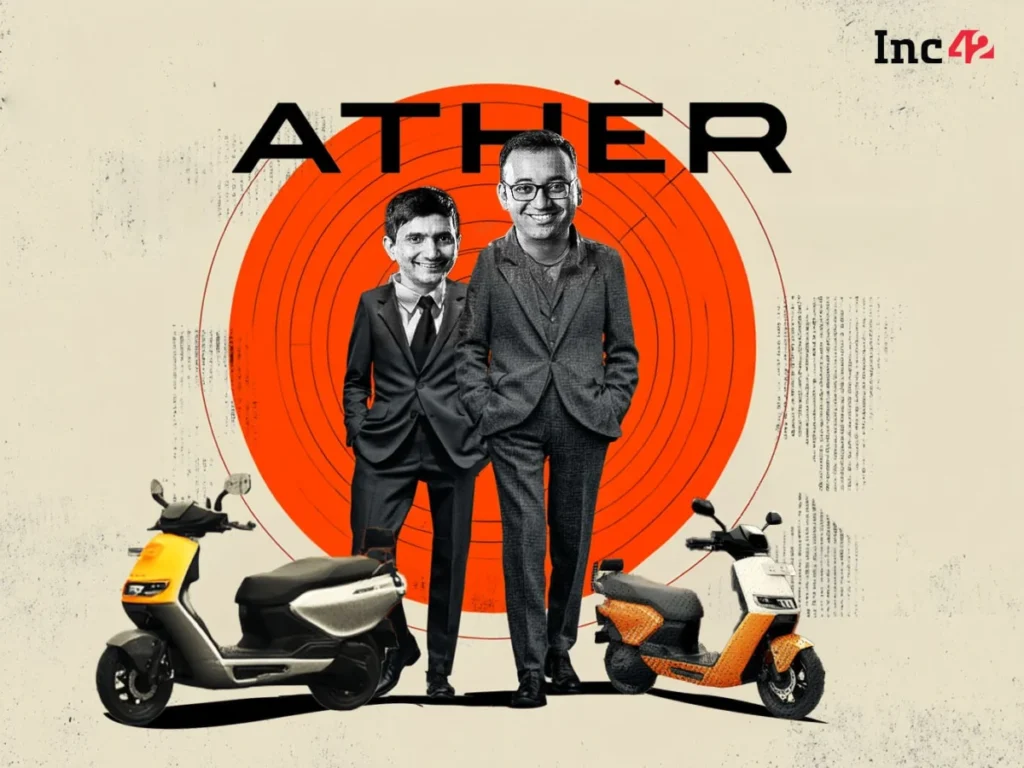
Bengaluru – In a move that signals a decisive shift in the competitive landscape of India’s electric two-wheeler (E2W) sector, Ather Energy has officially launched a Qualified Institutional Placement (QIP) to raise substantial capital. This strategic move is part of a larger, ambitious ₹2,500 crore fundraising roadmap, aimed at fortifying the company’s market position, advancing its technological edge, and aggressively expanding its infrastructure.
The announcement comes amidst a flurry of financial activity for the Bengaluru-based EV manufacturer, which is seeking to balance its books while scaling operations to meet the rising demand for green mobility.
The Core Financials: Breaking Down the QIP
The QIP, which opened to institutional investors today, has set a floor price of ₹1,169.70 per equity share. This represents a strategic discount of approximately 9.8% compared to the day’s closing price of ₹1,298 on the Bombay Stock Exchange (BSE). The company retains the flexibility to offer a further discount of up to 5% on this floor price, with the final issue price to be determined through discussions with book-running lead managers.
This QIP is a cornerstone of a broader ₹2,500 crore capital-raising plan. The company has structured this infusion in two distinct tranches:
- The QIP Component: Aimed at raising ₹1,500 crore to cater to institutional interest.
- Equity-Linked Instruments: The remaining ₹1,000 crore will be generated through various equity-linked instruments, providing the company with a diversified capital structure.
The funds generated will be deployed with surgical precision, specifically targeting the reduction of existing debt, significant investments in Research and Development (R&D), and the execution of high-octane marketing initiatives to maintain brand recall in an increasingly crowded market.
A Chronology of Strategic Moves
The current fundraising trajectory is not a knee-jerk reaction to market volatility but the culmination of a well-planned roadmap sanctioned by Ather’s leadership.
- June 2024: The Ather Energy board granted formal approval for the capital raise, recognizing the need for a liquidity buffer to support the next phase of growth.
- July 14, 2024: Shareholders reinforced this decision by passing a special resolution through a postal ballot, providing the necessary legal mandate for the equity dilution.
- Present Day: The company has simultaneously initiated a preferential issue of up to ₹1,200 crore alongside the QIP. This concurrent approach ensures that the company secures backing from both long-term strategic partners and institutional market participants.
Strategic Alliances and Shareholding Shifts
A pivotal aspect of Ather’s recent financial activity is the deepening of ties with its key stakeholders. As part of the ₹1,200 crore preferential issue, Hero MotoCorp—the world’s largest manufacturer of motorcycles and scooters—will invest approximately ₹960 crore through convertible warrants.
Simultaneously, the India-Japan Fund, managed by the National Investment and Infrastructure Fund (NIIF), is set to contribute ₹200 crore to acquire fresh equity shares. Notably, Ather’s own leadership is putting "skin in the game," with co-founders Tarun Mehta and Swapnil Jain each investing ₹20 crore through warrants.
Implications for Shareholding:
Upon the full conversion of these warrants, Hero MotoCorp’s stake in Ather Energy is projected to climb from its current 29.48% to 30.68%. This further solidifies the synergistic relationship between the two entities, where Ather leverages Hero’s massive distribution and manufacturing prowess, while Hero secures a dominant foothold in the premium electric segment.
Market Context: Navigating the EV "Gold Rush"
Ather Energy’s move to tap the capital markets coincides with a period of intense competition in the Indian E2W space. The narrative has shifted from mere entry-level innovation to a race for scale, network density, and product portfolio diversification.
Legacy giants such as TVS Motor and Bajaj Auto have successfully defended their turf by launching aggressive electric variants, while new-age tech disruptors like Ola Electric—which recently completed its own QIP—are utilizing capital to subsidize growth and accelerate manufacturing capacity.
For Ather, the timing is critical. While the company has historically focused on premium quality and engineering excellence, the need for rapid network expansion has become paramount. By raising capital now, Ather is ensuring that it does not fall behind in the battle for customer acquisition, which is currently being fought as much in the showrooms as it is on the charging grids.
Operational Performance: Data-Driven Growth
Despite the broader economic headwinds facing the automotive sector, Ather Energy has demonstrated strong financial resilience. In Q4 FY26, the company reported a stellar performance, narrowing its net loss by 57.2% year-on-year to ₹100.2 crore.
This improvement in profitability metrics has been matched by top-line growth, with operating revenue surging by 73.7% to ₹1,174.7 crore. These figures suggest that the company is successfully optimizing its unit economics as it scales.
Infrastructure Expansion:
Ather’s physical footprint has seen explosive growth. The company ended FY26 with a robust network of 700 experience centres, nearly doubling its count from 351 just twelve months prior. Beyond showrooms, the company has focused on the "ecosystem" aspect of EV ownership:
- Service Network: Grown to 548 dedicated centers.
- Charging Infrastructure: The company’s public fast-charging network has crossed the 6,000-point milestone, providing a significant competitive moat that enhances the "Ather experience" for its users.
Implications: What Lies Ahead for Ather?
The successful closure of this QIP will likely serve as a validation of Ather’s business model by institutional investors. By securing a war chest of ₹2,500 crore, Ather achieves several strategic objectives:
- De-leveraging: By prepaying or repaying existing borrowings, the company will lower its interest burden, directly improving its bottom-line performance in the coming quarters.
- R&D Supremacy: With the EV sector moving toward higher performance batteries and software-defined vehicles, the R&D investment will be critical for Ather to launch its next generation of products.
- Market Leadership: The expansion of its charging grid and experience centers positions the company to capture the next wave of urban buyers who are currently transitioning from internal combustion engines to electric.
Investor Sentiment
The stock market reacted positively to the news, with Ather Energy shares closing the session 7.9% higher at ₹1,298 on the BSE. This bullish sentiment reflects investor confidence in the company’s ability to execute its expansion plans while maintaining a disciplined approach to capital management.
Final Thoughts
As the Indian EV market enters its "consolidation phase," the winners will be determined by three factors: manufacturing scale, brand loyalty, and the ability to maintain a healthy balance sheet. Ather Energy, with its latest financial maneuver, has clearly signaled that it intends to be a long-term leader. Whether the company can effectively convert this capital into market share against well-funded incumbents remains the defining question for the coming year. However, with the backing of Hero MotoCorp and the confidence of institutional investors, the path forward appears well-funded and strategically sound.