Google Transforms Search with Integrated AI Mode Apps: A New Era of Task-Oriented Interaction
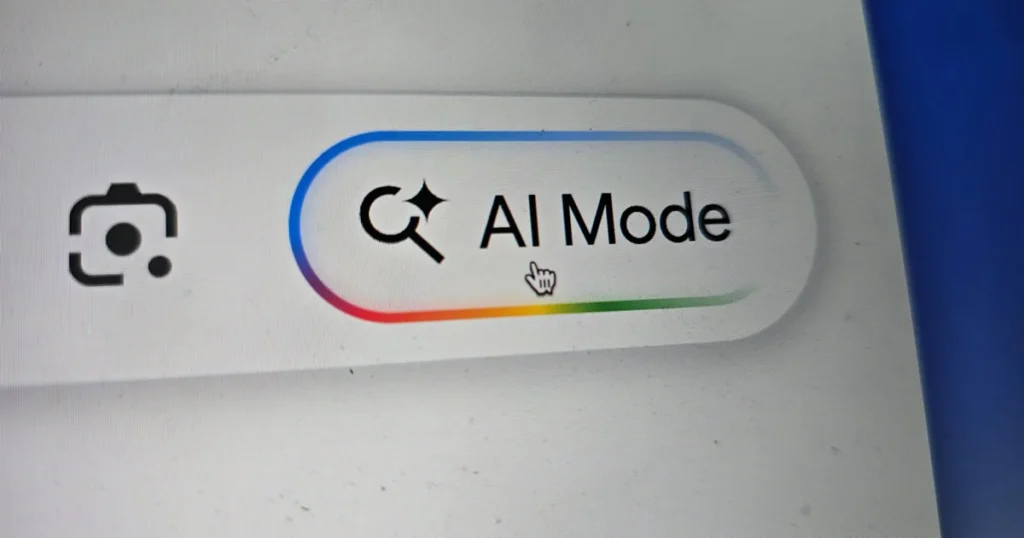
MOUNTAIN VIEW, CA – July 26, 2024 – Google is ushering in a significant evolution for its ubiquitous Search platform, moving beyond mere information retrieval to become a proactive, task-executing agent. This week marks the initial rollout in the U.S. of a groundbreaking feature: connected applications within AI Mode in Search. This integration allows users to seamlessly send search queries and intentions directly into popular third-party services like Instacart, Canva, and Google’s own YouTube Music, fundamentally reshaping how individuals interact with the web and complete daily tasks.
The announcement, detailed in a blog post penned by Chips Mistry, a senior product manager on Search, and Biharck Araûjo, an engineering lead on Search, signifies Google’s strategic pivot towards a more deeply integrated and intelligent search experience. While app connections have been a feature within the Google Gemini app for some time, their introduction into the core Search interface represents a monumental step, bringing advanced AI capabilities to the forefront of the primary Google user journey.
The Core Offering: Seamless Task Completion
At its heart, this new functionality is designed to eliminate friction and streamline workflows. Instead of searching for information and then manually navigating to a separate application to act on that information, AI Mode in Search now acts as a bridge, facilitating direct action. Google provided compelling examples to illustrate the immediate utility of these initial integrations:
- Instacart: Users connecting their Instacart account can leverage AI Mode to populate their grocery carts. Imagine searching for "easy weeknight dinner recipes" or "ingredients for a classic lasagna." AI Mode can then extract the necessary items from the search results and, with user confirmation, directly add them to an Instacart cart, ready for review and checkout within the Instacart app or website. This transforms a multi-step process into a nearly instantaneous action.
- Canva: For creative tasks, connecting Canva empowers AI Mode to generate design options. A user searching for "flyer templates for a charity bake sale" or "ideas for a birthday party invitation" can prompt AI Mode to display relevant Canva templates, offering a visual starting point directly within the search experience, saving time and fostering creativity.
- YouTube Music: Google’s own music streaming service also benefits from this integration. AI Mode can curate personalized playlists based on user prompts – for instance, "create a workout playlist with upbeat 80s hits" or "a relaxing playlist for studying." These custom-generated playlists can then be saved directly to the user’s YouTube Music library, enhancing the discovery and listening experience.
Crucially, Instacart and Canva represent the external, non-Google entities in this initial launch cohort, underscoring Google’s commitment to an open ecosystem of partnerships. While specific future partners were not disclosed, the company has indicated that it is actively collaborating with a diverse range of developers and anticipates rolling out support for additional applications in the near future. This promise of expansion hints at a broader vision for an interconnected digital environment powered by Google Search.
Distinguishing Connected Apps from Personal Intelligence
It is vital to understand that Google employs similar terminology for two distinct, albeit related, AI-driven functionalities within Search. The newly introduced "connected apps" in AI Mode perform a different function than "Personal Intelligence," a feature launched earlier this year.
- Personal Intelligence: Unveiled in January, Personal Intelligence leverages a user’s connected Google applications (such as Gmail, Google Photos, and as of this week, Google Calendar) to provide context for AI responses. For example, it might answer a question about an upcoming event by referencing details from your Google Calendar or help locate a specific photo. The purpose here is to personalize search results and AI interactions by drawing on your own data within Google’s ecosystem, making responses more relevant to your individual life.
- Connected Apps (New): In contrast, the new connected apps feature focuses on sending requests out to external services. AI Mode acts as an intermediary, taking user intent and translating it into actionable commands for third-party applications. It’s about task delegation – asking Canva to find templates or instructing Instacart to add items to a cart – on services that Google does not directly operate. This distinction is critical for understanding the scope and privacy implications of each feature, with connected apps acting as a conduit for action rather than a source of personal contextual data from non-Google services.
A Chronology of Google’s AI Integration Journey
The introduction of connected apps into Google Search is not an isolated event but rather the latest, and arguably most significant, step in Google’s ongoing strategy to embed advanced AI capabilities across its product suite. This journey began with earlier explorations and implementations, building a foundation for today’s widespread rollout.
The precursor to this Search integration can be found in the Google Gemini app, where connected apps were first introduced earlier this year. Services like OpenTable, Canva, and Instacart were among the initial partners to be integrated into Gemini. This early implementation provided Google with valuable insights into user interaction patterns and the technical challenges of linking AI systems with external tools.
Underpinning these integrations is the Model Context Protocol (MCP), an open standard designed to facilitate the secure and efficient linking of AI systems to outside tools and services. Google’s commitment to an "open standard" is noteworthy, suggesting a long-term vision for a broad, interoperable AI ecosystem rather than a proprietary, closed one. This protocol enables AI models to understand context and execute tasks across different platforms, forming the backbone of the connected app functionality.
Further expanding the Gemini ecosystem, Gemini Spark picked up additional integrations at the end of June, including Dropbox, Zillow Rentals, alongside the continued support for Canva, Instacart, and OpenTable. Gemini Spark also introduced support for custom MCP connections, empowering developers to create their own integrations, signaling Google’s intent to foster a vibrant developer community around its AI platforms.
Parallel to the development of connected apps, Google has also been advancing its Personal Intelligence features. As noted, this launched in January with integrations for Gmail and Google Photos, providing AI with access to a user’s personal Google data for more contextualized responses. The recent addition of Google Calendar to Personal Intelligence this week further extends its utility, allowing AI Mode to assist with scheduling, reminders, and event-related queries by referencing a user’s personal calendar.
This rich history within the Gemini app and the continuous evolution of Personal Intelligence have culminated in the current, highly anticipated rollout for Google Search. The decision to bring connected apps directly to the primary Search interface, rather than confining them to a separate AI application, underscores Google’s belief in the transformative potential of this technology for its core product. It also highlights the strategic importance of the U.S. market, as the current Search rollout is exclusively for users in the United States at launch, often serving as a testing ground for global expansion.
Supporting Data: The Strategic Rationale Behind Google’s Move
Google’s decision to integrate connected apps directly into Search’s AI Mode is not merely a feature update; it’s a strategic imperative driven by evolving user expectations, intense market competition, and Google’s long-term vision for the future of information access and task completion. This move is supported by several key considerations:
1. The Evolution of User Expectation and Task Efficiency:
Traditional search has always involved a multi-step process: query, results, click, consume, then perhaps navigate to another service to act. For instance, finding a recipe might lead to a food blog, but then the user still has to open Instacart, search for ingredients, and add them. This new integration dramatically shortens that pathway. Users are increasingly demanding immediate gratification and frictionless experiences across their digital interactions. By enabling direct actions within Search, Google caters to this desire for efficiency, transforming Search into a "do engine" rather than solely a "find engine." This is particularly relevant in a fast-paced world where time-saving conveniences are highly valued.
2. The Competitive Landscape of Conversational AI:
The rise of sophisticated conversational AI models, spearheaded by entities like OpenAI’s ChatGPT and Microsoft’s Copilot, has intensified the competition in the AI space. These platforms offer interactive, generative experiences that can answer complex questions and even draft content. While Google has its own formidable AI models, integrating app functionality into Search provides a distinct competitive advantage. It moves Google’s AI offerings beyond mere conversation or information synthesis, enabling tangible, real-world actions. This positions Google Search not just as an information source, but as a central hub for digital life, a true "AI assistant" capable of orchestrating tasks across a diverse ecosystem of applications.
3. Strengthening Google’s Ecosystem and Market Dominance:
By becoming the central orchestrator of actions across various services, Google reinforces its indispensable position in the digital lives of billions. Even when facilitating actions on third-party apps like Instacart or Canva, Google retains its role as the gateway. This strategy helps to solidify its market dominance by making its core product, Search, even stickier and more integrated into daily routines. It also creates a powerful incentive for other app developers to integrate with Google Search, further expanding its utility and cementing its central role.
4. The Model Context Protocol (MCP) as an Enabler:
The underlying technology, the Model Context Protocol, is crucial. By building on an "open standard," Google signals its intention to foster a broader ecosystem rather than a proprietary walled garden. This approach encourages more developers to integrate their services, knowing they are working with a standardized and potentially widely adopted framework. MCP allows AI models to understand the capabilities of connected tools and pass the right information to them, making seamless task completion possible without the AI model needing to fully understand the intricate workings of each individual app.
5. Expanding Beyond Information Retrieval:
For decades, Google Search’s primary function has been to index the web and provide relevant links. While incredibly powerful, this paradigm is evolving. The new connected apps signify a shift towards a more proactive, agentic form of AI. Instead of just answering "what," Google’s AI Mode can now help users "do." This fundamental change moves Search into the realm of personal productivity and daily task management, offering a richer, more engaging, and ultimately more valuable user experience. It positions Search as a comprehensive digital assistant that not only informs but also acts on behalf of the user.
Official Responses: Google’s Vision for a More Helpful Search
The official blog post by Chips Mistry and Biharck Araûjo serves as Google’s primary statement regarding this significant update. Their messaging consistently emphasizes the goal of making Search "more helpful," "seamless," and "intuitive." While the post doesn’t contain direct quotes about the broader strategic implications, the language used clearly articulates Google’s intent to enhance user workflows and integrate AI into the fabric of daily digital interactions.
The core message from Google is one of empowerment and efficiency. By enabling direct connections to external services, Google aims to reduce the cognitive load and friction associated with switching between applications to complete tasks. The examples provided – grocery shopping, design work, and music curation – are carefully chosen to illustrate common pain points that the new integration directly addresses.
Google’s clear distinction between "connected apps" and "Personal Intelligence" is also an important part of its official communication. This clarification is likely intended to manage user expectations regarding data privacy and the scope of AI interaction. By stating that connected apps "send requests out" to services Google "doesn’t run," they are delineating the boundaries of data access and control, reassuring users that their personal data within third-party apps is managed by those apps, with Search acting merely as an intelligent intermediary for specific tasks.
Furthermore, the mention of "working with a range of partners" and the expectation to "launch more apps soon" is a crucial official response. It signals Google’s commitment to expanding this functionality beyond the initial trio, indicating a long-term strategic roadmap. This forward-looking statement invites other developers and service providers to consider the potential of integrating with Google’s evolving Search platform, suggesting an open invitation for collaboration within the framework of the Model Context Protocol. While the exact criteria for partnership remain undisclosed, the official stance is clearly one of open collaboration and ecosystem growth.
Implications: Reshaping the Digital Landscape
The integration of connected apps into Google Search’s AI Mode carries profound implications across various facets of the digital world, from user behavior and business strategies to the very future of search engine optimization (SEO) and Google’s market position.
1. For Users: Unprecedented Convenience and Streamlined Workflows
For the everyday user, the most immediate and tangible implication is an unparalleled level of convenience. The days of searching for a recipe, opening a new tab for a grocery store, then manually adding ingredients, could become a relic of the past. This seamless integration promises to significantly reduce task switching, save time, and minimize friction in completing common digital tasks. It transforms Google Search into a more proactive and personalized assistant, anticipating needs and executing actions on demand. Users will likely experience a deeper sense of productivity and efficiency, as their digital tools work together more cohesively.
2. For Developers and Businesses: The "Second Visibility Question" and a Paradigm Shift in SEO
This is perhaps the most significant implication for businesses and website owners. The original article astutely highlights the emergence of a "second visibility question." Traditionally, the goal for businesses has been to rank highly in Google Search results to drive traffic to their websites. With connected apps, a new layer of visibility emerges: being a direct action partner within AI Mode.
- SEO Redefined: For categories where AI Mode can pass a task to a connected app (e.g., recipes for Instacart, templates for Canva, music for YouTube Music), simply ranking high with organic links might no longer be sufficient. If a user can directly add ingredients to a cart via an AI prompt, the website that traditionally provided the recipe might be bypassed entirely in that specific user journey. This doesn’t negate the value of traditional SEO for content discovery, but it introduces a powerful new channel for task completion that could siphon off direct traffic for certain intent types. Businesses will need to strategize not just for ranking, but also for potential integration with AI Mode.
- Partnership as a Premium Channel: Being chosen as a connected app partner becomes a strategic imperative for many businesses. This "list" of eligible apps represents a highly coveted direct pipeline to user intent and action. The lack of public explanation from Google on how a company joins this set or whether a broader integration route is coming creates uncertainty but also intense competition. Will it be an invite-only system for major players, or will there be an open API for smaller developers? The answer will dictate the future accessibility and fairness of this new channel.
- Monetization Opportunities: For Google, this opens up potential new monetization avenues beyond traditional advertising. While not explicitly stated, future models could involve revenue sharing with partners for transactions initiated via Search AI Mode, or premium placement for preferred connected apps.
3. For Google: Deepening Ecosystem Lock-in and the Future of Search
This move solidifies Google’s position as the central hub of digital activity. By making Search the gateway for direct actions across a multitude of services, Google further entrenches its ecosystem into daily routines. It moves Google closer to realizing the vision of a ubiquitous, proactive AI assistant that seamlessly integrates with every aspect of a user’s digital life.
This also represents a fundamental shift in the very definition of "search." It’s no longer just about finding information; it’s about facilitating action. This transformation positions Google to remain at the forefront of the AI revolution, adapting its core product to meet the demands of an increasingly intelligent and interconnected web.
4. Ethical Considerations and Transparency:
As AI becomes more integrated into task completion, ethical questions naturally arise.
- Data Privacy: While Google distinguishes between Personal Intelligence (using Google’s own data) and connected apps (sending requests out), transparency about what data is shared with third-party apps during a task initiation is crucial. Users will need clear assurances about their privacy.
- Algorithmic Bias and App Selection: How will Google choose which apps to integrate? Will there be favoritism towards certain partners or Google’s own services? The potential for anti-competitive practices or biased selection could be a concern if the process is not transparent and fair.
- User Control: Ensuring users have granular control over which apps are connected, and the ability to easily disconnect them, will be paramount for trust and adoption.
Looking Ahead: The Road to an AI-Powered Ecosystem
The initial launch of connected apps in Google Search’s AI Mode is merely the first chapter in what promises to be a transformative journey. The next few launches will be critical in revealing Google’s strategic priorities, particularly which new categories it aims to integrate into its action-oriented search experience. Will it expand into travel (booking flights/hotels), e-commerce beyond groceries, advanced productivity tools, or perhaps even smart home device control? The answer to this will define the scope and impact of this initiative.
More importantly, the industry eagerly awaits Google’s public explanation of how companies can become part of this coveted set of connected apps. The lack of clarity around eligibility criteria, partnership models, or whether a broader integration route is planned, leaves many businesses in a state of anticipation. Will Google roll out an open API for developers to submit their apps for review, or will it remain a more curated, invitation-only program? The answer to these questions will determine whether this powerful new channel is accessible to a broad range of innovators or if it will primarily benefit a select group of established players.
Ultimately, Google’s move represents a bold step towards a future where search engines are not just information portals but intelligent agents capable of orchestrating actions across our digital lives. As this evolution unfolds, it will redefine user expectations, reshape business strategies, and set a new standard for what it means to "search" the web.