The "Undo" Button for Infrastructure: AWS Revolutionizes Kubernetes Stability with EKS Version Rollbacks
For nearly a decade, the Kubernetes community has operated under a sobering technical reality: upgrading a cluster’s control plane is a "one-way door." Once an administrator initiated an upgrade, there was no turning back. If a breaking change, an incompatible API, or a silent configuration error surfaced post-upgrade, the only path forward was often a grueling, high-stakes recovery mission involving manual troubleshooting or, in worst-case scenarios, rebuilding clusters from scratch.
Today, Amazon Web Services (AWS) has fundamentally altered that landscape. In a significant announcement for the cloud-native ecosystem, AWS has introduced native version rollbacks for Amazon Elastic Kubernetes Service (EKS). This feature provides a critical safety net, allowing administrators to revert a cluster to its previous, fully validated state within a seven-day window. This development addresses one of the most persistent anxieties in enterprise DevOps: the fear of upgrading production infrastructure.
Main Facts: A Paradigm Shift in Cluster Management
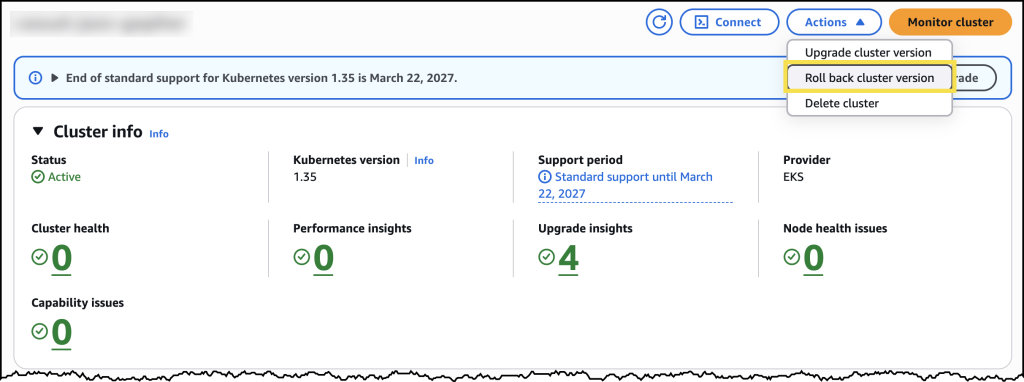
The new rollback functionality is not merely an emulation or a "best-effort" script; it is a structural change to how EKS handles cluster lifecycle management. By allowing users to revert a control plane version—for example, moving back from Kubernetes 1.35 to 1.34—AWS is providing a legitimate "undo" button for one of the most sensitive tasks in cloud architecture.
Key features of this launch include:
- A Seven-Day Safety Window: Users can trigger a rollback within one week of an upgrade.
- Validated State Restoration: Unlike experimental community projects that rely on "emulated versions," EKS restores the cluster to the actual, previously running production version.
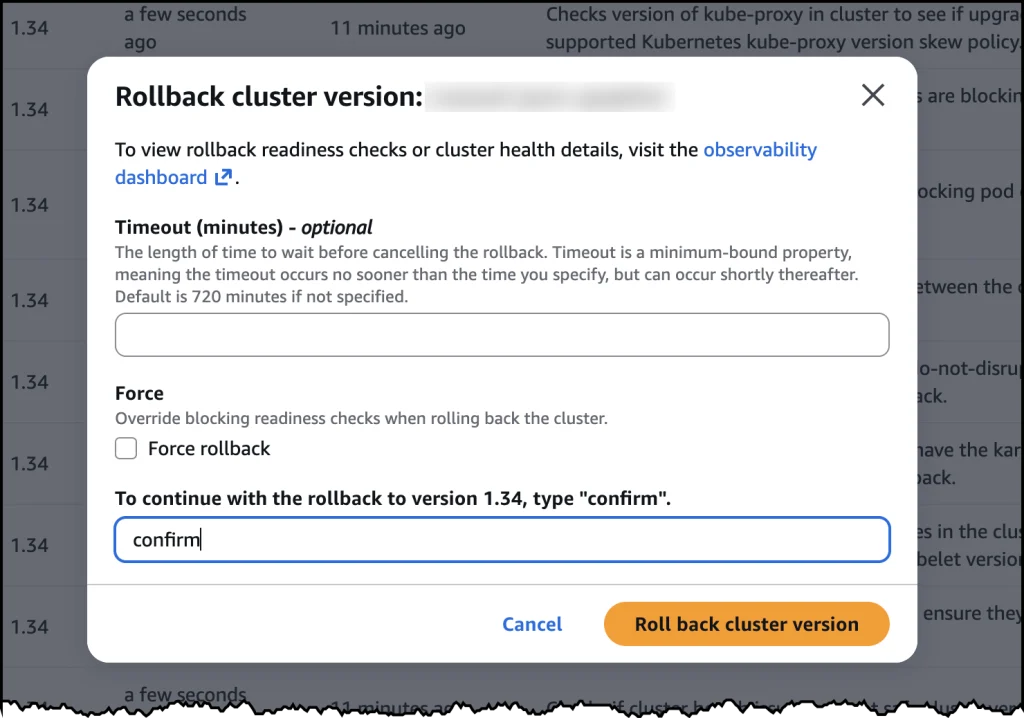
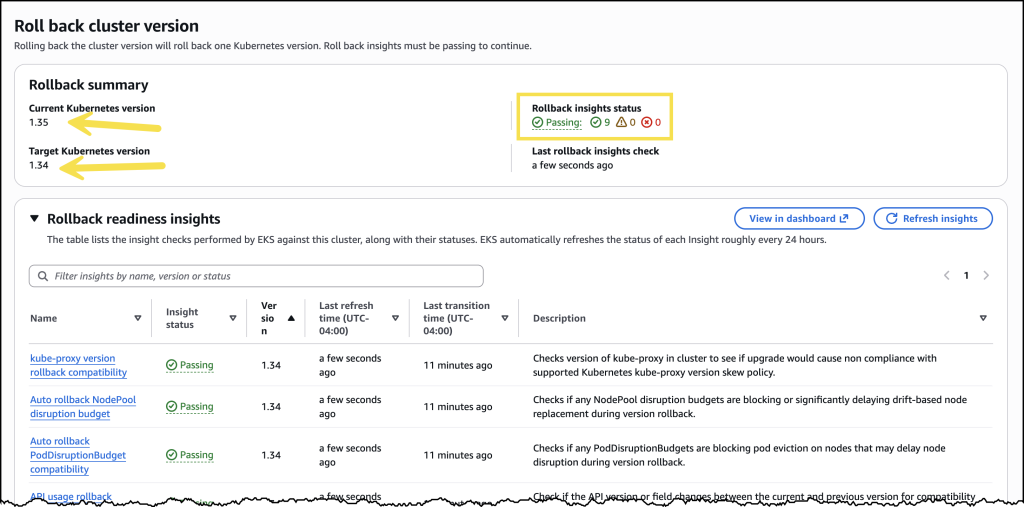
- Integration with Cluster Insights: Before a rollback is executed, the EKS console evaluates the environment for compatibility issues, such as node version mismatches or add-on dependencies.
- EKS Auto Mode Support: For users leveraging EKS Auto Mode, the rollback process extends to the compute layer, ensuring that managed nodes are synchronized with the reverted control plane.
- Zero-Cost Implementation: The feature is available immediately in all commercial AWS regions at no additional charge beyond standard EKS operational costs.
The Chronology of Kubernetes Upgrades: From Fear to Confidence
To understand why this announcement is being hailed as a milestone, one must look at the historical trajectory of Kubernetes management.
The Era of "Elaborate Compensating Mechanisms"
For years, the rigid upgrade path forced organizations to implement "compensating mechanisms" to mitigate risk. These included months-long testing cycles, rigid "bake periods," staggered upgrade groups, and extensive manual sign-off processes. Because Kubernetes releases three minor versions per year, many organizations found themselves trapped in a cycle of "upgrade debt."
Administrators often delayed updates to avoid the risk of downtime, leading to clusters running on outdated versions. This, in turn, created security vulnerabilities and pushed organizations toward the dreaded "extended support" timelines, which carry additional costs and operational overhead.
The Catalyst for Change
The open-source community recognized this issue, most notably through KEP-4330 (Kubernetes Enhancement Proposal), which explored emulated versions. While these community efforts signaled progress, they often kept clusters in a "transitional" state. AWS took a different approach: rather than focusing on the temporary state, they focused on the production-proven state. By integrating rollback capabilities directly into the EKS control plane, AWS has essentially automated the safety procedures that previously required custom, error-prone scripts.

Supporting Data: Why Reliability Matters
The necessity for this feature is underscored by the complexity of modern, large-scale deployments. Organizations managing hundreds of clusters—particularly in regulated industries like finance, healthcare, and government—operate with zero tolerance for downtime.
The Cost of a "One-Way Door"
When an upgrade fails in a production environment, the "Mean Time to Recovery" (MTTR) can stretch into days. The data points supporting this need are clear:
- Workload Disruption: Upgrades that go wrong often lead to cascading failures across microservices.
- Resource Inefficiency: Teams are forced to maintain parallel "canary" clusters to test upgrades, doubling infrastructure costs just to ensure a safe transition.
- Security Gaps: When upgrades are delayed due to fear, the attack surface of the infrastructure expands.
By removing the fear of the "one-way door," AWS expects to see an increase in the velocity of Kubernetes adoption, as teams can now move forward with upgrades knowing that a verified, tested, and reliable "Plan B" is only a few clicks away.
Official Responses and Strategic Implications
AWS’s decision to prioritize rollback functionality speaks to the maturity of its managed Kubernetes offering. By handling the complexities of node disruption budgets and control plane synchronization internally, AWS is signaling a shift in its philosophy: managed services should not just host infrastructure; they should actively manage the risk associated with its evolution.
Implications for "EKS Auto Mode"
The most sophisticated aspect of this release is how it handles EKS Auto Mode. In a fully managed environment, the control plane and the data plane are deeply intertwined. AWS has introduced a dedicated cancel API for these rollbacks, acknowledging that node rollbacks are not instantaneous. Because these operations respect Pod Disruption Budgets (PDBs), they can be time-consuming. The ability to pause or cancel a rollback mid-process provides operators with the granular control needed to balance recovery time with workload availability.
A New Standard for Compliance
For regulated industries, the ability to "roll back to a known-good state" is not just a convenience; it is often a compliance requirement. This feature provides an audit trail and a deterministic recovery process that satisfies the stringent uptime requirements of enterprise-grade compliance frameworks.
The Future of Cluster Management
As we look toward the future, the introduction of EKS version rollbacks sets a high bar for the entire cloud-native industry. It transforms the Kubernetes upgrade process from a high-stakes "leap of faith" into a standard, manageable operational task.
How to Get Started
AWS has ensured that the barrier to entry is minimal. The process is straightforward:
- Navigating the Console: Within the Amazon EKS console, users can select an upgraded cluster and view the "Rollback" status within the seven-day eligibility window.
- Reviewing Insights: Before committing to a rollback, administrators should leverage the "Cluster Insights" tool, which provides a pre-flight checklist. This tool flags potential conflicts, such as outdated add-ons or node version mismatches, that might complicate the process.
- The Execution: Once the decision is made, the control plane initiates the revert. For standard clusters, the control plane returns to its previous version. For Auto Mode clusters, the system orchestrates a graceful, PDB-aware node migration.
- Verification: The system monitors the return to the previous state, ensuring that the cluster is healthy and stable post-reversion.
Closing Thoughts
The "Undo" button is a classic feature of software development, but it has been conspicuously absent in the high-stakes world of Kubernetes infrastructure. By implementing this within Amazon EKS, AWS has not only addressed a significant pain point for existing customers but has also removed a major psychological and technical barrier for organizations looking to migrate to the cloud.
The ability to move forward with confidence, knowing that the ability to pivot is built into the foundation of the service, represents the next stage of maturity for the Kubernetes ecosystem. As AWS continues to refine the EKS experience, the emphasis remains clear: empower the operator, prioritize stability, and ensure that the infrastructure works for the business, not the other way around.
For teams currently navigating the complexities of Kubernetes lifecycle management, this update serves as a timely reminder that the most powerful tools are often those that provide the most peace of mind. Whether you are managing a handful of clusters or a global fleet, the new EKS version rollback capability is an essential addition to your operational toolkit.